

What is green packaging? A guide for eco-conscious gift-givers
TL;DR:
- Green packaging aims to minimize environmental harm throughout its entire lifecycle by using verified sustainable materials. Reusable fabric wraps are the most sustainable choice for gifts, especially for children, as they eliminate waste and can be kept as keepsakes. Certifications like FSC and home compostability ensure packaging claims are trustworthy and environmentally responsible.
Green packaging is any packaging designed to minimise environmental harm across its entire lifecycle, from raw material sourcing through to disposal. The term sits alongside the more precise industry phrase sustainable packaging, which evaluates materials against criteria including renewable energy use, recycled content, and recovery potential. For anyone choosing gifts for a newborn or young child, understanding what is green packaging means more than picking a box labelled “eco.” It means knowing which materials hold up under scrutiny, which certifications carry real weight, and how your disposal choices shape the final environmental outcome.
What is green packaging and how is it defined?
Green packaging, formally assessed as sustainable packaging, minimises environmental impact across eight criteria spanning safety, market fit, renewable energy, manufacturing technology, and recovery potential. That breadth matters. A material that looks natural on the shelf may still carry a heavy footprint if it was produced using fossil fuel energy or cannot be recovered after use.
The Forest Stewardship Council (FSC) and Life Cycle Assessment (LCA) methodology under ISO 14040/44 are the two most credible frameworks for verifying green claims. FSC certification confirms that paper-based materials come from responsibly managed forests. LCA under ISO 14040/44 accounts for every stage of a product’s life, from the energy used in manufacturing to the emissions generated at end of life. Without one of these frameworks, a “green” label is largely decorative.
For gift-givers, this definition has a warm and practical edge. The wrapping around a newborn’s first gift, or the fabric cradling a milestone keepsake, carries meaning far beyond its material weight. Choosing packaging that reflects genuine care for the planet adds a quiet layer of intention to the gift itself.
What are the main types of green packaging?
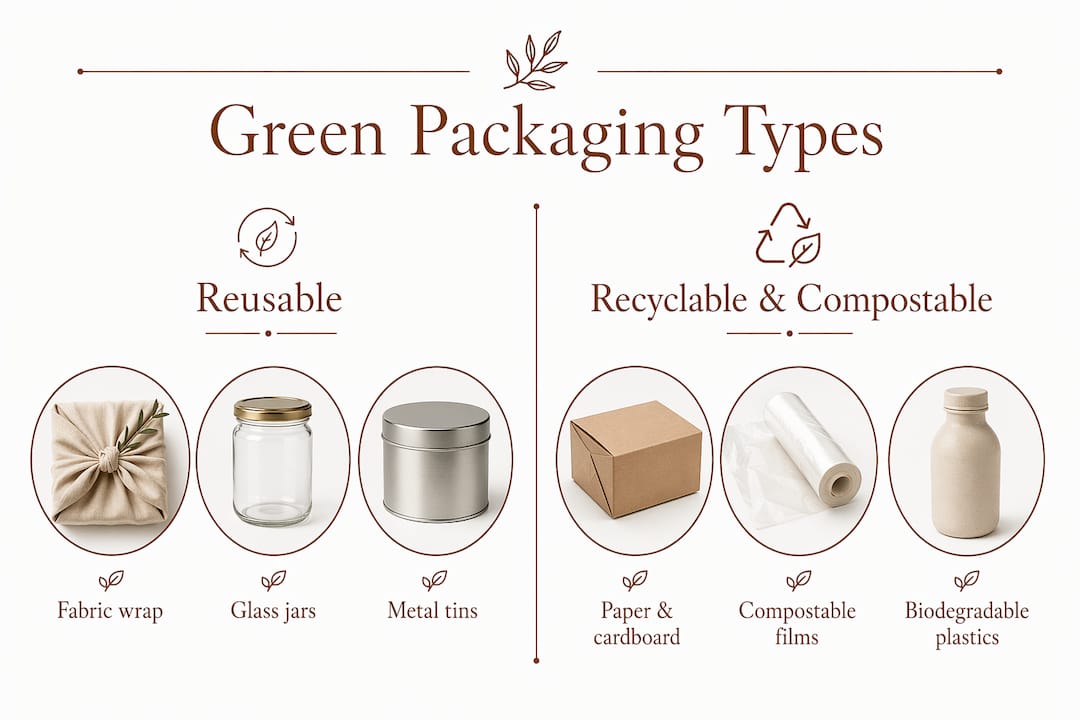
Sustainable packaging solutions fall into four broad categories, each with distinct strengths and real-world limitations.
- Recyclable packaging includes cardboard, paper, glass, and certain plastics. Cardboard recycling rates exceed 93% in the United States, making it one of the most reliably recovered materials. That figure reflects decades of investment in collection infrastructure, which is why paper-based gift wrap and boxes remain a dependable choice.
- Compostable packaging breaks down into organic matter under the right conditions. The critical distinction is between industrial compostable and home compostable materials. Many bioplastics labelled compostable require industrial processing temperatures that a home compost bin cannot reach. Placing them in a home bin or general recycling contaminates both streams.
- Biodegradable packaging degrades over time, but the term has no standardised legal definition in the UK. Without a certified timeframe or verified conditions, biodegradable claims can be misleading.
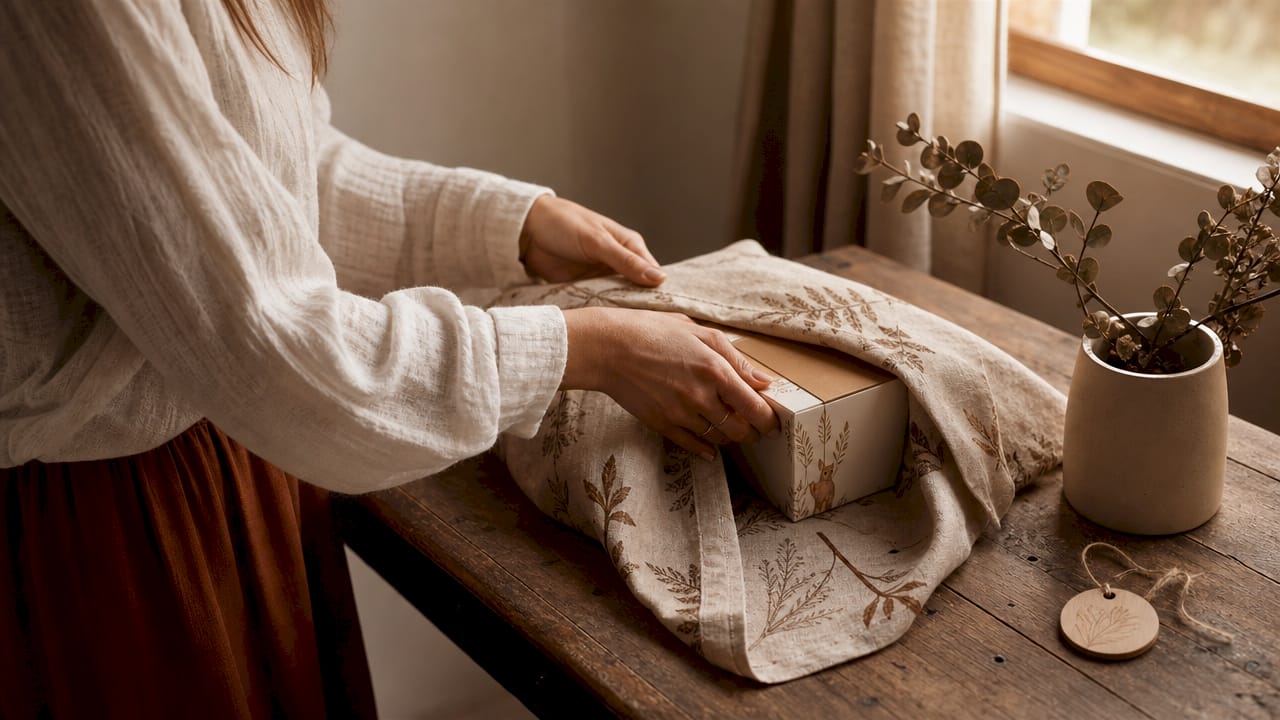
- Reusable packaging sits at the top of the sustainability hierarchy. Fabric wraps, cloth bags, and embroidered textile covers can be used dozens of times, dramatically reducing the per-use environmental cost. Nicholasandrose was built on exactly this principle: a beautifully crafted fabric gift wrap that becomes a keepsake rather than landfill.
No single category is inherently superior. Environmental impact depends on disposal infrastructure, manufacturing energy, and the full lifecycle context. A compostable mailer sent to landfill may carry a higher impact than a recycled plastic alternative that enters a working recovery stream.
Pro Tip: When choosing eco-friendly packaging for a baby shower or newborn gift, prioritise reusable fabric options first, FSC-certified paper second, and compostable materials only if you have confirmed access to the correct disposal facility.
Why do certifications matter more than labels?
Greenwashing is the practice of making vague or misleading environmental claims. Vague terms like “eco-friendly” mislead consumers and can cause genuine environmental harm when packaging is disposed of incorrectly. The solution is to look past the marketing language and seek precise, verifiable statements.
Trustworthy certifications to look for include:
- FSC (Forest Stewardship Council): confirms responsible forest management for paper and card. FSC certification protects biodiversity and supports Indigenous Peoples’ rights in forest communities.
- Home Compostable certification: confirms a product breaks down in a domestic compost environment, not just under industrial conditions.
- ISO 14040/44 LCA: the standard methodology for objectively measuring a product’s full environmental footprint.
- Seedling logo: the European standard for industrially compostable packaging, useful for distinguishing industrial from home compostable products.
The disposal infrastructure point deserves emphasis. A certified compostable wrap placed in a general recycling bin contaminates the entire batch. Checking your local council’s accepted materials before purchasing is a small step with a meaningful outcome.
Pro Tip: Look for the phrase “home compostable certified” rather than simply “compostable.” The distinction tells you exactly where and how the material will break down, removing the guesswork from disposal.
How does packaging design reduce environmental impact?
Material choice captures most of the public conversation around sustainable packaging, but design and weight reduction often deliver larger environmental gains. The 3Rs hierarchy (Reduce, Reuse, Recycle) places reducing at the top for good reason.
Right-sizing packaging and reducing material weight can produce bigger carbon reductions than switching materials alone, because lighter packages require less fuel to transport at every stage of the supply chain. An 8% reduction in bottle packaging weight, for example, equates to eliminating 1.6 million tons of packaging waste annually, with economic savings exceeding $3 billion. That scale illustrates how design decisions compound across millions of units.
For the gift wrap sector, the comparison is equally striking. Switching to optimised paper-based formats can reduce material usage by 70% and package weight by 50%. One case study recorded the elimination of 39.2 tons of plastic waste through a single material substitution programme.
| Design approach | Environmental benefit | Practical example |
|---|---|---|
| Right-sizing | Reduces material waste and transport emissions | Wrapping sized to the gift, not a standard sheet |
| Lightweight materials | Lowers logistics carbon footprint | Fabric wrap versus thick foil paper |
| Reusable format | Eliminates single-use waste entirely | Embroidered fabric wrap kept as a keepsake |
| FSC-certified paper | Protects forest ecosystems at source | Certified tissue paper and gift boxes |
Reusable fabric gift wrap sits in a category of its own within this table. It removes the single-use problem entirely rather than managing it more efficiently. That is a fundamentally different proposition, and one that aligns with the highest tier of the sustainability hierarchy.
Pro Tip: When assessing any gift wrap, ask one question: will this still exist in a useful form in five years? If the answer is no, look for a reusable alternative before settling for a recyclable one.
How to choose green packaging for newborn and children’s gifts
Choosing genuinely sustainable packaging for a baby shower or children’s gift requires a few clear criteria, applied calmly and without the pressure of marketing language.
Start with the eco gift wrapping workflow that prioritises reuse above all else. Fabric wraps, personalised with embroidery, serve as both packaging and lasting memento. They do not end up in the bin before the baby is even born, which is the quiet tragedy of most conventional gift wrap.
When reusable fabric is not the chosen route, apply these criteria:
- Choose FSC-certified paper or card for boxes, tags, and tissue. Look for the FSC logo, not just the word “recycled.”
- Avoid foil, glitter, and laminated papers. These cannot be recycled and contaminate paper recycling streams.
- Select home compostable certified wrapping tissue only if you have a home compost system. Otherwise, FSC-certified paper is the more reliable choice.
- Refuse plastic ribbon and synthetic bows. Natural cotton twine or dried botanicals are beautiful and compostable.
- Consider the full presentation. A fabric wrap tied with cotton ribbon, personalised with a name in embroidery, creates a gift that the family will keep for years.
Understanding what makes wrap environmentally friendly goes beyond the material itself. The longevity of the item, the care taken in its production, and the story it carries all contribute to its true value. A Nicholasandrose fabric wrap embroidered with a newborn’s name is not simply packaging. It is the first heirloom the child receives.
For parents who care about sustainable style choices across every aspect of their lives, applying the same thoughtfulness to gift wrap is a natural extension of those values.
Key takeaways
Green packaging reduces environmental impact most effectively when reuse, certified materials, and design efficiency are prioritised together rather than treated as separate choices.
| Point | Details |
|---|---|
| Define before you buy | Green packaging is assessed across eight lifecycle criteria, not just material type. |
| Certifications carry weight | FSC and home compostable labels are verifiable; vague “eco-friendly” claims are not. |
| Reuse outranks recycle | Fabric gift wrap eliminates single-use waste entirely, the highest sustainability outcome. |
| Design matters as much as material | Reducing packaging weight and size often delivers greater carbon savings than material switching alone. |
| Disposal determines outcome | Even certified compostable packaging causes harm if sent to the wrong waste stream. |
Why I believe reusable fabric wrap is the quiet revolution in sustainable gifting
A personal perspective from Helen
I have watched the conversation around green packaging shift considerably over the past few years. What strikes me most is how much energy goes into debating materials, whether bioplastic is better than recycled card, whether compostable is greener than recyclable, when the more profound question is rarely asked: why are we wrapping things in single-use materials at all?
The newborn gift sector is where this contradiction feels sharpest. A parent receives a beautifully wrapped gift for their baby, and within minutes the wrapping is torn away and discarded. The care that went into choosing it evaporates in seconds. Conventional gift wrap, even the FSC-certified kind, ends its life in a bin bag. That outcome sits uneasily with the intention behind the gift.
Fabric gift wrap changes that equation entirely. When a wrap is embroidered with a child’s name and birth date, it becomes part of the gift. Families keep it. They use it again for the next milestone. Some fold it into a memory box. The environmental benefit is real, but the emotional benefit is what makes people choose it again and again.
I think 2026 marks a turning point. Consumers are more alert to greenwashing than ever before, and they are asking better questions. The shift toward reusable, personalised, and heirloom-quality packaging feels less like a trend and more like a correction. We are returning to the idea that the wrapping should be as considered as the gift itself.
— Helen
Nicholasandrose: sustainable gift wrap for life’s first milestones
Nicholasandrose creates reusable fabric gift wraps designed for the gifts that matter most. Each wrap in the Baby & Beyond milestone collection is crafted from thoughtfully sourced fabric and can be personalised with embroidery, transforming the wrapping into a lasting keepsake. The 2026 newborn and toddler range brings that same philosophy to life’s earliest milestones, offering a refined alternative to wrapping paper that ends in the bin before the celebration is over. For a baby shower gift or a newborn welcome, explore the full Baby & Beyond collection and find a wrap that will be treasured long after the gift inside is unwrapped.
FAQ
What is the difference between green and sustainable packaging?
Green packaging and sustainable packaging describe the same concept. Sustainable packaging is the formal industry term, assessed against lifecycle criteria including renewable materials, recyclability, and recovery potential.
Is biodegradable packaging always eco-friendly?
Biodegradable packaging is not always eco-friendly. Without a certified timeframe or verified breakdown conditions, the term carries no legal standard in the UK and can be misleading.
What does FSC certification mean on gift wrap?
FSC certification confirms that the paper or card comes from responsibly managed forests. It protects biodiversity and verifies the supply chain from forest to finished product.
Can I put compostable gift wrap in my home compost bin?
Only if it carries a home compostable certification. Many compostable materials require industrial processing temperatures and will not break down in a domestic compost bin.
Why is reusable fabric gift wrap considered the most sustainable option?
Reusable fabric wrap eliminates single-use waste entirely rather than managing it. Used repeatedly and kept as a keepsake, it carries the lowest per-use environmental cost of any gift wrap format.
Recommended
- What is green gifting? A guide for eco-conscious givers – Nicholas & Rose Limited
- Eco gift wrapping workflow: Sustainable steps for parents – Nicholas & Rose Limited
- What is climate friendly gifting: a mindful guide – Nicholas & Rose Limited
- Wrapping workflow for eco gifts: 2026 guide – Nicholas & Rose Limited