

What is climate friendly gifting: a mindful guide
TL;DR:
- Climate-friendly gifting involves selecting and presenting gifts that minimize environmental impact throughout their entire lifecycle. Reusable fabric wraps, made with certified sustainable materials, transform the act of giving into an eco-conscious, lasting gesture. Prioritizing transparency, certifications, and mindful presentation helps avoid greenwashing and promotes meaningful, sustainable exchanges.
Climate-friendly gifting is the practice of choosing and presenting gifts designed to minimise environmental impact across the entire lifecycle of the item, from raw material sourcing through to its eventual end of life. This approach is particularly resonant when selecting newborn gifts, baby shower presents, and children’s keepsakes, where the desire to celebrate new life sits beautifully alongside a wish to protect the world that child will inherit. Rather than focusing solely on the gift itself, climate-conscious gifting encompasses circular economy principles such as durability, repairability, and recyclability, woven together with the quiet intention of reducing waste at every stage. Personalised reusable fabric gift wrap, such as the bespoke embroidered wraps crafted by Nicholasandrose, exemplifies this philosophy with grace.
What is climate friendly gifting and why does it matter for families?
Climate-friendly gifting, sometimes referred to in sustainability circles as sustainable gifting, is defined by its attention to the full journey a gift takes before it reaches loving hands and long after the celebration has passed. Lifecycle impact spans sourcing, manufacture, packaging, distribution, and end-of-life management, making it a far richer consideration than simply choosing an item labelled “natural” or “green.” For families welcoming a newborn or celebrating a child’s milestone, this matters deeply. The gifts chosen today become part of a child’s earliest sensory world, and the wrapping that surrounds them often ends up in the bin before the baby has even drawn breath in the room.
The circular economy principles at the heart of this approach ask a simple but profound question: can this gift be used, repaired, passed on, or returned to the earth without harm? When you apply that question to a beautifully embroidered fabric wrap that can be treasured for years, the answer is a quiet and confident yes. Sustainable gifting is more than the item itself. It is the entire journey from raw materials through disposal, which is precisely why reusable packaging and waste reduction are so central to the conversation.
Which materials and production methods define climate-friendly gifts?
The materials within a gift carry their own environmental story, written long before the item arrives in your hands. Organic cotton, bamboo, and sustainably harvested wood are among the most widely recognised choices for climate-conscious presents, each offering lower chemical inputs, reduced water consumption, and a gentler footprint than their conventional counterparts. For newborn and toddler gifts in particular, the absence of harmful chemicals is not merely an environmental consideration. It is a matter of the softest skin meeting the safest surfaces.
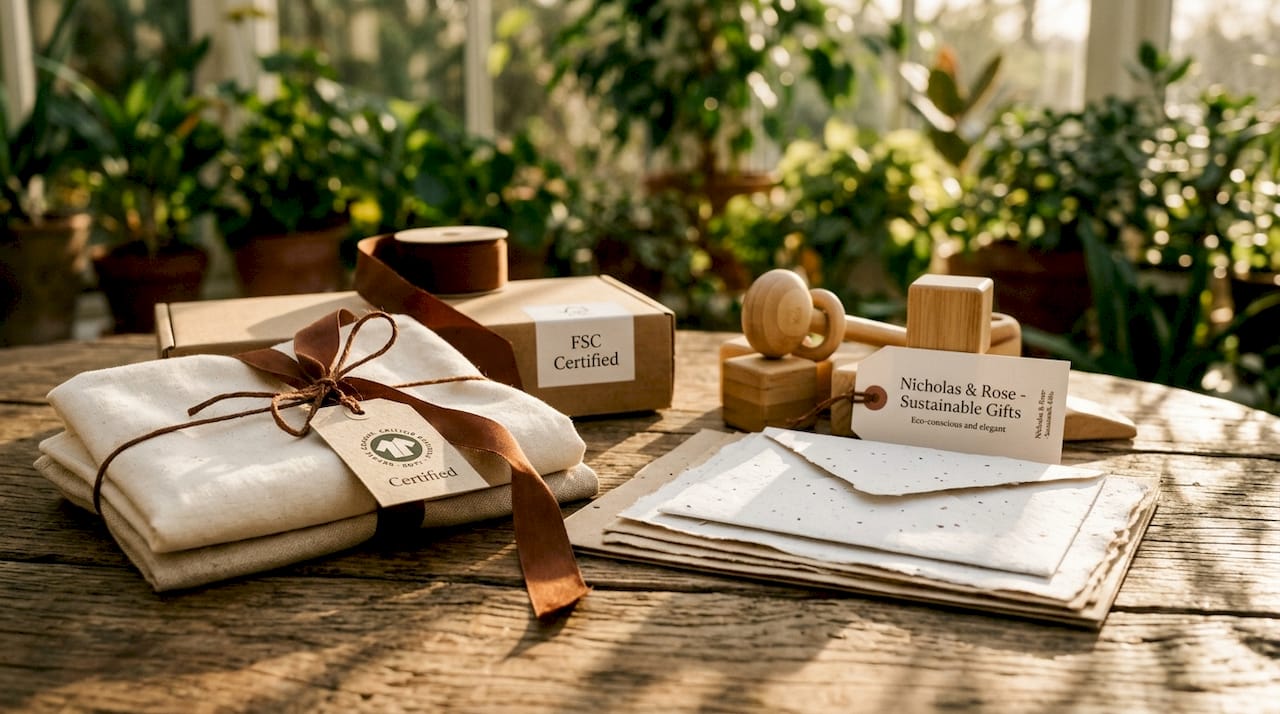
Ethical production is inseparable from environmental sustainability across a gift’s lifecycle. Gifts made under fair wage conditions, with safe working practices and without child or forced labour, carry a moral integrity that deepens their meaning. When you give a personalised keepsake to a new parent, knowing it was crafted with care for both people and planet transforms the gesture entirely.
Certifications and transparency offer the clearest signal of genuine climate-friendliness. Look for:
- GOTS (Global Organic Textile Standard) for organic fibres used in fabric gifts and wraps
- FSC (Forest Stewardship Council) certification for wooden toys and paper-based packaging
- OEKO-TEX Standard 100 for textiles tested free from harmful substances, particularly relevant for baby gifts
- Fair Trade certification as evidence of ethical supply chain practices
- B Corp status as a broader indicator of a brand’s social and environmental accountability
Pro Tip: When purchasing fabric gifts or wraps for newborns, request the material composition in writing. A brand confident in its sustainability credentials will share this without hesitation.
Sustainable materials can reduce a gift’s carbon footprint significantly, making the choice of fabric or fibre one of the most consequential decisions in the gifting process.
How does packaging and wrapping shape a climate-friendly gift?
Packaging is where the most visible and immediate waste occurs in gifting, and it is also where the most immediate change can be made. Conventional wrapping paper, often laminated, glittered, or foil-printed, is neither recyclable nor biodegradable in most cases. For baby shower gifts and newborn presents, mountains of this paper accumulate and vanish into landfill within hours of a celebration, sometimes before the guest of honour has even arrived.
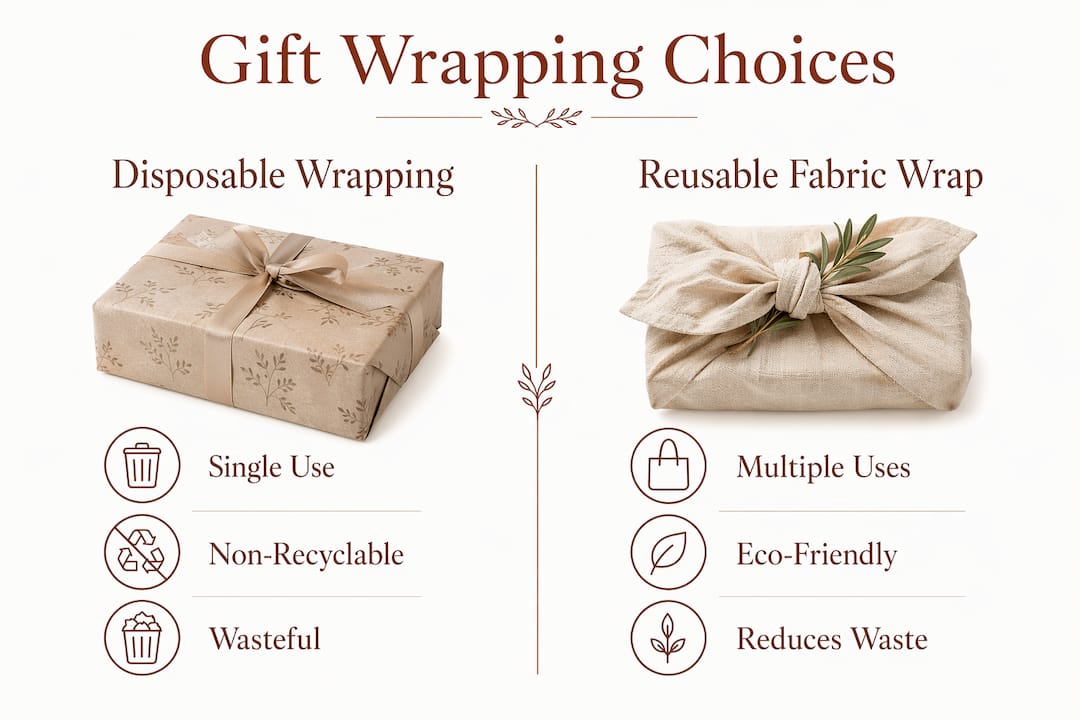
Reusable cloth packaging that can be cleaned and circulated reduces landfill waste compared to conventional single-use wrapping. This is not a minor detail. Packaging design is integral to genuine climate accountability in gifting, and the shift from disposable to reusable is one of the most tangible steps any gift-giver can take.
The following comparison illustrates the difference clearly:
| Feature | Disposable wrapping paper | Reusable fabric gift wrap |
|---|---|---|
| Lifespan | Single use, discarded within minutes | Years of repeated use |
| Material | Often non-recyclable, mixed fibres | Organic cotton or natural fabric |
| Personalisation | Printed, generic | Embroidered with names, dates, motifs |
| End-of-life | Landfill | Reused, repurposed, or composted |
| Emotional value | Momentary | Heirloom quality, kept as a memento |
The Nicholasandrose approach to fabric wrapping transforms the act of unwrapping into something lasting. A wrap embroidered with a baby’s name and birth date does not end up in the bin. It becomes part of the child’s story, folded away with the tenderness of a first memory.
Pro Tip: Choose a fabric wrap in a neutral, timeless design so it can be reused across multiple occasions and gifted onwards as the child grows.
For those wishing to explore sustainable gift wrapping in greater depth, the benefits extend well beyond aesthetics into genuine, measurable waste reduction.
What mindful gifting practices strengthen climate-friendly giving?
Mindful gifting is the deliberate slowing of the gifting impulse, choosing depth over volume and meaning over novelty. Thoughtful gift choices such as homemade items, meaningful experiences, and donations in a recipient’s name reduce excess material waste compared to conventional shopping. For new parents already navigating an abundance of well-meaning presents, a gift chosen with genuine intention carries far more weight than another plastic toy destined for a charity shop.
Mindful gifting improves wellbeing for both giver and receiver by creating meaningful, personalised exchanges without excess consumption. Homemade gifts, experiential presents, and charitable donations promote connection and reduce clutter, which is a particular gift to parents of young children who are already navigating full homes and full hearts.
Practical ways to bring mindful gifting into your practice include:
- Choosing one beautifully made, durable gift rather than several disposable items
- Selecting experiences such as a family membership to a nature reserve or a sensory class for babies
- Making a donation to an environmental charity in the child’s name, paired with a handwritten note
- Regifting thoughtfully, passing on items in excellent condition with honesty and care
- Wrapping gifts in personalised fabric that the family can keep and reuse, removing the need for disposable paper entirely
Choice-based gifting models that allow recipients to select what they truly want reduce the waste created by unwanted items, shifting environmental responsibility to before the gift even reaches the recipient. This principle translates beautifully to personal gifting: ask, listen, and choose with care.
How to identify genuine climate-friendly gifts and avoid greenwashing
Greenwashing is the practice of making misleading environmental claims to attract eco-conscious buyers, and it is particularly prevalent in the gifting sector. The FTC’s Green Guides warn explicitly against vague environmental claims such as “eco-friendly” or “natural” without substantiation. Marketers must use specific, qualified claims supported by scientific evidence. This guidance applies equally to UK consumers evaluating products under the Competition and Markets Authority’s Green Claims Code.
Legal and compliance experts advise scrutinising environmental claims for specificity and substantiation, recommending scepticism towards broad labels. When a baby gift is described simply as “green,” that label tells you almost nothing of value.
To identify genuinely climate-friendly gifts, follow these steps:
- Look for specific claims. “Made from 100% GOTS-certified organic cotton” is verifiable. “Eco-friendly” is not.
- Request or research lifecycle information. Life Cycle Assessments evaluate all stages from raw material extraction through end-of-life, and being recyclable does not automatically imply a lower climate impact.
- Check for third-party certification. GOTS, FSC, OEKO-TEX, and Fair Trade are independently audited and carry genuine weight.
- Examine the packaging. A brand committed to climate-friendly principles will not wrap a sustainable gift in layers of single-use plastic and foil.
- Research the brand’s supply chain transparency. Brands with nothing to hide share their sourcing, manufacturing locations, and environmental policies openly.
Practical tips for choosing and presenting climate-friendly newborn and kids gifts
Selecting a climate-friendly gift for a newborn or young child is an act of quiet optimism, a belief that the choices made today shape the world that child will grow into. The most enduring gifts are those built to last: wooden toys that survive multiple childhoods, organic cotton clothing passed between siblings, and personalised keepsakes that become part of a family’s visual and tactile memory.
Supporting local artisans and ethical brands reduces transport emissions and keeps craft traditions alive. For eco-conscious UK parents, choosing a gift made within the country or region carries both environmental and cultural resonance.
Presentation matters as much as the gift itself. Consider these approaches:
- Wrap the gift in a personalised embroidered fabric wrap that doubles as a keepsake, removing the need for any disposable paper
- Tuck a handwritten card inside explaining the sustainable credentials of the gift, so the recipient understands the thought behind it
- Choose a fabric wrap in a design that complements the nursery aesthetic, making it a decorative piece as well as a practical one
- Encourage recipients to reuse the fabric wrap for future gifts, passing the climate-friendly habit forward
- For zero-waste presentation, use the fabric wrap as the only packaging, secured with a natural cotton ribbon or a sprig of dried botanicals
The Nicholasandrose 2026 newborn and toddler range brings this philosophy to life with wraps designed to be treasured long after the gift inside has been loved and outgrown. You can explore personalised eco-conscious gift wrap ideas to find the presentation that feels most true to your values.
Key takeaways
Climate-friendly gifting is defined by its attention to the full lifecycle of a gift, from the materials chosen to the packaging used, making reusable, personalised fabric wrapping one of the most immediate and meaningful changes any gift-giver can make.
| Point | Details |
|---|---|
| Lifecycle thinking | Evaluate gifts across sourcing, manufacture, packaging, transport, and end-of-life, not just the item itself. |
| Material choices | Prioritise organic cotton, bamboo, and FSC-certified wood, supported by third-party certifications such as GOTS and OEKO-TEX. |
| Reusable wrapping | Replace disposable paper with personalised fabric wraps that become heirloom keepsakes rather than landfill waste. |
| Avoiding greenwashing | Seek specific, substantiated claims and lifecycle data rather than trusting broad labels like “eco-friendly” or “natural.” |
| Mindful intention | Choose one meaningful, durable gift over several disposable ones, and present it with care and personalisation. |
Why I believe the wrap matters as much as the gift
When I think about the newborn gifts I have given and received over the years, the ones that linger in memory are rarely the most expensive. They are the ones that arrived with a sense of intention: wrapped in something beautiful, chosen with knowledge of the family’s values, and made to last beyond the afternoon of the celebration. The wrapping paper, by contrast, is a ghost. It exists for a moment of theatre and then disappears entirely, often before the guests have finished their tea.
What strikes me most about climate-friendly gifting for babies and young children is that it asks us to think about the child’s future in the very act of celebrating their arrival. A fabric wrap embroidered with a name and a date is not merely packaging. It is a small, tactile record of a moment that mattered. Parents keep these things. They fold them into memory boxes, drape them over cot rails, and bring them out years later with a softness in their eyes.
The challenge I hear most often is that sustainable options feel harder to find or more costly. My honest experience is that the cost per use of a reusable fabric wrap is a fraction of the paper it replaces over a lifetime of gifting. The difficulty is not really cost. It is habit. Once you give a gift wrapped in fabric for the first time and see the recipient’s face when they realise the wrap itself is part of the present, the habit forms itself.
— Helen
Discover Nicholasandrose’s reusable fabric gift wraps
Nicholasandrose creates personalised reusable fabric gift wraps designed to transform the way you celebrate new arrivals and young children. Each wrap is crafted from natural fabric and can be embroidered with a name, birth date, or bespoke motif, making it a lasting memento rather than a fleeting gesture. The 2026 newborn and toddler range brings fresh designs suited to the earliest chapters of a child’s life, presented with the quiet elegance that climate-conscious gifting deserves. Explore the full collection and discover personalised fabric wraps that honour both the child and the world they are growing into.
FAQ
What is climate friendly gifting in simple terms?
Climate-friendly gifting means choosing and presenting gifts that minimise environmental harm across their entire lifecycle, from the materials used to make them through to how they are wrapped and eventually disposed of or reused.
Are reusable fabric wraps genuinely more sustainable than wrapping paper?
Reusable fabric wraps reduce landfill waste significantly because they replace single-use paper that is often non-recyclable. A single fabric wrap used repeatedly over years carries a far lower environmental footprint than the paper it replaces.
How do I know if a baby gift is truly eco-friendly and not greenwashing?
Look for specific, third-party certifications such as GOTS, OEKO-TEX, or FSC rather than vague labels. The FTC’s Green Guides confirm that broad claims without substantiation are considered deceptive marketing.
What makes a newborn gift climate-friendly beyond the material?
A newborn gift is climate-friendly when it is durable, repairable, and presented in reusable packaging. Lifecycle considerations include transport distance, ethical production, and whether the item can be passed on or composted at end of life.
Can personalised gifts still be sustainable?
Personalised gifts are among the most sustainable options because they are kept rather than discarded. An embroidered fabric wrap or engraved wooden keepsake carries emotional value that extends its life far beyond that of a generic, disposable alternative.
Recommended
- Eco-conscious gifting for UK parents: sustainable choices – Nicholas & Rose Limited
- Eco-friendly Christmas wrap: Curated, reusable family solutions – Nicholas & Rose Limited
- Personalisation in Gifting: Creating Keepsakes for Eco-Conscious Famil – Nicholas & Rose Limited
- Why sustainable materials for gifts cut 70% carbon footprint – Nicholas & Rose Limited