

How to teach eco gifting at baby showers and birthdays
Teaching eco gifting means giving guests a clear, repeatable plan before the event even begins. Add a short note to your invitation, bring one beautiful example gift wrapped in reusable fabric, and run a two-minute demonstration on the day. That is the whole framework. Three immediate actions make it real:
- Add an invitation line such as: “We’re celebrating sustainably — reusable wraps, heirloom gifts, and experiences warmly welcomed.”
- Place one personalised fabric-wrapped gift on the gift table as a visual anchor guests can touch and admire.
- Offer a one-sentence guest script: “I’d love to try eco gifting — could you show me how the fabric wrap works?”
Key takeaways
Teaching eco gifting at baby showers and children’s birthdays works best when hosts model the behaviour, provide guests with a short script, and use a personalised reusable wrap as a tangible demonstration piece.
| Point | Details |
|---|---|
| Invitation wording | Add one warm, specific line about sustainable gifts to every invitation, two weeks before the event. |
| Demo on the day | Unwrap one fabric-wrapped gift yourself first; guests learn by watching, then doing. |
| Guest script | Give guests a single sentence to ask questions: “Could you show me how the fabric wrap works?” |
| Activity station | A swap table or wrap-it challenge takes under 15 minutes to run and makes eco gifting memorable. |
| Nicholasandrose wraps | Order personalised embroidered cotton wraps at least three weeks ahead for UK delivery and embroidery. |
Table of Contents
- Why eco gifting matters — and what to tell your guests
- How to teach eco gifting: a step-by-step plan for hosts
- Sustainable gift ideas for baby showers and children’s birthdays in the UK
- How to demo reusable fabric wrapping at your event
- Activities that make eco gifting tangible for children and guests
- Ordering timeline, budgeting and polite communications
- Helen’s note on teaching eco gifting with fabric wraps
- Personalised reusable fabric wraps from Nicholasandrose
- Sources
Why eco gifting matters — and what to tell your guests
The case for sustainable gifting is not about guilt; it is about giving things that last. Conventional wrapping paper, ribbons, and single-use packaging are typically discarded within minutes of a gift being opened, often before a newborn has even come home. Circular gifting reframes the act entirely: choose items that stay in use, can be repaired or repurposed, and arrive without disposable packaging.
For new parents, the emotional argument carries equal weight. A personalised keepsake or a reusable fabric wrap becomes a memento of the occasion rather than landfill by teatime. Guests who understand this shift from excess to intention tend to embrace it warmly, particularly when the host frames it as a celebration of thoughtfulness rather than a lecture on waste. Sharing the eco values behind UK family gifting can help guests feel included rather than corrected.
How to teach eco gifting: a step-by-step plan for hosts
A host who models the behaviour teaches it more effectively than any handout. Follow this sequence on event day:
- Set the scene two weeks before. Send invitations with a brief, warm note about sustainable gifting preferences. Keep the tone light: “We’d love gifts that grow with baby — experiences, heirlooms, and reusable wraps are our favourites.”
- Welcome diverse guests graciously. Open with: “Thank you all for being here. We’re celebrating with a little eco twist today — there’s no pressure, just an invitation to try something beautiful.”
- Model the wrap first. Unwrap the demonstration gift yourself, folding the fabric neatly and explaining it will be reused as a storage cloth or nursery keepsake.
- Invite participation. Ask one or two willing guests to wrap a small item at the demonstration table while others watch.
- Coach gently, not prescriptively. If a guest arrives with conventional wrapping, receive it with equal warmth. You might say: “How lovely — and we’ll repurpose this paper for our craft station later.”
- Close with a thank-you that reinforces values. Send a follow-up note mentioning how the fabric wrap is now living in the nursery, making the lesson tangible and personal.
Pro Tip: Frame eco gifting as a gift to the parents, not a rule for guests. Phrases like “less clutter, more memory” land far better than environmental statistics at a celebration.
When sourcing gifts, the five-step framework of understanding the recipient, choosing sustainable materials, favouring minimal packaging, supporting local makers, and considering experiential gifts gives guests a checklist they can genuinely use.
Sustainable gift ideas for baby showers and children’s birthdays in the UK
Categories that work beautifully for newborns and toddlers, with UK sourcing notes:
- Heirloom toys. Wooden rattles, hand-knitted animals, and Montessori-style stacking sets from UK makers such as those found at local craft fairs or ethical toy shops. Look for FSC certification or Fair Trade labels when verifying sustainability claims.
- Practical reusables. Organic muslin cloths, beeswax wraps for the kitchen, or bamboo feeding sets. These are widely available from UK independent retailers at affordable prices.
- Experiences. A baby sensory class voucher, a toddler pottery session, or a family National Trust membership. Experiential gifts create memories without material clutter, and many UK experience providers offer digital vouchers with zero packaging.
- Secondhand and vintage. Charity shops such as the NCT’s nearly-new sales or local Facebook Marketplace groups often carry gently used nursery items in excellent condition. Secondhand and vintage choices sit at the heart of circular gifting.
- Personalised keepsakes. An embroidered fabric wrap, a hand-stamped memory box, or a custom illustrated print. These carry lasting sentimental value and are considered meaningful keepsakes. For eco-conscious keepsake ideas, personalisation transforms a practical item into a family heirloom.
For hosts suggesting budgets, a gentle note on the invitation such as “gifts under £20 are always welcome” removes financial pressure and opens the door to secondhand and experiential options.
How to demo reusable fabric wrapping at your event
The furoshiki method, a Japanese cloth-wrapping tradition, is the most teachable technique for a group setting. Here is a simple demo routine:
- Gather materials. One square of fabric (45cm for a book, 70cm for a toy, 90cm for a larger gift), the gift, and a small embroidery tag or label if personalised.
- Place the gift diagonally in the centre of the fabric, roughly one-third of the way from one corner.
- Fold the nearest corner up and over the gift, tucking it snugly underneath.
- Bring the opposite corner up and over, then tie the two remaining corners in a secure knot at the top.
- Adjust the drape so the fabric sits evenly, and display the embroidered name or date facing outward.
| Fabric size | Typical use | Wash and care |
|---|---|---|
| 45cm square | Book, small toy | Gentle machine wash, air dry |
| 70cm square | Medium toy, clothing set | Gentle machine wash, air dry |
| 90cm square | Large gift, hamper | Hand wash or delicate cycle |
A personalised embroidered wrap, with a baby’s name and birth date stitched into the cloth, does something no paper wrap can: it becomes a keepsake the family keeps. Parents reuse these as storage pouches, cot blankets, or wall decorations, meaning the wrap outlives the occasion by years. The eco gift wrapping workflow from Nicholasandrose walks through this process in detail for parents who want to practise before the event.
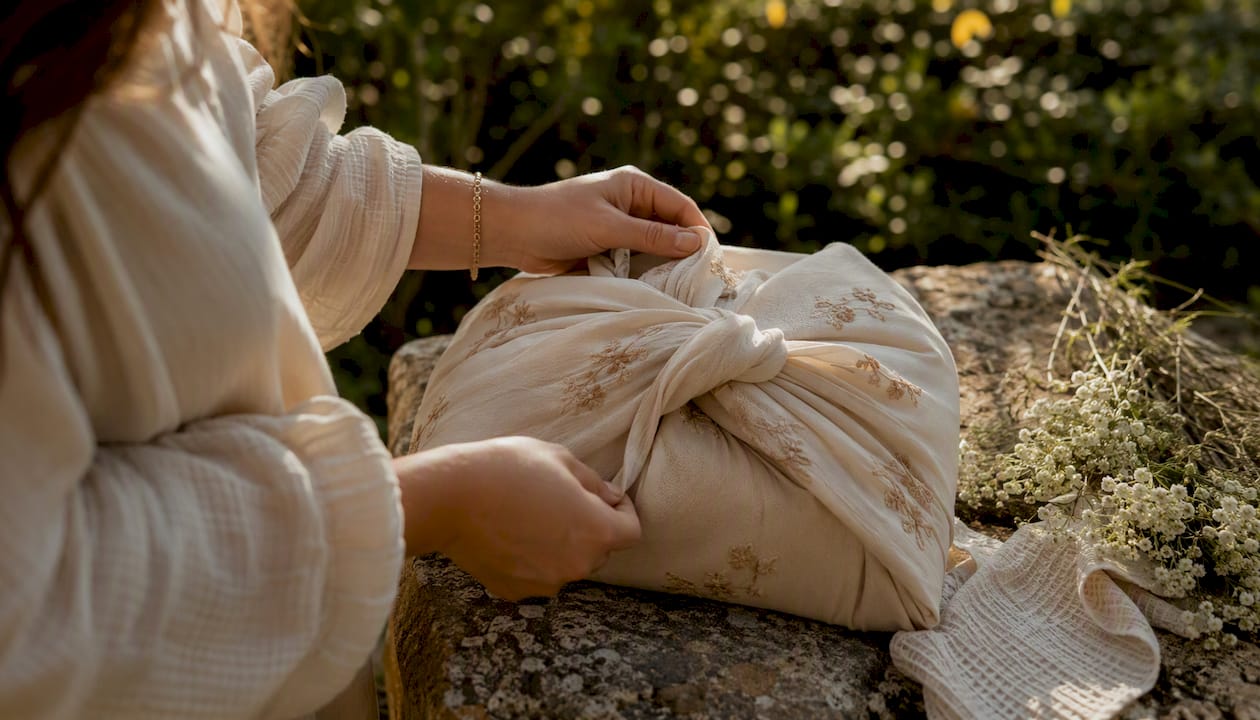
Pro Tip: Lay the wrapped gift on a wooden tray or linen cloth for the unboxing moment. The tactile staging makes the fabric wrap feel like part of the gift itself, not just its container.
Activities that make eco gifting tangible for children and guests
Running one or two short stations keeps the teaching light and the atmosphere festive:
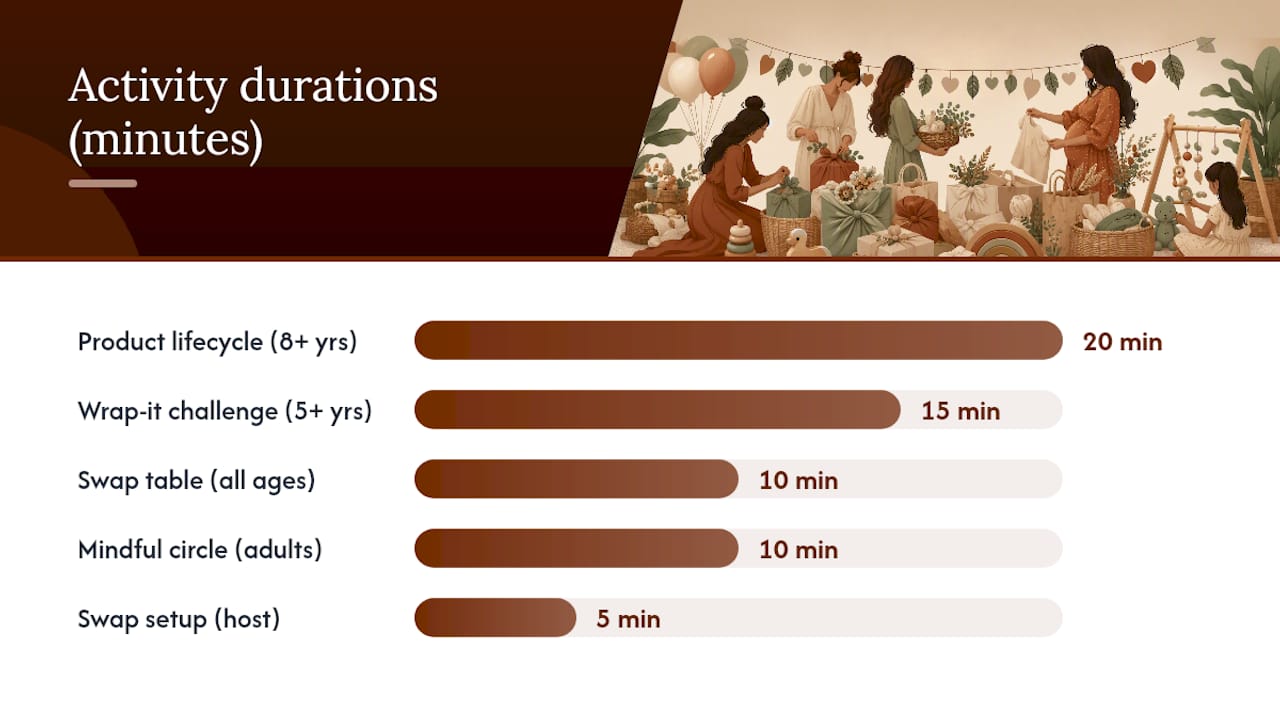
- The swap table (10 minutes, all ages). Guests bring one small preloved item and take one home. Label the table “Give one, take one.” No materials needed beyond a tablecloth and labels.
- Wrap-it challenge (15 minutes, ages 5 and up). Set out fabric squares, ribbons, and a selection of small objects. Guests race to wrap their item using only the fabric, no tape or paper. The reusable gift traditions guide offers creative variations on this format.
- Product lifecycle matching (20 minutes, ages 8 and up). Print simple cards showing a toy’s journey from raw material to landfill versus repair and reuse. Children match stages in order. This mirrors the classroom product lifecycle activity from Gifting Sense, which also includes a DIMS (Does It Make Sense?) scoring tool children can use to evaluate whether a purchase is worth making.
- Mindful buying circle (10 minutes, adults). A facilitated two-minute conversation: “Before buying, ask: will this be used in a year? Can it be repaired? Does it come without packaging?” Simple, memorable, and repeatable at home.
For hosts short on time, the swap table alone takes five minutes to set up and generates more conversation than any printed guide.
Ordering timeline, budgeting and polite communications
Lead with the most time-sensitive fact: order personalised fabric wraps at least three weeks before your event to allow for embroidery, quality checks, and UK delivery. For peak seasons such as December or spring bank holidays, extend that to four to five weeks.
| Item type | Lead time | Approximate cost band |
|---|---|---|
| Personalised embroidered wrap | 3–5 weeks | £25 |
| Standard reusable fabric wrap | 1–2 weeks | £12 |
| Experience voucher (digital) | Same day | £15 |
| Secondhand/vintage gift | Variable | £5 |
For polite reminders, add a line to your RSVP page: “We’re keeping things sustainable — if you’d like gift inspiration, our wishlist focuses on experiences, reusables, and personalised keepsakes.” This sets expectations without prescribing.
If a guest arrives with a conventional gift, receive it graciously. A quiet “Thank you so much — we’ll find a lovely use for the paper at our craft station” honours their intention while keeping the event’s spirit intact. Unused wrapping paper can be repurposed for children’s art activities or donated to a local school.
Helen’s note on teaching eco gifting with fabric wraps
Fabric wrapping is the single most effective teaching prop I have encountered for eco gifting at baby showers and children’s birthdays. When guests can touch the cloth, tie the knot themselves, and see a name embroidered into the weave, the idea of reusable gifting stops being abstract and becomes something they want to take home. The Nicholasandrose newborn and toddler range for 2026 was designed with exactly this moment in mind: a wrap that is beautiful enough to keep, practical enough to reuse, and personal enough to become part of a family’s story. If you are planning a demonstration at your next event, I would encourage you to try one as your centrepiece gift to showcase eco gifting.
Personalised reusable fabric wraps from Nicholasandrose
For hosts who want a ready-made demonstration piece and a gift that endures long after the celebration, Nicholasandrose offers personalised luxury cotton fabric wraps with custom embroidery, sized for newborns through to toddlers. A wrap embroidered with a baby’s name and birth date arrives as both packaging and keepsake, shipped to UK addresses.
The Golden Celestial Star wrap is a particularly lovely choice for a newborn gift: its warm, luminous pattern pairs with embroidered personalisation to create something parents genuinely treasure. The full Baby & Beyond milestone collection covers a range of patterns, sizes, and personalisation options. Order at least three weeks ahead for embroidery, and visit the collection page to choose your fabric, size, and thread colour.
Sources
- The Art of ‘Circular Gifting’: How to Give Presents That Don’t Create Waste – EcoGrowthHub
- Eco‑Conscious Gift Giving: Ideas for Sustainable Presents - Tweedot
- In Classroom Earth Day Activities - Gifting Sense®
- Sustainable Gifting 101: Thoughtful Choices, Greener Future
- Sustainable Gifting: 5 Easy Steps to Eco-Friendly Gifts
Recommended
- The role of gifting in sustainability for parents – Nicholas & Rose Limited
- Personalisation in Gifting: Creating Keepsakes for Eco-Conscious Famil – Nicholas & Rose Limited
- Eco-conscious gifting for UK parents: sustainable choices – Nicholas & Rose Limited
- The role of eco values in gifting for UK families – Nicholas & Rose Limited