

Modern holiday wrap: sustainable gifting for families
Gift wrap has become synonymous with waste in many households, particularly when celebrating the arrival of a newborn or a toddler’s birthday. Colourful paper often ends up in the bin before the baby even comes home from hospital. Modern holiday wrap challenges this throwaway culture by offering sustainable, reusable alternatives that can be personalised and treasured as keepsakes. These fabric-based wrapping solutions combine environmental responsibility with elegant presentation, making them ideal for eco-conscious parents and gift-givers across the UK. This guide explores what modern holiday wrap truly is, how it compares to traditional options, and practical ways to incorporate it into your celebrations.
Table of Contents
- Key takeaways
- Understanding modern holiday wrap: eco-friendly and personalised options
- Comparing modern holiday wrap to traditional gift wrap
- Practical ways to use and personalise modern holiday wrap for newborns and toddlers
- Care and sustainability benefits: extending gift wrap life and reducing waste
- Explore luxury sustainable gift wrap options for your milestones
- Frequently asked questions
Key Takeaways
| Point | Details |
|---|---|
| Sustainable fabric wraps | Modern holiday wrap uses reusable fabrics such as cotton, linen and silk instead of disposable paper to cut waste. |
| Personalised keepsakes | Wraps can be personalised with embroidered names, birth dates or messages to create a lasting keepsake. |
| Reusable and versatile | Fabric wraps are designed for multiple uses, washing clean between celebrations and offering versatile sizes for tiny booties to larger gifts. |
| Lower environmental impact | Compared with traditional wrapping paper, modern holiday wraps reduce waste by enabling dozens of uses and avoiding coatings that are not recyclable. |
Understanding modern holiday wrap: eco-friendly and personalised options
Modern holiday wrap represents a shift towards sustainable gift presentation using reusable materials rather than disposable paper. At its core, this wrapping approach uses high-quality fabrics such as cotton, linen, and silk styled as furoshiki wraps or fabric squares that can be folded and tied in various ways. These wraps are designed to be used repeatedly, washing clean after each occasion and maintaining their beauty across multiple celebrations.
The materials chosen for modern wrap prioritise both sustainability and tactile appeal. Natural fibres feel soft against delicate newborn items and provide a luxurious presentation that elevates the gift-giving experience. Modern holiday wraps often use reusable fabrics such as furoshiki, reducing waste and adding personal style. These wraps come in patterns specifically designed for baby showers, first birthdays, and milestone celebrations, featuring gentle colours and whimsical prints that suit children’s occasions.
Personalisation transforms these wraps from simple coverings into meaningful keepsakes. Parents can add embroidered names, birth dates, or special messages that make each wrap unique to the child and occasion. This personal touch means the wrap itself becomes part of the gift, something families treasure long after the celebration ends. The wrap might later serve as a comfort blanket, wall hanging in the nursery, or cherished memento stored with other baby keepsakes.
Key features of modern holiday wrap include:
- Washable fabrics that maintain colour and texture through multiple uses
- Designs specifically created for children’s milestones and celebrations
- Versatile sizes accommodating everything from tiny booties to larger toys
- Natural materials free from harmful chemicals or synthetic coatings
- Elegant presentation that rivals or exceeds traditional gift wrap aesthetics
Pro Tip: Choose wraps in neutral tones or timeless patterns that work across multiple occasions, maximising their reusability and ensuring they suit various gift recipients throughout the year.
Comparing modern holiday wrap to traditional gift wrap
Traditional wrapping paper dominates gift-giving occasions, yet its environmental cost remains substantial. Most conventional wrap contains plastic coatings, metallic finishes, or glitter that render it non-recyclable. Traditional wrapping paper contributes significantly to landfill waste due to single-use and often non-recyclable coatings. After a single unwrapping session, this paper heads straight to the bin, contributing to the millions of tonnes of waste generated during holiday seasons and celebrations.
Modern holiday wrap operates on entirely different principles. Fabric wraps are designed for longevity, with proper care extending their lifespan to dozens or even hundreds of uses. This durability fundamentally changes the economics and environmental impact of gift presentation. Where traditional paper requires constant repurchasing, a quality fabric wrap represents a one-time investment that serves families for years.
The comparison becomes particularly stark when considering children’s celebrations. Baby showers and toddler birthdays often involve multiple gifts, each traditionally wrapped in disposable paper. Switching to reusable fabric wraps for these occasions eliminates recurring waste whilst adding a coordinated, elegant aesthetic to the celebration. The wraps can be collected after gift opening and redistributed to guests or saved for future family occasions.
| Factor | Traditional Paper | Modern Fabric Wrap |
|---|---|---|
| Material | Virgin or recycled paper with coatings | Natural fabrics like cotton or silk |
| Waste generated | Complete disposal after one use | Zero waste with proper care |
| Reusability | None, single-use only | Dozens to hundreds of uses |
| Cost over 5 years | £50-75 for regular purchasing | £30-50 initial investment |
| Aesthetic appeal | Varies, often gaudy or juvenile | Sophisticated, timeless designs |
| Recyclability | Often non-recyclable due to coatings | Fully biodegradable at end of life |
Emotional value differs significantly between the two approaches. Traditional paper is torn and discarded, creating a brief moment of excitement followed by immediate disposal. Fabric wraps become part of the gift narrative, with their beauty and personalisation adding layers of meaning. Recipients appreciate the thoughtfulness of choosing sustainable options, and children can later understand the environmental values their family prioritises.
Key advantages of modern wrap include:
- Elimination of recurring purchases and storage of bulky paper rolls
- Reduction in household waste during celebration seasons
- Enhanced gift presentation that feels more intentional and special
- Educational opportunities to teach children about sustainability
- Financial savings accumulating over years of reuse
Pro Tip: Calculate your annual spending on wrapping paper and compare it to investing in a collection of quality fabric wraps that will serve you for years, making the economic case clear alongside environmental benefits.
Practical ways to use and personalise modern holiday wrap for newborns and toddlers
Selecting appropriate fabric wraps for baby occasions requires consideration of colour, pattern, and size. Soft pastels work beautifully for newborn gifts, whilst brighter primary colours suit toddler celebrations. Look for prints featuring gentle animals, stars, clouds, or botanical designs that align with nursery aesthetics. Size matters too, with smaller wraps perfect for clothing or books and larger squares accommodating toys or gift sets.
Personalised gift wrap enhances the gifting experience by adding meaningful touches whilst supporting sustainability. Embroidery offers the most permanent personalisation, with names, dates, or short messages stitched directly onto the fabric. This transforms the wrap into a keepsake that parents treasure alongside baby books and first outfits. Fabric markers provide a simpler alternative for those less confident with needlework, allowing hand-drawn designs or messages that add personal charm.
Wrapping delicate baby items requires gentle handling and secure folding techniques. The furoshiki method offers multiple approaches suited to different gift shapes:
- Place the gift diagonally in the centre of the fabric square
- Bring two opposite corners up and over the gift, smoothing the fabric gently
- Tie these corners in a secure knot above the gift centre
- Gather the remaining corners and tie them decoratively or tuck them under the first knot
- Adjust the fabric folds to create an aesthetically pleasing presentation
For irregularly shaped items, the bundle wrap works effectively. Gather all four corners above the gift and tie them together, creating a pouch effect that secures the contents whilst looking charming. This method particularly suits soft toys or clothing sets that lack rigid structure.
Creative reuse extends the life and value of gift wraps beyond their initial purpose. After unwrapping, these beautiful fabrics can serve multiple functions:
- Frame smaller wraps as nursery wall art celebrating the child’s birth or milestones
- Use larger wraps as play mats or picnic blankets for outdoor family activities
- Transform wraps into cushion covers that coordinate with nursery decor
- Create bunting by cutting wraps into triangles and stringing them together
- Store the wrap with other keepsakes in the baby memory box
Pro Tip: Attach a small card to the wrapped gift explaining the wrap’s reusability and suggesting ways to reuse gift wrap after opening, encouraging recipients to embrace sustainable practices and extending the educational impact of your gift.
Care and sustainability benefits: extending gift wrap life and reducing waste
Proper care ensures fabric wraps maintain their beauty and functionality across years of use. Most natural fabric wraps tolerate gentle machine washing, though hand washing in cool water preserves colours and fibres more effectively. Use mild, eco-friendly detergent without harsh chemicals or brighteners that might damage delicate prints or embroidery. After washing, air dry wraps flat or on a line rather than using a tumble dryer, which can cause shrinkage or weaken natural fibres.
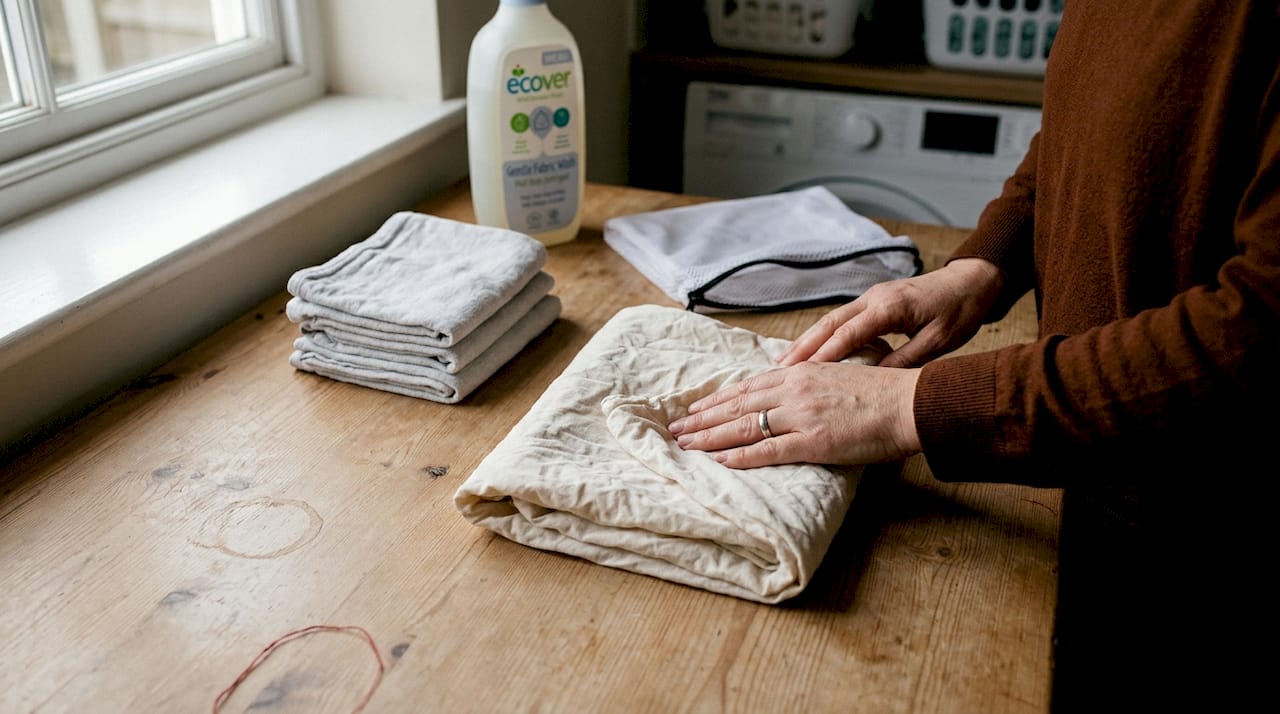
Storage between uses protects wraps from dust, moisture, and damage. Fold wraps neatly and store them in a breathable fabric bag or dedicated drawer. Avoid plastic storage containers that can trap moisture and encourage mildew growth. Cedar blocks or lavender sachets placed with stored wraps deter moths whilst adding a pleasant scent. Organise wraps by size or occasion for easy selection when wrapping gifts.
The environmental mathematics of reusable wrap versus disposable paper reveal compelling benefits. Reusable fabric wraps contribute significantly to waste reduction and have a lower carbon footprint over time compared to disposable paper. Each fabric wrap that replaces 20 uses of traditional paper prevents approximately 2 kilograms of waste from entering landfills. Multiply this across a family’s gift-giving occasions over years, and the impact becomes substantial.
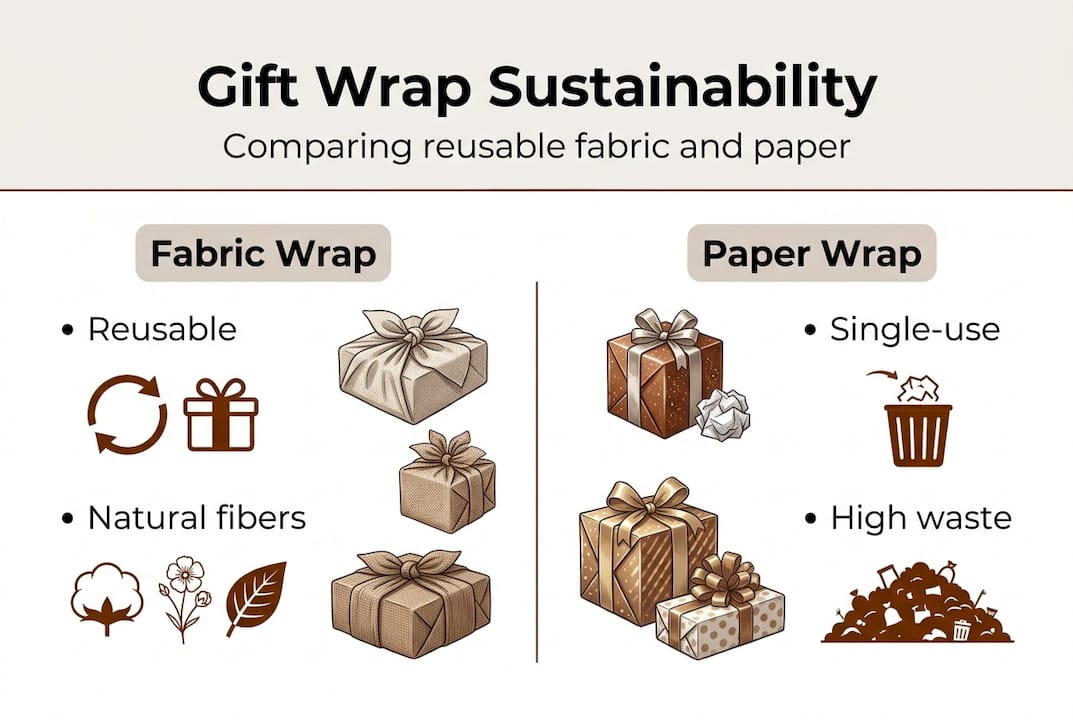
| Metric | Traditional Paper (5 years) | Reusable Fabric (5 years) |
|---|---|---|
| Waste generated | 15-20 kg per household | 0 kg during use period |
| Carbon footprint | 45-60 kg CO2 equivalent | 8-12 kg CO2 equivalent |
| Water usage | 200-250 litres | 30-40 litres |
| Trees required | 0.5-0.7 trees | 0 trees |
| Chemical processing | High (bleaching, coating) | Minimal (natural dyeing) |
Economic benefits accumulate alongside environmental ones. Initial investment in quality fabric wraps costs more than a single roll of paper, but the per-use cost drops dramatically with each reuse. Families who wrap 30-40 gifts annually break even within the first year and enjoy pure savings thereafter. This financial advantage appeals to budget-conscious parents already managing the considerable expenses of raising children.
Integrating wrap reuse into family routines normalises sustainable practices for children. Involve toddlers in selecting which wrap to use for gifts they give to friends, teaching decision-making and environmental awareness. After celebrations, make unwrapping and folding wraps a family activity that reinforces care for belongings and respect for reusable items. These small habits build lifelong values around consumption and waste.
Practical care tips include:
- Inspect wraps after each use for stains or damage requiring immediate attention
- Treat stains promptly with gentle spot cleaning before they set
- Iron wraps on appropriate settings to maintain crisp presentation
- Rotate wraps through your collection to distribute wear evenly
- Repair small tears or loose embroidery immediately to prevent worsening
Pro Tip: Keep a small repair kit with needle, thread, and fabric scissors alongside your wrap collection, making it easy to address minor damage immediately and extending the lifespan of each piece significantly.
Explore luxury sustainable gift wrap options for your milestones
Transitioning to sustainable gift presentation becomes effortless when you discover wraps designed specifically for life’s precious moments. Nicholas & Rose offers premium fabric wraps that combine environmental responsibility with elegant aesthetics perfect for baby showers, newborn arrivals, and children’s milestone celebrations. These baby and beyond milestone gift wraps feature sophisticated designs that honour the significance of early childhood occasions whilst supporting your eco-conscious values.
The baby beyond collection showcases reusable furoshiki wraps in patterns celebrating new life and childhood wonder. Each wrap uses natural fabrics that feel luxurious whilst remaining practical for repeated use. Designs like the golden celestial star reusable wrap bring magic to gift presentation with timeless patterns that suit multiple occasions throughout a child’s early years. Choosing these wraps means your gifts arrive beautifully presented whilst generating zero waste, aligning your actions with your environmental values.
Frequently asked questions
What is the most eco-friendly holiday wrap?
Reusable fabric wraps made from natural fibres like organic cotton or silk represent the most eco-friendly option for holiday gift presentation. These materials biodegrade at end of life and require minimal processing compared to paper production. Their reusability eliminates the recurring environmental cost of manufacturing, transporting, and disposing of single-use wrap. For maximum sustainability, choose wraps dyed with natural plant-based colours rather than synthetic dyes.
How can I personalise holiday wrap for a baby shower gift?
Embroidery offers the most durable personalisation, allowing you to add the baby’s name, birth date, or a meaningful message directly onto the fabric. Fabric markers provide a simpler alternative for hand-drawn designs or messages. You can also attach small cards explaining the wrap’s reusability or include pressed flowers tucked into the folds for natural decoration. Choose wraps in soft colours with baby-appropriate prints like animals, stars, or botanical patterns that suit nursery aesthetics and create a cohesive presentation.
Can modern holiday wrap be reused?
Absolutely, reusability defines modern holiday wrap’s core purpose and primary advantage. Quality fabric wraps withstand dozens to hundreds of uses when properly cared for through gentle washing and appropriate storage. The durability of natural fabrics means they maintain their appearance and structural integrity across years of celebrations. This longevity transforms gift wrap from a disposable commodity into a lasting household item that serves your family repeatedly whilst eliminating waste.
Are modern holiday wraps safe for toddlers?
Modern fabric wraps made from natural materials like cotton or silk are safe for toddlers when you choose options without small detachable decorations that present choking hazards. Natural fibres contain no harmful chemicals found in some traditional wrapping papers with plastic coatings or metallic finishes. Ensure any embellishments are securely attached and supervise young children during unwrapping. The soft texture of fabric wraps is gentler than paper edges, reducing the minor risk of paper cuts during enthusiastic unwrapping sessions.
Recommended
- Designer Gift Wrap: Stylish, Sustainable Christmas Impact – Nicholas & Rose Limited
- Innovative Gift Wrapping: Sustainable Luxury for Christmas – Nicholas & Rose Limited
- Sustainable Christmas Wrapping: A Luxurious Eco Choice – Nicholas & Rose Limited
- Custom Festive Wrap: Sustainable Luxury for Gifting – Nicholas & Rose Limited
- Eco Bathroom Trends 2025: How Americans Are Going Green at Home– Smart Toilets & Bidet Seats | Premium Bidet