

Textile art in wrapping: sustainable & personalised gifts
TL;DR:
- Textile art wrapping uses cloth instead of paper, promoting sustainability and reuse.
- Proper fabric selection and techniques create personalized, lasting gift presentations.
- Reusable fabric wraps form meaningful family keepsakes, reducing waste and enhancing gifting.
Each year, UK households discard mountains of single-use wrapping paper, much of it destined for landfill before the gift inside has even been opened. For eco-conscious parents preparing for baby showers and children’s birthdays, this quiet waste feels increasingly at odds with the values they wish to pass on. Up to 65% of UK shoppers are now actively seeking sustainable alternatives, and textile art in wrapping has emerged as one of the most beautiful, practical responses. This guide explores everything you need to know: the origins, the techniques, the finest materials, and the deeply personal touches that transform a simple wrap into a treasured keepsake.
Table of Contents
- What is textile art in wrapping?
- Choosing materials: fabrics, sizes, and sustainability
- Core wrapping techniques for different shapes
- Personalisation and making textile wrapping special
- Why textile art wrapping is future-proof gifting for families
- Ready to start your textile wrapping journey?
- Frequently asked questions
Key Takeaways
| Point | Details |
|---|---|
| Sustainable solution | Textile art wrapping cuts down on gift wrap waste and can be reused year after year. |
| Versatile and practical | A wide range of gifts can be wrapped beautifully using easy-to-learn folding techniques. |
| Personal and meaningful | Fabrics can be personalised, turning gift wrap into a memorable part of baby showers and birthdays. |
| Safe for children | Soft textiles avoid sharp edges, making them ideal for presents for babies and young children. |
What is textile art in wrapping?
Textile art in wrapping is the practice of using cloth rather than paper to enclose and present a gift, elevating the act of giving into something far more considered and lasting. Where paper is torn away and forgotten, a beautifully folded piece of fabric carries its own quiet elegance, inviting the recipient to pause, admire, and reuse.
The tradition draws most directly from the Japanese art of furoshiki, a centuries-old practice of wrapping objects in a single square of cloth. Far from being a relic, furoshiki has found a devoted following among UK parents who recognise its grace and its wisdom. The philosophy underpinning it, known as mottainai, expresses a deep respect for materials and a genuine reluctance to waste anything of value. It is a sentiment that resonates profoundly with anyone who has watched a roll of glossy paper disappear into a bin bag.
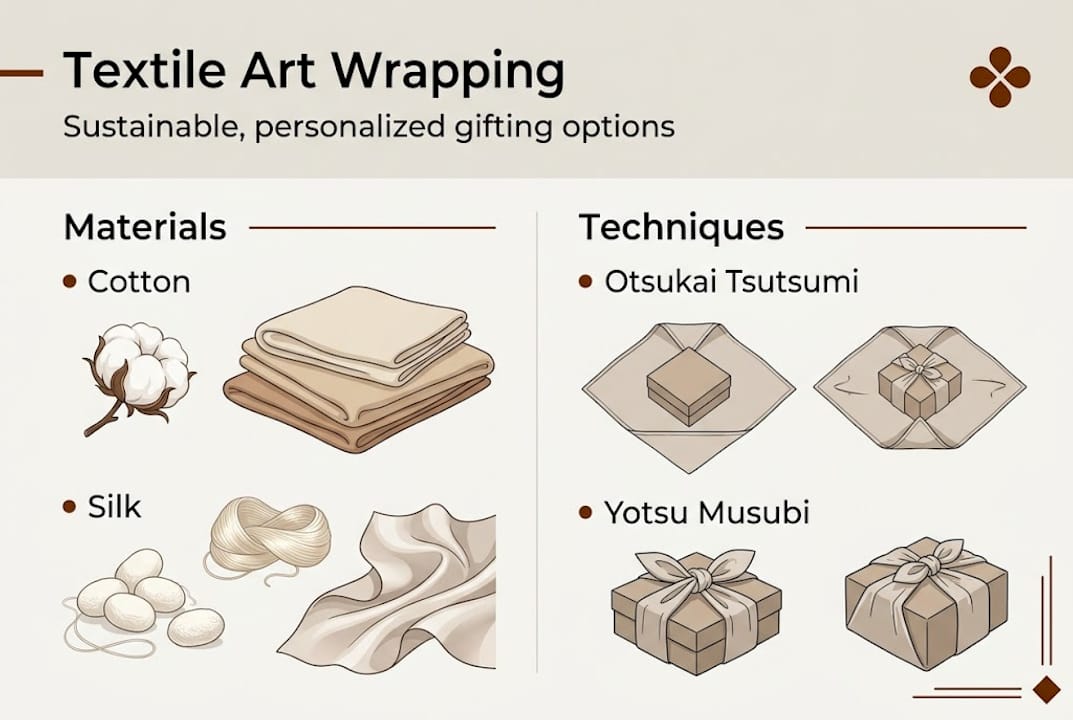
The core furoshiki techniques include Otsukai Tsutsumi for boxes, Yotsu Musubi for pouches, Bin Tsutsumi for bottles, and Hira Tsutsumi for flat items, each one a considered fold that suits a different gift shape. Learning even two or three of these opens up a world of refined presentation.
For elegant fabric gift wrapping that feels both sophisticated and effortless, the key lies in understanding which technique suits which gift. The comparison below offers a clear starting point.
| Technique | Best suited for | Difficulty |
|---|---|---|
| Otsukai Tsutsumi | Boxes and rigid gifts | Beginner |
| Yotsu Musubi | Soft pouches and bundles | Beginner |
| Bin Tsutsumi | Bottles and cylindrical gifts | Intermediate |
| Hira Tsutsumi | Flat items and books | Intermediate |
The environmental case is equally compelling. One furoshiki cloth can replace dozens of rolls of single-use paper across its lifetime, making it one of the most impactful small changes a family can make.
“The gift wrap is not merely a covering. In textile art wrapping, it becomes part of the gift itself, a second present waiting to be discovered.”
For parents curious about the full range of fabric folding techniques, there is a richness of method to explore, each one lending a different mood and character to the presentation.
Choosing materials: fabrics, sizes, and sustainability
Knowing the basic methods, the next step is selecting the right eco-friendly materials and sizes. The fabric you choose shapes everything: the drape of the finished wrap, the crisp hand-feel as it is unfolded, and the longevity that makes reuse genuinely pleasurable.
Common textile wrap fabrics include cotton, linen, silk, and rayon, each available in sizes ranging from 45cm to 105cm to suit gifts from the smallest newborn keepsake to a generous toddler toy. Cotton is the most practical choice for family gifting: it washes beautifully, holds embroidery with precision, and softens with every use. Linen brings a more textural, artisanal quality. Silk offers luminous occasion-worthy elegance. Rayon drapes with a fluid grace that suits looser, pouch-style wrapping.
Sustainable retail packaging increasingly favours these very materials, as brands and consumers alike recognise that cotton, linen, silk, and rayon textile wraps answer the growing demand for responsible gifting without sacrificing beauty.
Choosing the right size:
- 45cm: Ideal for small gifts, jewellery boxes, and newborn mementos
- 70cm: Suits most children’s gift boxes and books
- 90cm: Works well for larger toys and clothing bundles
- 105cm: Perfect for generous gifts or creating a dramatic, flowing presentation
For baby showers and children’s birthdays, cotton wraps in the 70cm to 90cm range offer the most versatility. They are soft enough to feel safe against delicate skin, and robust enough to withstand the enthusiastic unpacking that young children bring to every occasion.
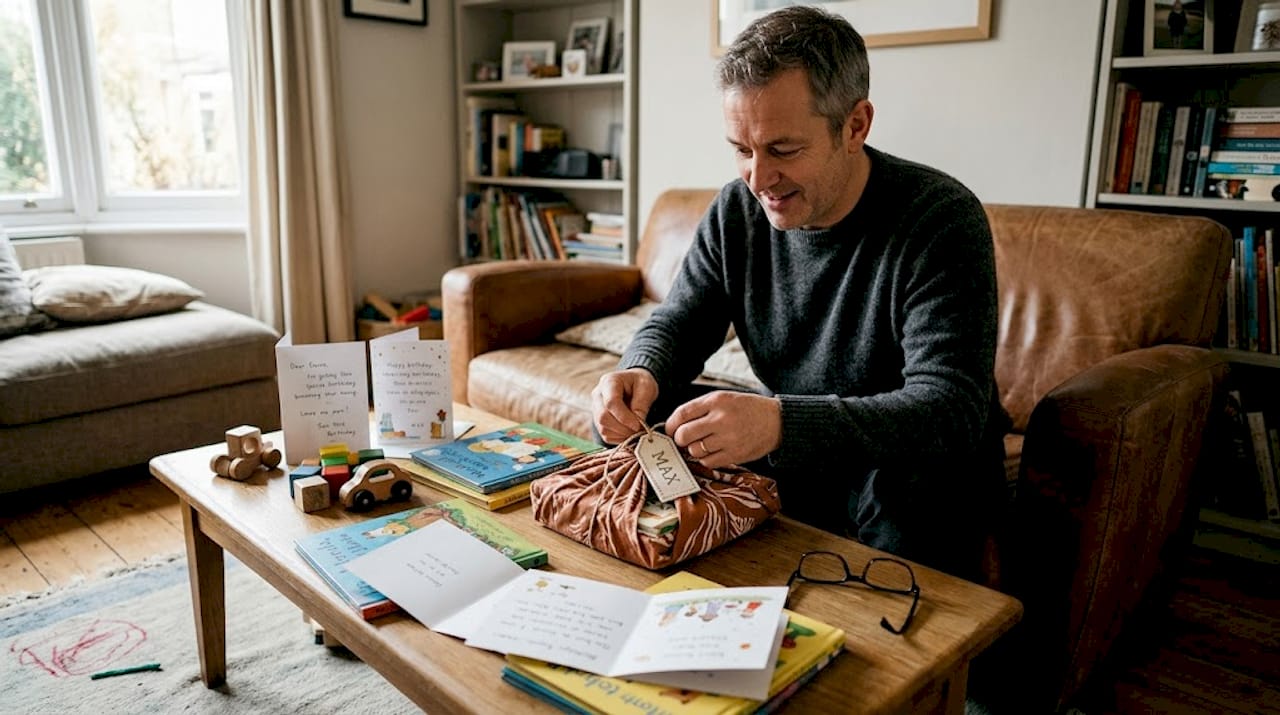
Personalisation elevates the material choice further still. Embroidery transforms a simple cotton square into a bespoke piece, stitching a child’s name, a birth date, or a beloved motif directly into the fabric. This is where the wrap ceases to be packaging and becomes a keepsake, something a family might fold away carefully and bring out again for years to come.
Pro Tip: Before purchasing, hold the fabric against the light. A fine, even weave will accept embroidery threads smoothly and maintain its appearance after repeated washing, ensuring your wrap remains as beautiful on its tenth use as its first.
For guidance on storing fabric wraps so they remain pristine between celebrations, rolling rather than folding prevents permanent creases and keeps edges fresh.
Core wrapping techniques for different shapes
After choosing your materials, it is crucial to master key wrapping methods for every type of gift. Children’s presents arrive in every conceivable shape, from neat square boxes to unwieldy soft toys, and having a technique for each one means you are never caught without a graceful solution.
The four principal furoshiki methods adapt beautifully to the variety of gifts common at baby showers and toddler birthdays. Here is how to approach each one:
- Otsukai Tsutsumi (box wrap): Place the box diagonally at the centre of the fabric. Fold the nearest corner up and over the box, then fold in the side corners neatly. Bring the final corner up and secure with a knot or a ribbon. The result is clean, structured, and deeply satisfying.
- Yotsu Musubi (pouch wrap): Gather the fabric around a soft or loosely shaped gift and tie the four corners together above it in a series of neat knots. This technique suits stuffed animals and clothing particularly well.
- Bin Tsutsumi (bottle wrap): Fold the fabric in half diagonally, place the bottle at one end, and roll it forward. Twist the excess fabric at the neck and tie the two remaining corners together. Elegant for gifting a keepsake bottle or a beautiful baby lotion.
- Hira Tsutsumi (flat wrap): Lay the fabric flat, place the item in the centre, and fold each edge over in sequence, securing with a pin or a simple knot. Ideal for books, flat toys, and framed prints.
For beautiful, crisp results, iron your fabric before wrapping. Smooth cloth folds with far greater precision and the finished presentation carries a polished, considered quality that paper simply cannot replicate.
A single reusable cloth can replace many rolls of single-use wrapping paper across its lifetime, making each wrap a small but meaningful act of environmental care.
Pro Tip: For round or unusually shaped gifts, the Yotsu Musubi technique is your most forgiving friend. Gather the fabric loosely, allowing it to billow softly around the gift, and tie the corners high for a cloud-like, whimsical effect that children adore.
Detailed reusable wrapping instructions and a step-by-step reusable wrap tutorial can guide you through each fold with confidence, even if you are entirely new to textile wrapping.
Personalisation and making textile wrapping special
Wrapping is more than materials and method. It is a canvas for creativity and memories, and nowhere is this more true than in the world of baby and toddler gifting, where every detail carries emotional weight.
Personalisation through embroidery transforms a fabric wrap into something genuinely irreplaceable. A child’s name stitched in soft thread, a birth date worked into a corner, or a meaningful motif chosen with care: these details speak of attention and affection in a way that a printed paper bag never could. Some families choose symbolic patterns: the hemp leaf design, for instance, carries traditional associations with growth and resilience for babies, making it a quietly meaningful choice for a newborn gift.
For baby showers and children’s birthdays, consider these personalisation ideas:
- Embroidered name and birth date for a newborn wrap that doubles as a keepsake
- Favourite animal or character motif stitched onto a toddler birthday wrap
- Family initials worked into a corner for a wrap that passes between generations
- Seasonal or occasion-specific patterns such as stars, florals, or woodland creatures
- Colour palette chosen to complement the nursery for a cohesive, considered gift
Soft cotton wraps are particularly well suited to baby and toddler gifts because they present no sharp edges, no rustling plastic, and no risk of paper cuts for curious small hands. They are gentle to the touch and entirely safe for the youngest recipients, which matters enormously when the gift is being unwrapped in excited, unpredictable company.
“A personalised wrap is not discarded. It is folded, stored, and brought out again, carrying the memory of the moment it was first received.”
The benefits of personalised wraps extend well beyond the occasion itself. Families who begin this tradition find that certain wraps accumulate a gentle patina of meaning, becoming part of the ritual of celebration rather than a footnote to it. That is a kind of value that no roll of paper, however beautifully printed, can offer.
Why textile art wrapping is future-proof gifting for families
Most conversations about sustainable gifting focus on the environmental metrics: paper saved, landfill avoided, carbon reduced. These matter, of course. But we believe the more compelling argument for textile wrapping lies somewhere quieter and more personal.
A beautifully embroidered wrap bearing a child’s name is not packaging. It is the beginning of a family story. It will be folded away after the birthday, brought out again the following year, and perhaps handed down when that child is old enough to wrap gifts of their own. No amount of recycled paper achieves this. Paper, however thoughtfully chosen, is still designed to be destroyed.
We also think the gifting culture around babies and young children deserves more intention. Gifts for newborns are often wrapped and discarded before the baby has even arrived home. The wrap, which cost time and thought to choose, vanishes in seconds. A reusable textile wrap, particularly one that has been personalised with embroidery, changes that dynamic entirely. It asks the recipient to slow down, to notice, and to keep.
This is not merely an eco-conscious choice. It is a more generous one.
Ready to start your textile wrapping journey?
If the idea of gifting something beautiful, lasting, and deeply personal appeals to you, you are already thinking in the right direction. Textile art wrapping asks very little of you in terms of skill, but it returns something remarkable: a gift presentation that outlasts the occasion and carries genuine meaning.
At Nicholas & Rose, our 2026 newborn and toddler range has been designed with exactly this in mind. Each wrap is crafted from premium fabric and can be personalised through embroidery, creating a bespoke keepsake that parents and children will return to long after the wrapping paper has been forgotten. Explore our collection and discover how a single, considered wrap can become one of the most treasured parts of the gift itself.
Frequently asked questions
What types of gifts can be wrapped with textile art?
Textile wrapping suits boxes, bottles, pouches, and even awkward shapes, with different folding techniques adapted to each gift form.
Are fabric wraps really better for the environment?
Yes. One reusable cloth can replace many rolls of single-use wrapping paper and supports the waste-reducing mottainai philosophy of respecting materials.
Can I personalise textile wraps for birthdays or baby showers?
Absolutely. Embroidery, symbolic prints, and carefully chosen fabrics all add a deeply personal touch that makes the wrap as meaningful as the gift inside.
How do I care for fabric wraps so they last?
Iron the fabric before use, choose natural ties, and store wraps flat or rolled to preserve their appearance and maximise longevity across many celebrations.
Recommended
- Personalised Wrap Benefits: Sustainable Luxury Gifting – Nicholas & Rose Limited
- Reusable Fabric Gift Wrap UK - Nicholas & Rose Limited
- Why personalise fabric wraps for eco-conscious gifting – Nicholas & Rose Limited
- Fabric Gift Wrapping Workflow for Personalised Luxury Gifts – Nicholas & Rose Limited
- Ideas for creative gifts in 2026