

What is ethical holiday gifting: a guide for families
TL;DR:
- Ethical holiday gifting involves selecting presents that consider their entire lifecycle impact on people, communities, and the environment.
- Focusing on fair-trade, cruelty-free, and reusable options, it emphasizes meaningful, personalized choices over disposable or superficial gifts.
Ethical holiday gifting is the conscious practice of selecting presents that consider their full lifecycle impact on people, communities, and the planet. It sits at the intersection of conscious consumerism and social responsibility, drawing on frameworks such as the UN Sustainable Development Goals and net-zero emissions targets. For families welcoming a newborn or shopping for young children, this practice carries particular weight. The gifts you choose in those early years shape not only a child’s world but also the values you model for them. Nicholasandrose was founded on precisely this belief: that a gift can be beautiful, personal, and kind to the earth all at once.
What is ethical holiday gifting and why does it matter?
Ethical holiday gifting is defined as choosing presents that consider lifecycle impact on recipients, the environment, and wider communities. That means thinking beyond the moment of unwrapping to ask where a product came from, who made it, and where it will end up.
The practice has grown from a niche concern into a genuine cultural shift. Ethical gifting choices now function as a form of individual activism, influencing market demand for humane, fair-trade, and regenerative products. Each purchase signals to brands what values matter to you.
For parents and gift-givers of young children, the stakes feel even more personal. Babies and toddlers accumulate gifts rapidly, and much of that wrapping paper is discarded before the child is old enough to notice it. Choosing gifts with a purpose, wrapped with care and intention, changes the entire ritual of giving.
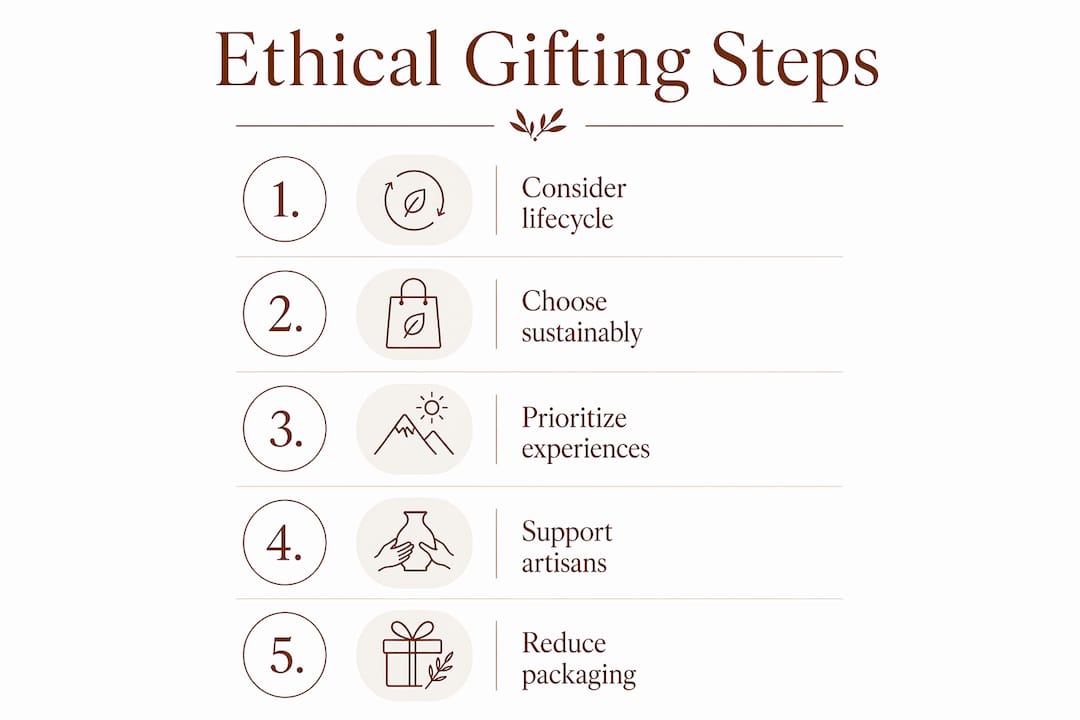
What principles underpin ethical holiday gifting?
Several clear principles guide genuinely ethical gift practices. Understanding them helps you cut through vague marketing language and make choices you feel confident about.
- Fair wages and labour standards. Gifts produced under fair-trade certification guarantee that workers received fair pay and safe conditions. Look for recognised marks such as Fairtrade International or the World Fair Trade Organization label.
- Cruelty-free and vegan options. For gifts involving animal-derived materials, cruelty-free alternatives exist across every category, from soft toys to skincare sets for new mothers.
- Reduced environmental impact. This covers lower carbon emissions during production, minimal or plastic-free packaging, and materials that biodegrade or can be reused.
- Lifecycle accountability. A truly ethical gift considers what happens after it is no longer needed. Durable, repairable, or compostable products score far higher than single-use novelties.
- Supply chain transparency. Brands that publish carbon emission data, labour practices, and circularity initiatives are demonstrably more trustworthy than those offering only vague pledges.
“True sustainable shopping is an ongoing relationship between personal values and purchasing power, not merely buying specific products. Progress matters more than perfection.”
This principle matters because it removes the paralysis of trying to be entirely virtuous at once. Gradual, iterative changes are more sustainable than radical overhauls, both for the planet and for your own wellbeing as a gift-giver.
What are the best ethical gifting strategies for babies and children?
Gifting for newborns and young children offers a genuine opportunity to practise mindful gifting without sacrifice. Children at this age do not need more; they need better.
-
Choose experience over object. A gift of time, such as a voucher for a family day out or a promise of a skill shared, creates lasting memories without generating waste. Experience-based gifts consistently outperform conventional high-cost presents in boosting wellbeing and reducing clutter.
-
Consider secondhand and refurbished goods. High-quality secondhand toys, books, and clothing carry no loss of joy for a baby or toddler. They carry a significantly lower environmental footprint. Many parents find that curated secondhand gifts feel more thoughtful than a brand-new item pulled from a shelf.
-
Invest in personalised, handcrafted gifts. Personalised gifts are rated more valuable by recipients than generic equivalents, regardless of price. A hand-embroidered keepsake, a named blanket, or a bespoke piece of fabric art becomes an heirloom rather than a passing novelty.
-
Rethink the wrapping entirely. Single-use wrapping paper is often discarded before a baby shower ends. Reusable fabric gift wrap with personalised embroidery transforms the packaging itself into a second gift. Nicholasandrose specialises in exactly this: fabric wraps that carry a name, a date, or a tender message, becoming part of the gift rather than landfill.
-
Resist the pressure to overspend. Gift-givers routinely overestimate how much recipients expect to be spent on them. A considered, personal gift at a modest price point lands with far greater warmth than an expensive item chosen in haste.
Pro Tip: When gifting for a newborn, choose items that grow with the child, such as fabric wraps that can be repurposed as a comfort cloth, a play mat cover, or a keepsake. Longevity is the most ethical feature of all.
For a broader view of eco-conscious gifting for parents, the principles above translate directly into everyday choices that accumulate into real environmental change.

How do you spot greenwashing in ethical gifting?
Greenwashing is the practice of making a product appear more environmentally responsible than it truly is. It is widespread in the gifting market, particularly around the holiday season when demand for “eco-friendly” options surges.
Common tactics to watch for include:
- Vague terms such as “natural,” “green,” or “eco” with no supporting evidence or certification.
- Packaging that looks recycled but contains virgin plastic or non-recyclable composite materials.
- Claims of carbon neutrality without publicly available offset methodology or third-party verification.
- Sustainability pages on brand websites that contain aspirational language but no measurable targets or supply chain data.
| Claim type | What to look for instead |
|---|---|
| “Eco-friendly” label | Third-party certification such as Fairtrade, FSC, or GOTS |
| “Natural materials” | Named material origin and production method |
| “Carbon neutral” | Published offset methodology and independent audit |
| “Sustainably sourced” | Supplier names and traceability reports |
Consumers must decode vague claims and verify with third-party certifications. Transparency is the clearest signal of authenticity. Brands that genuinely practise ethical gift practices publish their supply chain data openly and invite scrutiny.
Pro Tip: Before purchasing, search the brand name alongside “sustainability report” or “supply chain transparency.” A brand with nothing to hide will have something to show.
Choosing sustainable gift materials from verified sources is one of the most direct ways to sidestep greenwashing entirely.
How does ethical gifting transform family life for babies and young children?
The benefits of ethical holiday gifting extend well beyond the environmental. For families with babies and young children, the shift towards mindful gifting reshapes the entire emotional experience of the season.
- Less clutter, less stress. Fewer, better gifts reduce the overwhelm that many parents feel after a baby shower or Christmas morning. A curated selection of meaningful items is easier to store, use, and treasure.
- Stronger sentimental value. Personalised, sentimental gifts grounded in empathy create more lasting joy than expensive or generic presents. A fabric wrap embroidered with a child’s name and birth date becomes a keepsake that outlasts any plastic toy.
- Teaching eco-values early. Children absorb values through observation. Incorporating reusable wrapping and choosing durable or handmade gifts teaches mindful consumption from the very first birthday.
- Modelling conscious consumerism. When children see adults deliberate over choices, favour quality over quantity, and care for the things they own, those habits take root naturally.
| Benefit | How it shows up in family life |
|---|---|
| Reduced waste | Less packaging to dispose of; gifts that last years rather than weeks |
| Emotional resonance | Personalised gifts become keepsakes rather than clutter |
| Eco-values for children | Reusable wrapping becomes a teachable ritual at every celebration |
| Lower financial pressure | Fewer, more considered gifts reduce overspending and guilt |
The role of eco values in gifting for UK families is not abstract. It plays out in the small, repeated choices that define how a household relates to consumption, celebration, and care.
Key takeaways
Ethical holiday gifting is the most meaningful gift you can give: one that honours the recipient, respects the maker, and leaves the world a little lighter.
| Point | Details |
|---|---|
| Define before you buy | Ethical gifting considers full lifecycle impact, not just the moment of giving. |
| Prioritise personalisation | Personalised and handcrafted gifts are rated more valuable than expensive generic ones. |
| Verify sustainability claims | Look for named third-party certifications; reject vague “eco” labels without evidence. |
| Rethink the wrapping | Reusable fabric wrap with embroidery becomes a second gift and a lasting keepsake. |
| Start gradually | Small, consistent changes to gifting habits create more lasting impact than perfection. |
Why I believe ethical gifting matters most in those earliest years
When my first nephew was born, I watched a mountain of pastel-wrapped gifts appear at his baby shower. By the time the last ribbon was cut, the floor was deep in paper destined for the recycling bin. The gifts themselves were lovely. The wrapping was gone before the afternoon was over.
That image stayed with me. The wrapping is often the first thing a child sees, the tactile first impression of a gift. To make it disposable felt like a missed opportunity, a small but telling choice about what we value.
What I have observed since is that the families who shift towards ethical gift practices do not feel deprived. They feel lighter. The gifts they give and receive carry more weight precisely because they were chosen with care. A fabric wrap embroidered with a baby’s name is not just packaging. It becomes a comfort cloth, a keepsake, a story. That is the kind of gift that gets passed down.
My honest advice is this: do not try to overhaul everything at once. Choose one element of your gifting to make more considered this season. Perhaps it is the wrapping. Perhaps it is choosing one secondhand item or one personalised piece over a generic alternative. Green gifting trends show that even small shifts accumulate into something genuinely significant over time. Start there. The rest follows naturally.
— Helen
Gifts that carry meaning: Nicholasandrose for ethical baby gifting
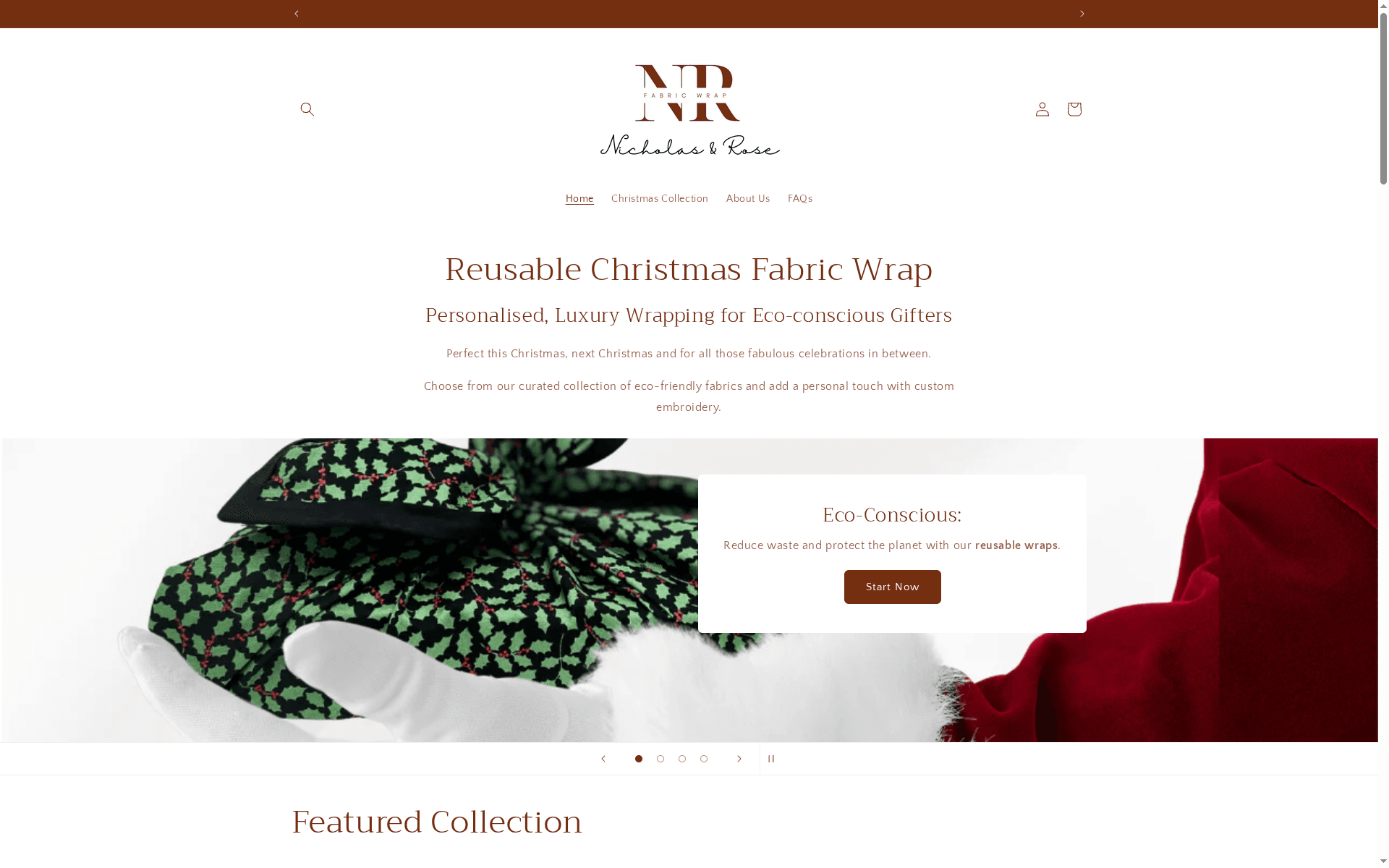
Nicholasandrose was created for exactly this moment: the search for a gift that is beautiful, personal, and kind to the earth. The 2026 newborn and toddler range offers reusable fabric gift wrap that can be personalised through embroidery with a name, a date, or a message close to your heart. The wrap itself becomes the gift, a bespoke keepsake that outlasts any paper and carries the warmth of the occasion long after the day has passed. For baby shower gifts, newborn presents, and children’s celebrations, Nicholasandrose offers a considered alternative to single-use wrapping. Explore the full collection and find a gift worth keeping.
FAQ
What is ethical holiday gifting in simple terms?
Ethical holiday gifting means choosing presents that consider their impact on people, communities, and the environment across their full lifecycle. It prioritises fair-trade, cruelty-free, and low-waste options over convenience or novelty.
Are personalised gifts more ethical than generic ones?
Personalised gifts are rated more valuable by recipients and tend to be kept longer, which reduces waste. A bespoke, handcrafted item such as an embroidered fabric wrap is both more meaningful and more sustainable than a mass-produced alternative.
How do I avoid greenwashing when buying eco-friendly holiday gifts?
Look for named third-party certifications such as Fairtrade, FSC, or GOTS rather than vague labels like “natural” or “green.” Brands with genuine ethical practices publish supply chain data and measurable sustainability targets openly.
What are the best sustainable gift ideas for newborns?
Durable, personalised, or secondhand gifts score highest for sustainability. Reusable fabric gift wrap with embroidered personalisation, such as that offered by Nicholasandrose, serves as both wrapping and keepsake, eliminating single-use paper entirely.
Does ethical gifting have to cost more?
Ethical gifting does not require a higher budget. Experience-based gifts, secondhand items, and personalised handmade presents often cost less than premium branded alternatives while delivering greater emotional value and far less waste.
Recommended
- Guide to sustainable gifting for eco-conscious occasions – Nicholas & Rose Limited
- Why choose reusables for holidays: eco-friendly gifting – Nicholas & Rose Limited
- What is green gifting? A guide for eco-conscious givers – Nicholas & Rose Limited
- The role of eco values in gifting for UK families – Nicholas & Rose Limited