

Why fabric wraps last longer: sustainable gifting that endures
TL;DR:
- Fabric wraps are durable, reusable, and extend beyond single use, reducing waste.
- They offer a tactile, personalized, and long-lasting alternative to paper gift wrapping.
- Choosing fabric wraps reflects eco-conscious values and creates meaningful family gifting traditions.
Picture the scene: a beautifully wrapped gift, ribbons curled to perfection, paper shimmering under the light. Then, within moments of the first excited tug, it is torn, crumpled, and destined for the bin. For eco-conscious parents, this fleeting ritual feels quietly at odds with everything you value. The truth is that eco-luxury wrapping choices have evolved far beyond the throwaway. Fabric wraps, crafted from woven textiles and often personalised through embroidery, offer something paper simply cannot: a life that extends well beyond a single birthday morning or baby shower afternoon.
Table of Contents
- What makes fabric wraps different?
- Paper vs fabric: A side-by-side comparison
- Real-world durability: How long do fabric wraps actually last?
- Sustainable and stylish: Why fabric wraps suit eco-conscious gifting
- What most guides miss about lasting gift wrap
- Ready to upgrade your gifting? Discover sustainable fabric wraps
- Frequently asked questions
Key Takeaways
| Point | Details |
|---|---|
| Fabric outlasts paper | Fabric wraps stay flexible and resist damage, making them longer-lasting than paper. |
| Reusable and eco-friendly | Fabric wraps can be reused for years, reducing waste and environmental impact. |
| Adds meaning to gifts | Fabric wraps help build family traditions and create memorable gifting experiences. |
| Suitable for all occasions | Fabric wraps are versatile for baby showers, birthdays, and any gift-giving moment. |
What makes fabric wraps different?
Fabric wraps are lengths of woven textile, typically cotton or linen, used in place of disposable paper to enclose and present a gift. Where paper is pressed from pulped fibres into flat, brittle sheets, fabric is constructed from interlocking threads that move, flex, and recover. That distinction matters enormously when a gift is being passed between hands, jostled in a bag, or handled by small, enthusiastic fingers.
Cotton, the most common choice, offers a soft, yielding drape that conforms naturally to the contours of a gift without splitting. Linen brings a crisper hand-feel and a refined, slightly textural surface that catches the light beautifully. Both materials share a woven architecture that is fundamentally more resilient than paper’s layered fibres, which are prone to tearing along any line of stress.
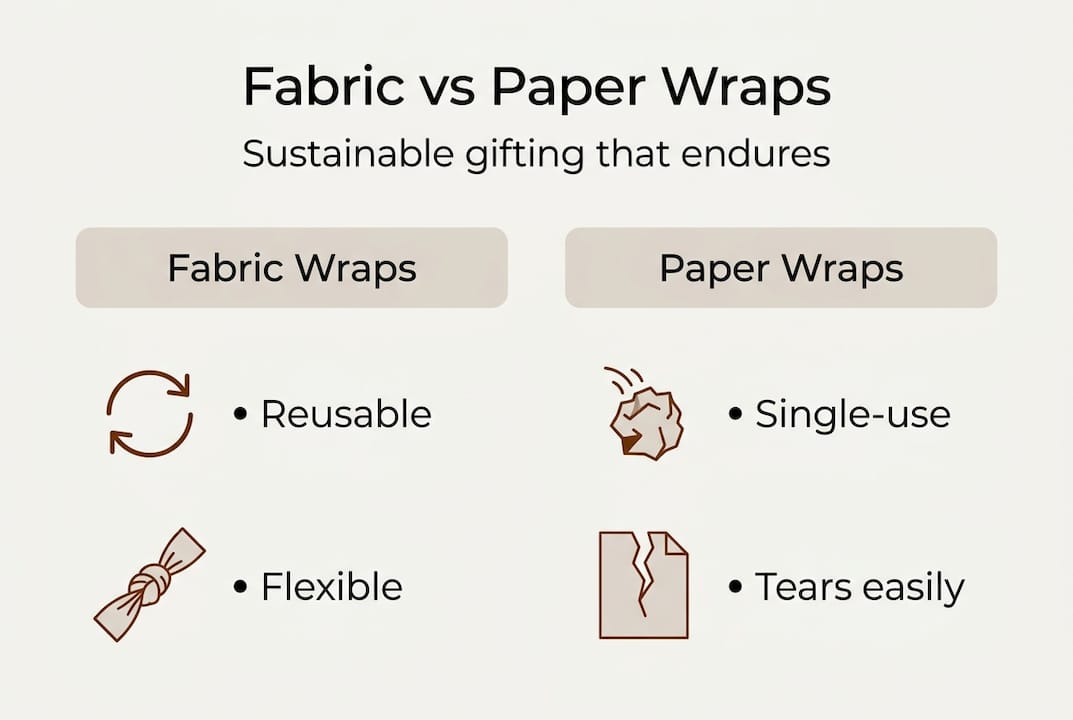
The key structural advantage is this: fabric’s woven structure provides flexibility, tear resistance, and pliability, preventing permanent damage from bumps or folds. A crease in paper is irreversible. A fold in fabric simply relaxes when smoothed, leaving no lasting mark.
Consider what fabric wraps offer beyond mere durability:
- Reusability across multiple occasions, seasons, and even generations
- Tactile richness, from the luminous sheen of satin ribbon ties to the gentle weight of organic cotton
- Personalisation potential, including hand-embroidered names, birth dates, or motifs that transform a wrap into a keepsake
- Reduced environmental footprint, as each reuse replaces a roll of disposable paper
- Aesthetic longevity, retaining their beauty wash after wash
“The best gift wrap is the one that outlasts the occasion, becoming part of the memory rather than the waste.”
For families who care deeply about the world their children inherit, that list reads not as a catalogue of features but as a quiet declaration of values.
Paper vs fabric: A side-by-side comparison
With an understanding of fabric’s strengths, the next step is to see how it compares directly with paper wraps across the moments that matter most.
| Quality | Paper wrap | Fabric wrap |
|---|---|---|
| Tear resistance | Very low; splits under light pressure | High; woven threads distribute stress evenly |
| Reusability | Single use only | Ten or more years with gentle care |
| Water resilience | Disintegrates when damp | Survives spills; washable |
| Appearance over time | Creases, fades, and tears after one use | Retains colour and drape across many uses |
| Environmental impact | Landfill after one occasion | Dramatically reduced waste over its lifespan |
Consider how each wrap performs across the real arc of a gifting occasion:
- Presentation. Paper can look pristine on a shelf, but fabric arrives with a tactile warmth that feels considered and refined from the first touch.
- The unwrapping moment. Paper tears, often in ragged strips. Fabric is untied or unwrapped gently, remaining entirely intact.
- Immediately after. Paper is gathered up and binned, sometimes before the gift has even been fully admired. Fabric is folded, smoothed, and set aside.
- The weeks that follow. Paper is gone. Fabric is stored, ready for the next occasion, or repurposed as a drawer liner, a swaddle, or a small keepsake cloth.
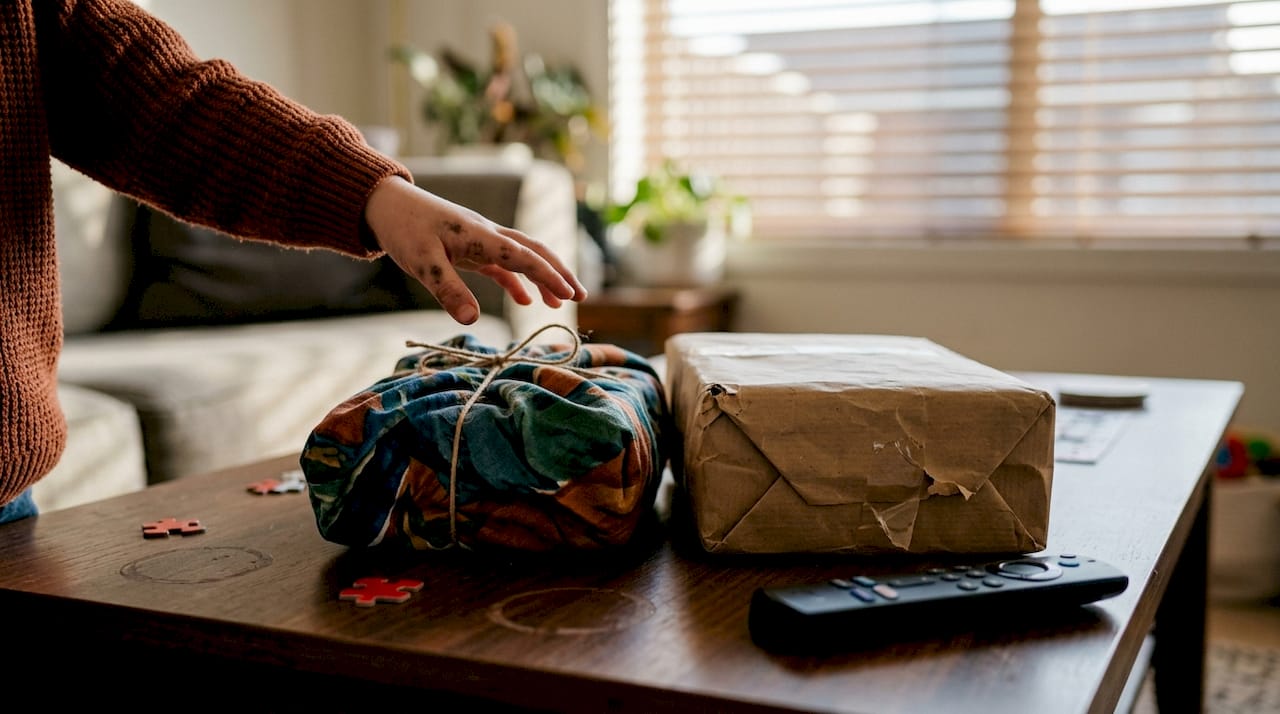
The evidence supports this clearly. Fabric bounces back from bumps; paper gets permanent creases and tears easily. And when you consider that fabric items often last a decade or more, the contrast with single-use paper becomes striking. Explore the best sustainable gift wraps to see how fabric options are reshaping the gifting landscape for families across the UK.
Real-world durability: How long do fabric wraps actually last?
Seeing the technical advantages is useful, but what actually happens when fabric wraps are used in everyday family life? The answer, for many parents, is quietly remarkable.
| Use case | What happens with paper | What happens with fabric |
|---|---|---|
| Handed down between siblings | Impossible; destroyed on first use | Easily reused, often becoming a familiar ritual |
| Survived a spilled drink | Disintegrates immediately | Wiped clean or gently washed and dried |
| Used for storage between occasions | Not possible | Folds neatly into a drawer or gift box |
| Personalised with a child’s name | Printed labels peel or fade | Embroidered details remain vivid for years |
Analogue data from fabric products suggest decade-plus durability and repeated use across many occasions. For a family with two or three children, a small collection of fabric wraps might serve every birthday and celebration for an entire childhood.
To make the most of your wraps, follow these simple care habits:
- Wash gently on a cool cycle with a mild, eco-friendly detergent
- Air dry rather than tumble dry to preserve the fibres and any embroidery
- Store folded in a cool, dry place, away from direct sunlight to protect colour
- Rotate your wraps across occasions so no single piece bears disproportionate wear
- Inspect embroidery threads periodically and re-secure any loose ends promptly
For more guidance, our reusable wrap tips and sustainability checklist offer practical advice tailored for UK families.
Pro Tip: Choose wraps in deeper tones or botanical prints rather than plain white or pale pastels. Richer colours and intricate patterns are far more forgiving of the minor marks that accumulate through joyful, well-used family life.
Over time, fabric wraps become something paper never could: a thread of continuity woven through your family’s celebrations, recognised and anticipated by children who remember the wrap as fondly as the gift inside.
Sustainable and stylish: Why fabric wraps suit eco-conscious gifting
With longevity proven, why does it matter so deeply for families committed to ethical, thoughtful gifting? The answer lies in both the environmental arithmetic and the emotional resonance that fabric wraps carry.
The sustainability benefits are clear and measurable:
- Reduced landfill contribution, as each fabric wrap replaces dozens of paper rolls over its lifetime
- Lower resource consumption, since producing one fabric wrap and reusing it repeatedly demands far less than manufacturing paper year after year
- Freedom from single-use culture, which is particularly meaningful when gifting at occasions as tender as a newborn’s arrival or a child’s first birthday
- Alignment with circular economy values, encouraging a culture of keeping and cherishing rather than discarding
The financial case is equally compelling. A beautifully made fabric wrap may carry a higher initial price than a roll of paper, but used across ten or more occasions, the cost per use becomes negligible. You are, in effect, investing in a small heirloom rather than purchasing a consumable.
Reusable fabric wraps reduce waste and offer personalisation, making them ideal for eco-friendly families who wish to gift with intention. The ability to have a child’s name, a birth date, or a delicate floral motif embroidered onto the fabric transforms the wrap itself into part of the gift, a keepsake that endures long after the toy or clothing inside has been outgrown.
Pro Tip: Personalise your fabric wrap with a sewn name tag or embroidered initial before gifting. It takes the presentation from beautiful to genuinely unforgettable, and the recipient is far less likely to ever discard something that carries their child’s name.
For inspiration on presentation, explore our eco-conscious gift styling ideas and sustainable embellishment ideas to craft a gifting moment that feels as considered as it truly is.
What most guides miss about lasting gift wrap
Most articles on sustainable gift wrap focus on material specifications: thread counts, certifications, washing temperatures. These details matter, but they address only half the story. What is rarely discussed is the emotional durability of a fabric wrap, and why that may be the more significant quality of all.
Children are acutely observant. They notice the wrap that reappears each birthday, the one with their name stitched into the corner, the one that smells faintly of the cedar drawer where it is kept between occasions. These sensory memories accumulate into something precious: a sense that gifting in your family is a ritual, not a transaction.
When you choose a fabric wrap, you are not simply reducing landfill. You are quietly reshaping what celebration looks like for the next generation, normalising the idea that beautiful things are worth keeping. Explore our thoughts on top eco wrap materials for guidance on where to begin.
The most lasting gift wrap, it turns out, is the one that teaches children something without ever saying a word.
Ready to upgrade your gifting? Discover sustainable fabric wraps
If the idea of a gift wrap that outlasts the occasion, carries your child’s name, and returns season after season feels like the kind of tradition you want to begin, we would love to welcome you to Nicholas & Rose.
Our milestone fabric wraps are crafted for the moments that matter most, from a newborn’s very first gift to a toddler’s birthday celebration. Each piece in our Baby & Beyond collection can be personalised through embroidery, transforming a beautiful wrap into a bespoke keepsake. This is where thoughtful gifting begins, and where throwaway paper quietly becomes a thing of the past.
Frequently asked questions
How many times can a fabric wrap be reused?
A quality fabric wrap can often be reused for ten years or more, depending on the material and how carefully it is washed and stored between occasions.
Are fabric wraps suitable for all kinds of gifts?
Yes; fabric wraps’ flexibility allows them to be used on a wide variety of shapes and sizes, from small jewellery boxes to larger baby gifts, without risk of tearing or damage.
Can I wash fabric wraps if they get dirty?
Most fabric wraps can be gently washed on a cool cycle and air dried, and fabric durability is well preserved through careful, regular washing, making them far more practical than paper over time.
Do fabric wraps really reduce waste?
Reusable fabric wraps reduce waste significantly by replacing dozens of disposable paper rolls over their lifetime, making them one of the most impactful small changes an eco-conscious family can make.
Recommended
- Fabric wrap in luxury sustainable gifting: why it matters – Nicholas & Rose Limited
- High-End Fabric Gift Wrap: Elevating Sustainable Luxury – Nicholas & Rose Limited
- Why Fabric Gift Wrap Beats Paper Waste – Nicholas & Rose Limited
- Sustainable gift wrapping with fabric: save 90% waste – Nicholas & Rose Limited
- What Is Sustainable Graphic Clothing? Eco Impact Guide – 3 Wizard Clothing