

Wrap design's role in sustainability: 2026 guide
TL;DR:
- Thoughtful wrap design reduces waste, lowers emissions, and encourages sustainable gifting practices. Reusable fabric wraps with personalisation and natural aesthetics enhance emotional value and long-term reuse. Material choices and structural features like mono-materials and mechanical closures optimize environmental benefits and consumer appeal.
The role of wrap design in sustainability is defined by every material, fold, and finish chosen before a gift ever reaches its recipient’s hands. Thoughtful sustainable wrap design reduces landfill waste, lowers carbon emissions, and shapes the gifting rituals we pass on to the next generation. For eco-conscious parents and gift-givers welcoming a new baby, these choices carry particular weight. Wrapping paper is discarded within moments of a birth announcement, yet a beautifully crafted fabric wrap, embroidered with a newborn’s name, becomes a keepsake that outlasts the occasion by years.
How does wrap design reduce environmental impact?
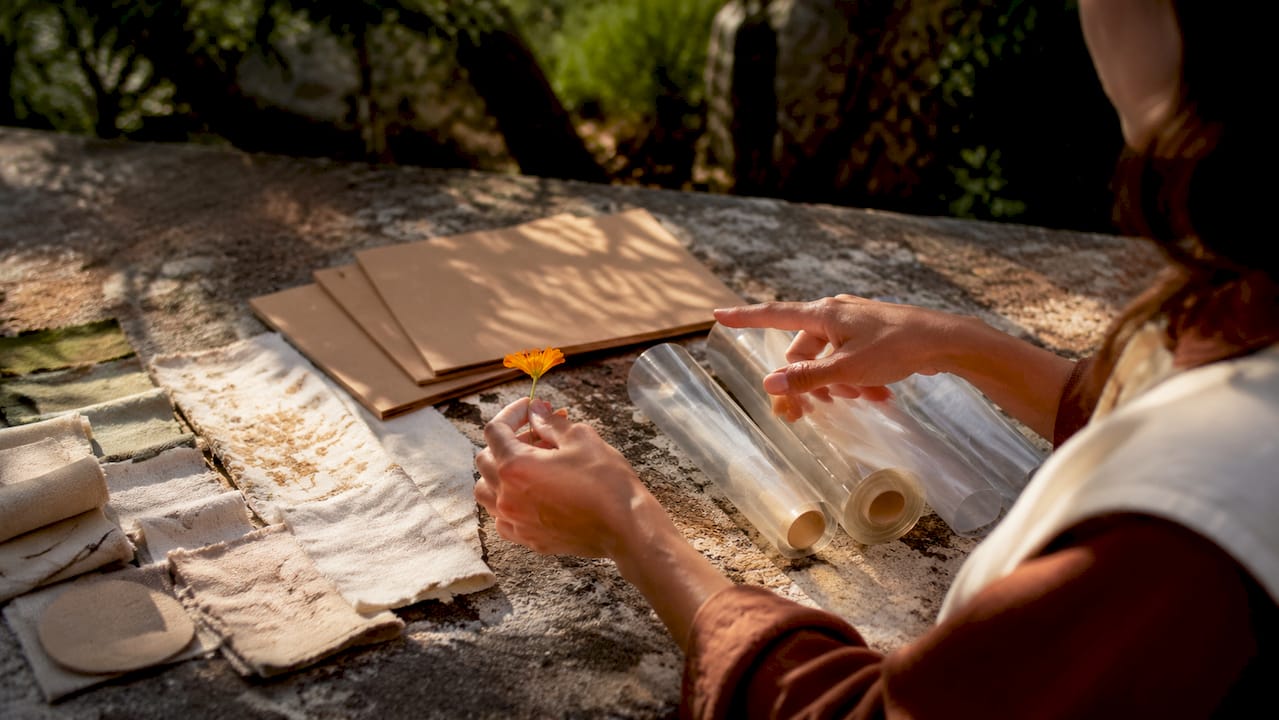
The impact of packaging design on the environment begins long before a gift is wrapped. Every structural and material decision either adds to landfill or diverts waste from it.
Dematerialisation is the most direct lever available. LUSH Cosmetics reduced traditional wrapping by 35%, achieving a measurable decrease in carbon footprint simply by removing unnecessary packaging layers. That single figure illustrates how stripping back excess is often more effective than substituting one material for another.
Material composition matters equally. Mondi’s FlowWrap contains 35% post-consumer recycled plastic content while maintaining full performance. This demonstrates that recycled content can be integrated without sacrificing the tactile qualities that make wrapping feel considered and refined.
Structural design choices also determine whether a wrap can be recycled at all. Common wrapping papers laminated with plastic film or dusted with glitter are non-recyclable by design, contaminating paper recycling streams. Mechanical closures such as folds, tucks, and fabric ties preserve recyclability or reusability far more effectively than adhesive tape, which bonds incompatible materials together.
Here is a clear summary of the design features that most directly reduce environmental harm:
- Remove excess layers. Every additional sheet, tissue, or sleeve adds weight, cost, and waste.
- Choose mono-materials. Wraps made from a single material type, whether cotton, recycled paper, or PLA film, are far easier to recycle or compost.
- Avoid adhesive closures. Tape and glue contaminate paper recycling. Fabric ties, ribbon, and folded tucks are cleaner alternatives.
- Prioritise post-consumer recycled content. Materials incorporating PCR content reduce demand for virgin resources without compromising appearance.
- Design for reuse from the outset. A wrap intended to be used once requires a fundamentally different design brief than one built to last a decade.
Pro Tip: When selecting wrapping for a newborn gift, choose a fabric wrap with a mechanical tie closure. It can be unwrapped without scissors, preserved intact, and reused for the next milestone.
What is the impact of visual design on sustainable wrap adoption?
Beautiful design is not a luxury in sustainable gifting. It is the mechanism by which eco-friendly choices become desirable choices.
Colour is the strongest predictor of buying behaviour in packaging studies. This means that a reusable fabric wrap in a luminous sage green or a deep botanical print will outperform a plain brown recycled paper wrap in purchase intent, even when both carry identical sustainability credentials. Aesthetics communicate value before a single word is read.
Packaging acts as an informational cue, shaping expectations of product quality before the gift is even opened. A wrap with a considered drape, a crisp hand-feel, and a refined pattern signals care and intentionality. For a baby shower gift, that first impression carries emotional weight that a crumpled sheet of paper simply cannot replicate.
Among younger consumers, the dynamic is even more pronounced. Youth green aesthetics drive sustainable packaging adoption through identity expression and social media sharing. A beautifully wrapped gift photographed at a baby shower and shared online becomes a quiet ambassador for the eco-conscious gifting values behind it.
The practical steps for balancing beauty with sustainability are straightforward:
- Lead with colour and texture. Choose wraps in nature-inspired palettes, soft botanical prints, or tactile weaves that invite touch and admiration.
- Let the design tell the sustainability story. A wrap that looks considered communicates its values without requiring a label that shouts “eco-friendly.”
- Avoid feature stacking. Adding excessive eco-claims, multiple certifications, and competing design motifs creates visual noise and confuses the consumer. Clarity and simplicity are more persuasive.
- Invest in personalisation. An embroidered name or birth date transforms a wrap from packaging into a memento, deepening the emotional connection and making reuse feel natural rather than obligatory.
“Packaging aesthetics are a vital tool to communicate sustainability stories effectively to consumers, influencing their emotional engagement.” — Frontiers in Psychology, 2026
How do sustainable wrap types compare?
Choosing between recycled paper, bio-based films, and reusable textile wraps requires understanding what each material genuinely offers across its full lifecycle.
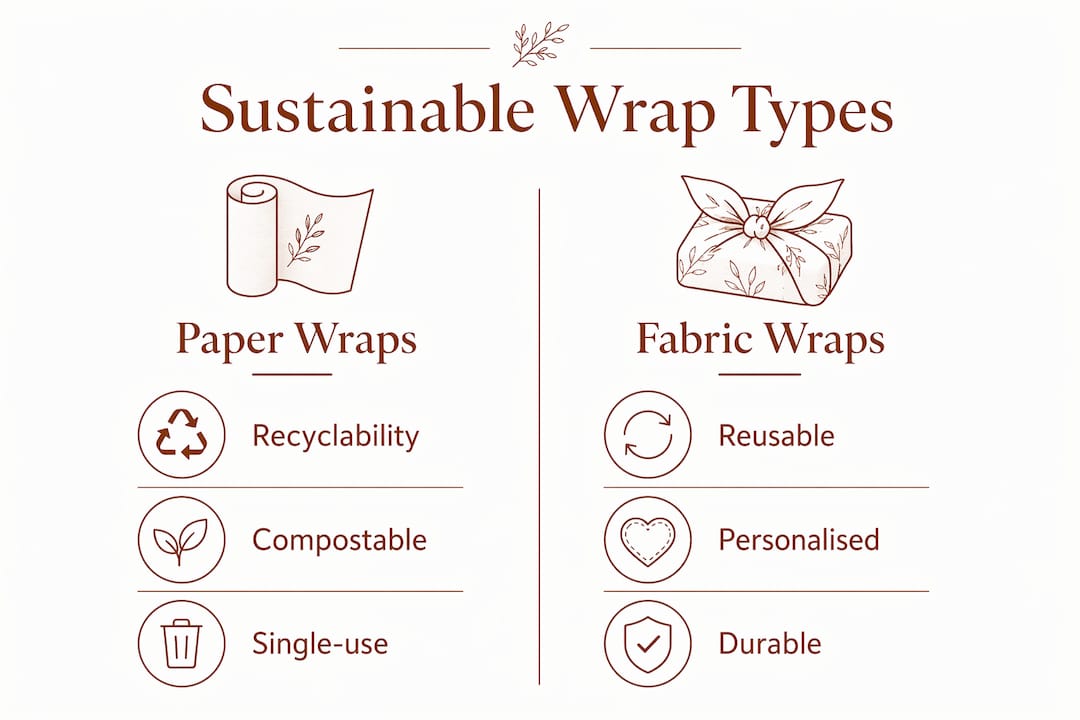
| Material | Recyclability | Reusability | Emotional Value | Sustainability Strength |
|---|---|---|---|---|
| Recycled paper (no laminate) | High | Low | Low | Good for single use; compostable |
| PLA bio-based film | Moderate | Low | Low | Compostable in industrial facilities only |
| Recycled polyester fabric | Low (as textile) | Very high | High | Excellent over multiple uses |
| Bamboo weave fabric | Moderate | Very high | High | Renewable source; biodegradable |
| Cotton fabric (organic) | Moderate | Very high | Very high | Best lifecycle impact with reuse |
Recycled paper without laminate or glitter is the most accessible single-use option. It composts cleanly and carries a familiar, tactile warmth. The limitation is longevity. Once torn, it is gone.
PLA films derived from plant starch offer a bio-based alternative to plastic wrapping, but their compostability requires industrial processing facilities that remain rare across much of the United Kingdom. The gap between the promise and the practical reality is worth noting.
Textile wraps represent the most compelling case for how design affects sustainability over time. The Japanese Furoshiki tradition, in which a single cloth is folded and knotted to wrap gifts of any shape, demonstrates that reusable wraps gain longevity by embedding cultural and emotional value. A wrap that is beautiful enough to keep, and meaningful enough to pass on, exits the waste stream entirely.
Precision engineering is critical for non-plastic wrapping solutions. Small dimensional errors in paper-based cushioning or fabric construction affect both protection and sustainability efficacy. This is why quality matters as much as material choice. A poorly constructed fabric wrap that frays after two uses offers no real environmental advantage over disposable paper.
Pro Tip: For newborn and baby shower gifts, a bamboo weave or organic cotton fabric wrap sized generously will accommodate gifts of varying shapes, from soft toys to clothing bundles, without requiring additional packaging.
What practical steps help eco-conscious gift-givers wrap baby gifts sustainably?
Translating sustainable wrap design principles into everyday gifting for newborns and young children is more straightforward than it might appear. The key is choosing wraps that serve multiple purposes across a child’s early years.
Consider these practical approaches when wrapping gifts for babies, toddlers, and young children:
- Choose fabric wraps with personalisation. An embroidered name, birth date, or small motif transforms the wrap into a keepsake. The recipient keeps it, uses it, and cherishes it long after the gift inside has been outgrown. Nicholasandrose specialises in exactly this kind of reusable wrap with lasting impact, where the wrap itself becomes part of the gift.
- Select wraps sized for versatility. A generous square of fabric can wrap a soft toy, a set of babygrows, or a picture book with equal elegance. Versatility extends the wrap’s useful life across many occasions.
- Encourage the recipient to rewrap. Include a small card with folding instructions inspired by the Furoshiki method. This turns the wrap into a skill and a ritual, rather than a one-time novelty.
- Look for natural dyes and botanical prints. Emerging design trends in 2026 favour wraps featuring natural dye palettes, from soft ochre to muted sage, alongside cultural motifs that carry meaning beyond the occasion. These designs age gracefully and feel as relevant at a first birthday as they did at a baby shower.
- Consider the full gifting lifecycle. A fabric wrap given at a baby shower can become a play cloth, a small blanket, or a keepsake stored alongside first shoes and hospital wristbands. Designing for this extended life is the most honest expression of eco-friendly wrap solutions.
The wrapping choices parents make in those early gifting moments set a quiet precedent. Children who grow up surrounded by beautiful, reusable wraps absorb a different relationship with objects and their value.
Key takeaways
Sustainable wrap design reduces environmental impact most effectively when material choice, structural design, and aesthetic appeal work together rather than in isolation.
| Point | Details |
|---|---|
| Design drives sustainability outcomes | Material, structure, and aesthetics together determine a wrap’s true environmental footprint. |
| Colour and beauty accelerate adoption | Visually appealing wraps are chosen more often, making good design a sustainability tool in itself. |
| Fabric wraps outperform paper over time | Reusable textile wraps eliminate waste across multiple uses, especially when personalised as keepsakes. |
| Mechanical closures preserve recyclability | Folds and ties avoid adhesive contamination, keeping materials in the circular economy. |
| Personalisation creates emotional value | An embroidered name or motif transforms a wrap into a memento, making reuse feel natural and meaningful. |
Why wrap design is the most overlooked sustainability decision in gifting
I have watched the conversation around sustainable gifting shift considerably over the past decade. Parents who once reached automatically for a roll of foil paper now pause. They ask questions. They want to know where the wrap goes after the ribbon is pulled. That shift is real, and it matters.
What still surprises me is how rarely the design of the wrap itself is discussed. We talk about materials endlessly, recycled paper versus plastic, compostable versus reusable. But the design decisions that determine whether a wrap is actually kept, actually reused, and actually loved are treated as secondary. They are not secondary. They are the whole story.
A fabric wrap with a child’s name embroidered in soft thread does not end up in a bin bag before the guests have finished their tea. It gets folded carefully. It gets stored with the photographs. It reappears at the next birthday, a little softer, a little more beloved. That is the circular economy in its most human form, and it begins entirely with a design decision.
The brands and makers who understand this, who treat the wrap as a gift in itself rather than a disposable container, are the ones shaping what thoughtful gifting looks like in 2026. The design choices behind eco wraps are not a compromise between beauty and responsibility. They are proof that the two have always belonged together.
— Helen
Beautifully wrapped, beautifully kept: Nicholasandrose
For those welcoming a new baby or celebrating a first milestone, Nicholasandrose offers a collection of reusable fabric gift wraps designed to be as memorable as the gift they hold.
Each wrap in the Baby and Beyond milestone collection is crafted from soft, tactile fabric and can be personalised with embroidery, a name, a date, or a small motif that marks the occasion forever. These are not wraps that end up in the recycling bin before the baby has taken a first breath. They are heirloom pieces, designed with the same care and intention as the gifts they carry. The 2026 newborn and toddler range brings fresh botanical prints and nature-inspired palettes to a collection already beloved by eco-conscious parents and gift-givers across the United Kingdom.
FAQ
What is the role of wrap design in sustainability?
Wrap design determines a gift wrap’s environmental impact through material choice, structural features, and reusability. Designs that use mono-materials, mechanical closures, and durable fabrics significantly reduce waste compared to disposable laminated paper.
Why are fabric wraps more sustainable than paper wraps?
Fabric wraps can be reused across many occasions, removing them from the waste stream entirely. Textile wraps linked to traditions like Furoshiki promote circular gifting practices, with each reuse multiplying the environmental benefit of the original material choice.
How does personalisation make a wrap more sustainable?
Personalisation creates emotional attachment, making recipients far more likely to keep and reuse the wrap. An embroidered name or birth date transforms packaging into a keepsake, extending its lifecycle from a single occasion to years of meaningful use.
Does the colour of a wrap really affect sustainability choices?
Colour is the strongest predictor of buying behaviour in packaging studies, meaning visually appealing wraps are chosen and kept more often. A beautiful wrap is therefore a more sustainable wrap, because it is less likely to be discarded.
Are PLA bio-based films a good sustainable alternative for gift wrap?
PLA films are compostable in theory, but require industrial composting facilities that are not widely available across the United Kingdom. For most gift-givers, reusable fabric wraps or unlaminated recycled paper offer a more reliably sustainable outcome.
Recommended
- How design makes eco wraps beautiful and sustainable – Nicholas & Rose Limited
- Designer Gift Wrap: Stylish, Sustainable Christmas Impact – Nicholas & Rose Limited
- Why wrapping choices matter for eco-conscious parents – Nicholas & Rose Limited
- How to embellish gift wraps sustainably: 2026 guide – Nicholas & Rose Limited