

How design makes eco wraps beautiful and sustainable
TL;DR:
- Thoughtful, well-designed eco gift wraps challenge the misconception that sustainability means sacrificing beauty or quality. They utilize renewable or recycled materials, mono-material construction, and minimal coatings to ensure recyclability and reusability, extending their lifespan well beyond a single use. Effective design choices, such as restraint, tactile quality, personalisation, and aging gracefully, make eco wraps both visually elegant and environmentally responsible, transforming gifting into a meaningful act.
There is a quiet but persistent assumption that choosing an eco-friendly gift wrap means accepting something plain, flimsy, or frankly forgettable — perhaps a sheet of brown kraft paper and a bit of recycled twine, destined to look rather apologetic beside a beautifully presented gift. But this assumption deserves to be gently dismantled. Thoughtful design is not merely decorative; it is the very mechanism through which an eco wrap becomes both genuinely sustainable and genuinely beautiful. For parents choosing wrapping for baby showers, first birthdays, or milestone moments, understanding how design shapes every dimension of a wrap — from its material integrity to its emotional resonance — transforms the act of gifting into something quietly extraordinary.
Table of Contents
- What makes an eco wrap eco-friendly?
- How design choices boost both style and sustainability
- Personalising eco wraps for meaningful gifting
- Beyond wrapping: Multi-functionality and the waste hierarchy
- Why smart design in eco wraps matters more than ever
- Discover sustainable, beautifully designed gift wraps for every occasion
- Frequently asked questions
Key Takeaways
| Point | Details |
|---|---|
| Design drives sustainability | Smart design choices make eco wraps both beautiful and kind to the planet. |
| Mono-materials boost recycling | Using only one material means easier recycling and less waste. |
| Minimalism supports personalisation | Simple designs offer creative space for adding personal touches. |
| Wraps can have second lives | Eco wraps with multi-use features cut waste and add lasting value. |
| Choose purpose over excess | Selecting design-led eco wraps creates more meaningful gifts for your family. |
What makes an eco wrap eco-friendly?
Before appreciating design’s role, it helps to understand what truly qualifies a wrap as eco-friendly. The answer is not simply that it contains the word “natural” on the packaging or that it looks vaguely rustic. True eco-friendliness begins at the material level, where every fibre, coating, and ink choice either reduces or compounds environmental impact.
Eco-design principles guide the most responsible wraps — they minimise material use, enhance recyclability, and enable multi-purpose functionality. As research published in Applied Sciences confirms, eco-design in packaging applies these very principles to reduce waste at the source. This means that a beautifully constructed reusable fabric wrap, embroidered with a child’s name, is not just a lovely gesture — it is a carefully considered object that sidesteps the landfill entirely.
Key criteria that distinguish genuinely eco-friendly wraps include:
- Renewable or recycled materials: Organic cotton, linen, and recycled kraft paper replenish or recirculate, rather than deplete.
- Mono-material construction: A wrap made from a single material type is far easier to process in UK recycling facilities. Mixed materials — foil laminate bonded to paper, for instance — typically cannot be separated and end up as residual waste.
- Soy-based or water-based inks: Traditional petroleum-based inks release volatile organic compounds (VOCs) during printing and degrade recycling quality. Soy and water-based alternatives perform significantly better on both counts.
- Minimal or no coatings: Gloss varnish and metallic finishes contaminate paper recycling streams. A matte, uncoated surface, or a beautifully textured fabric, remains processable or reusable.
It is worth noting that kraft paper can be recycled up to seven times before its fibres degrade, making it one of the most circular paper materials available. Fabric wraps, however, go considerably further — they are not recycled at the end of their life so much as they are passed on, repurposed, and treasured.
| Wrap type | Recyclability | Reusability | Estimated lifespan |
|---|---|---|---|
| Glossy paper | Low | None | Single use |
| Kraft paper | High (up to 7 cycles) | Limited | Single to occasional reuse |
| Fabric (cotton or linen) | High (as textile) | Excellent | Years to decades |
| Foil or glitter wrap | Very low | None | Single use |
“The most eco-friendly wrap is not one you simply discard less guiltily — it is one designed from the outset to remain useful, beautiful, and present in the world long after the gift has been unwrapped.”
Choosing eco-conscious gift wrap basics means looking at the full picture: material origin, production process, end-of-life pathway, and yes, the emotional durability of the piece itself.
How design choices boost both style and sustainability
Now that eco criteria are clear, let’s see how design directly enhances both look and sustainability. The idea that sustainability and beauty are in tension is one of the more enduring misconceptions in the gifting world. In practice, the opposite is closer to the truth.
Minimalist graphic design, thoughtfully applied, creates wraps that are visually arresting without requiring the layers of foil, glitter, or laminate that so often render conventional wraps unrecyclable. Soy-based inks and matte finishes perform better in curbside recycling compared to gloss or metallic effects, and they lend a quiet, sophisticated quality that feels far more refined than the over-decorated alternatives. There is something genuinely elegant about a wrap that trusts its form and material to carry the visual weight.
Consider what good design actually achieves in an eco-friendly wrap:
- It uses restraint purposefully. A single embroidered motif on organic cotton — perhaps a tiny oak leaf or a delicate moon — communicates more than a busy pattern ever could. Restraint reduces ink coverage, which reduces chemical load, which improves recyclability or composting potential.
- It prioritises tactile quality. The feel of a well-woven linen wrap, the slight warmth of its texture beneath your fingers, is itself a form of luxury. No foil finish can replicate the living quality of natural fibres.
- It integrates function with form. Mono-material corrugated cardboard supports AR features through embedded QR codes, allowing gift-givers to attach digital experiences — a recorded lullaby, a family message — without a single scrap of additional material.
- It enables personalisation. Simple, clean surfaces — whether kraft paper or undyed fabric — become a canvas for meaningful additions: a stamped name, an embroidered date, a pressed flower tied with organic twine.
- It ages gracefully. Unlike a garish paper wrap, a beautifully designed fabric piece does not date. It looks as refined at a first birthday as it does at a naming ceremony years later.
Designer eco wrap examples demonstrate time and again that considered design choices — tonal palettes, natural textures, understated embellishment — produce wraps that photograph beautifully, feel luxurious in the hand, and carry genuine environmental credibility.
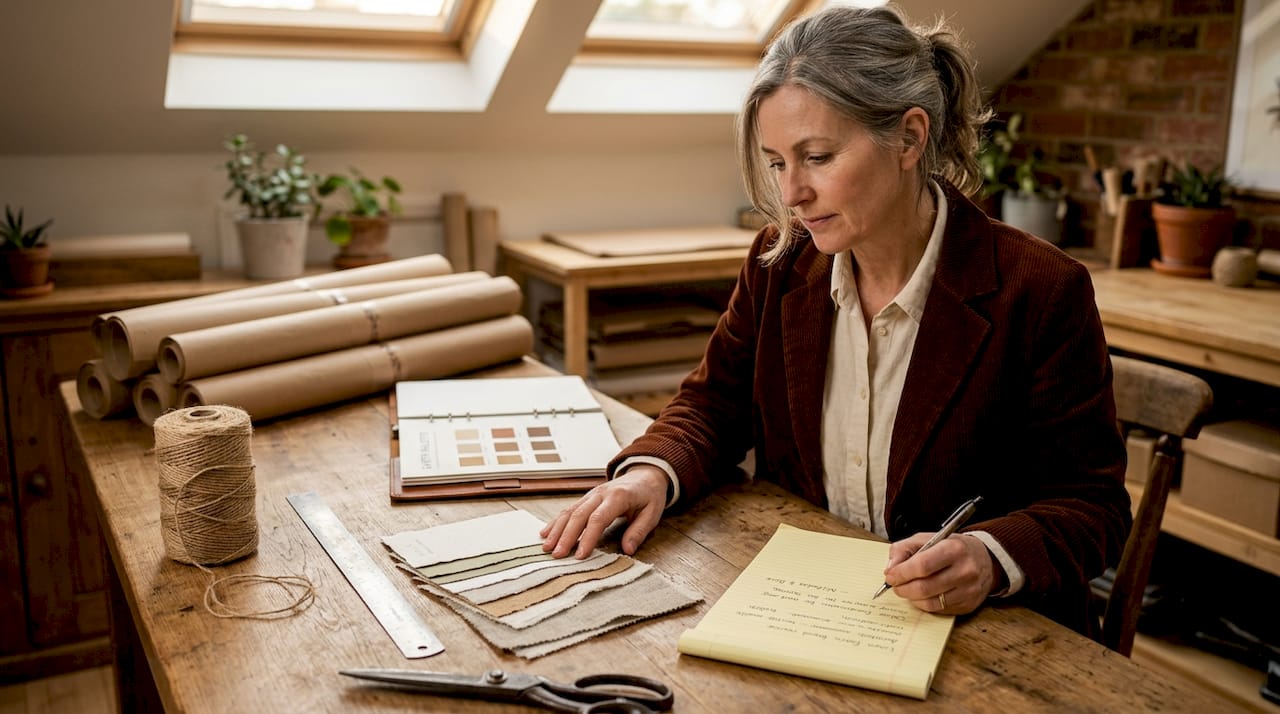
Pro Tip: When selecting an eco wrap for a baby shower gift, choose one with a neutral or botanical motif. These age better than theme-specific designs and are more likely to be kept and reused by the recipient — which is, after all, the highest form of sustainability.
| Finish type | Visual appeal | Recyclability | VOC emissions |
|---|---|---|---|
| Soy-based ink, matte | High (refined) | Good | Low |
| Metallic foil | High (flashy) | Poor | Moderate to high |
| Water-based ink, uncoated | High (natural) | Excellent | Very low |
| Gloss varnish | Moderate | Poor | Moderate |
When you consider eco wrap material choices in this light, the decision becomes less about compromise and more about discernment.
Personalising eco wraps for meaningful gifting
With better design, eco wraps are already appealing — let’s make them truly personal for special occasions. Personalisation is perhaps the most emotionally significant dimension of gift wrapping, and the good news for eco-conscious parents is that minimalist, sustainably designed wraps are almost uniquely suited to it.
Research confirms that minimalist approaches enhance brand recognition and consumer preference without excessive materials — and the same principle applies beautifully to personal gifting. A clean surface, whether undyed cotton or natural kraft paper, does not fight for attention with your personalisation. It holds it, quietly and beautifully.
Here are the most considered ways to personalise an eco wrap for a newborn or toddler gift:
- Embroidery: For fabric wraps, embroidery is the gold standard. A child’s name stitched in soft thread, a birth date, or a small celestial motif transforms a wrap into a keepsake that the family will genuinely keep. Unlike printed personalisation, embroidery does not fade, peel, or crack with washing.
- Hand-stamping: Water-based ink stamps allow you to add names, dates, or small illustrations to paper wraps without compromising recyclability. The warmth of an imperfect hand-stamp carries a humanity that digital printing rarely achieves.
- Natural adornment: A sprig of dried lavender, a loop of undyed jute twine, or a pressed fern frond tied to the wrap adds sensory richness and biodegrades completely. These small gestures carry extraordinary emotional weight.
- Child’s artwork: For older siblings or creative families, incorporating a child’s drawing — reproduced on uncoated paper or stitched onto fabric — creates a wrap with genuine narrative depth.
Things to avoid if you want your personalised wrap to remain eco-friendly:
- Plastic-based stickers or adhesive labels
- Solvent or oil-based markers (use water-based pens instead)
- Glitter, even so-called “biodegradable” varieties, which often contain microplastics
- Synthetic ribbons and bows that cannot be composted or recycled
A personalising eco wrap guide will show you exactly how to layer these touches without compromising the material’s end-of-life credentials. And for parents who want clear, step-by-step guidance, eco gift wrapping steps break the process down beautifully.
The most meaningful wrapping is not the most elaborate. It is the most considered — the one that says: I thought about you, about what would last, about what would hold.
Beyond wrapping: Multi-functionality and the waste hierarchy
Finally, let’s go beyond wrapping, exploring how design brings lasting value while minimising waste. The concept of the waste hierarchy — reduce, reuse, recycle, in that order of priority — is a quietly radical framework for gifting.
Most conventional wrapping paper occupies the very bottom of that hierarchy. It cannot be reduced (it exists solely for single use), rarely gets reused, and often cannot be recycled due to mixed materials or contamination. The best eco wraps, however, are designed to ascend the hierarchy entirely.
Reduce: The first principle means choosing wraps with the least material and fewest unnecessary extras. A single fabric square, precisely sized for the gift, involves no off-cuts, no excess, and no waste in production.
Reuse: This is where thoughtful eco wraps genuinely distinguish themselves. Some gift boxes transform into bee nesting boxes or promotional stands — a testament to design’s capacity for reinvention. Fabric wraps go further still: they become storage pouches, doll’s blankets, drawer liners, even a beloved security cloth for a small child who has grown attached to something that smells faintly of the gift-giver’s home.
Recycle: When a wrap finally reaches the end of its useful life, single-material construction ensures it can be processed without contaminating other waste streams. Mono-materials ensure compatibility with UK and EU recycling streams, and fabric wraps can be recycled as textiles through clothing banks or taken to specialist textile processors.
| Hierarchy level | Conventional paper wrap | Eco fabric wrap |
|---|---|---|
| Reduce | Limited (often over-sized) | Excellent (made to measure) |
| Reuse | Rarely | Frequently, over many years |
| Recycle | Variable (coatings complicate) | Good (mono-material textile) |
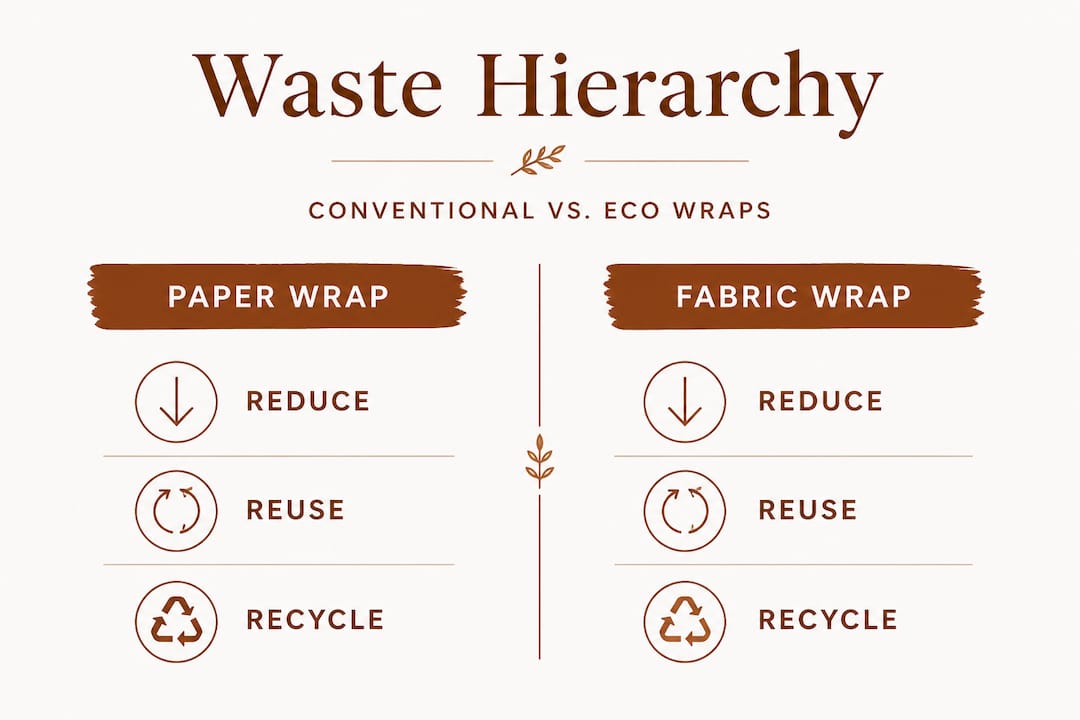
When you consider why sustainable materials matter for gifting, the difference between a wrap that ends up in landfill within the hour and one that becomes a cherished household object is not trivial. For top sustainable wrap ideas, the waste hierarchy provides an excellent filter for evaluating any wrap you are considering.
Pro Tip: When gifting to a new family, choose a fabric wrap sized to become a useful item afterwards — a small square makes a lovely muslin substitute, while a larger piece can line a nursery drawer or serve as a play mat accessory. The gift does not end with the unwrapping.
Why smart design in eco wraps matters more than ever
There is a deeper conversation worth having here, and it centres on what we communicate through our gifting choices. Many parents still reach instinctively for wrapping that looks luxurious by conventional measures — shiny surfaces, elaborate bows, cellophane windows through which you can glimpse the gift within. The assumption is that more adornment signals more care. But this conflation of visual complexity with genuine thoughtfulness is worth questioning, perhaps especially when gifting for a newborn or young child.
A beautifully embroidered fabric wrap, personalised with a child’s name and made from organic cotton, says something different. It says: this was chosen with intention, and it is made to last. That message carries far more emotional weight than a foil-printed paper that will be in the recycling bin — or, more likely, the general waste — before the thank-you cards are written. Eco wrapping workflow tips reflect this truth: the most sustainable choice and the most meaningful choice are, increasingly, the same choice.
There is also something profoundly valuable about modelling this kind of stewardship for children. When a toddler watches a fabric wrap be carefully folded and placed in a drawer for next time, they are absorbing a lesson about value, resourcefulness, and the quiet dignity of objects that endure. The wrap becomes part of the household story. It travels. It is recognised. It is loved.
We believe, with some conviction, that the gifting world is at a turning point. The era of wrapping-paper mountains destined for landfill is not just environmentally indefensible — it is aesthetically tired. Thoughtful, well-designed eco wraps are not a compromise. They are an upgrade, in every sense that matters.
Discover sustainable, beautifully designed gift wraps for every occasion
You now know exactly what to look for in an eco wrap — materials, design integrity, personalisation options, and multi-functionality that honours the waste hierarchy. The next step is finding wraps that live up to every one of those criteria, and that is precisely what we have created.
Our Baby & Beyond milestone collection brings together reusable fabric wraps designed for the most tender gifting occasions — newborn arrivals, naming ceremonies, first birthdays, and toddler milestones. Each piece is available with bespoke embroidery, so your gift arrives already holding a name, a date, or a small motif chosen with love. Browse the full baby wrap collection and discover wraps that are made to be kept, displayed, and treasured long after the wrapping paper has been forgotten.
Frequently asked questions
What is the most eco-friendly way to personalise a gift wrap?
The best approach is using hand-stamped names, water-based pens, or embroidery on natural fibres, as these methods keep the wrap fully recyclable or reusable. Minimal designs make customisation easier without compromising the wrap’s eco credentials at the end of its life.
Why are mono-material wraps better for the environment?
Mono-material wraps are accepted by UK recycling facilities without the need to separate mixed components, so the entire wrap is processed cleanly. Mono-materials ensure compatibility with UK and EU recycling streams under established 95/5 material guidelines.
Are soy-based inks safer for children?
Yes — soy-based inks lower VOCs, reducing children’s exposure to the harmful airborne chemicals that traditional petroleum-based printing inks typically release during and after production.
Can eco wraps really be used more than once?
Absolutely. Many eco wraps are intentionally designed for a long, useful second life: as storage pouches, nursery accessories, or comfort cloths. Research even shows that gift boxes can be repurposed as bee nesting boxes or display stands, demonstrating the extraordinary range of possibilities when design is guided by the reuse principle.
Recommended
- Why eco wraps are the sustainable choice for gifting – Nicholas & Rose Limited
- Designer Gift Wrap: Stylish, Sustainable Christmas Impact – Nicholas & Rose Limited
- Why switch to fabric wraps: sustainable, stylish gifts – Nicholas & Rose Limited
- What Makes Wrap Environmentally Friendly: Key Benefits Explained – Nicholas & Rose Limited