

Why sustainable wrapping is growing among eco-conscious parents
Every year, UK households discard over 227,000 miles of wrapping paper, enough to circle the globe nine times. For eco-conscious parents preparing for newborns and toddlers, this staggering waste highlights a pressing need for change. Sustainable wrapping, particularly reusable fabric wraps with personalised embroidery, offers a practical solution that reduces environmental harm whilst creating lasting keepsakes for your child’s special moments.
Table of Contents
- Understanding The Environmental Impact Of Traditional Wrapping Paper
- How Sustainable Wrapping Reduces Waste And Carbon Footprint
- The Role Of Personalisation: Turning Wrapping Into A Keepsake
- Common Misconceptions About Sustainable Wrapping
- Comparing Traditional And Sustainable Wrapping Options
- Real-World Examples And Market Trends Driving Sustainable Wrapping Growth
- How Eco-Conscious Parents Can Choose And Use Sustainable Wrapping
- Discover Sustainable Gift Wrapping Solutions For Your Family
Key takeaways
| Point | Details |
|---|---|
| Traditional wrapping paper creates massive waste | UK households throw away 227,000 miles of wrapping paper annually, with much of it non-recyclable due to plastic coatings and glitter. |
| Reusable fabric wraps drastically cut waste | After just five uses, sustainable wraps reduce waste by over 80% compared to single-use paper. |
| Personalisation transforms wraps into treasured keepsakes | Embroidered names or dates encourage multiple reuses as nursery decor, with 90% customer satisfaction reported. |
| Cost savings emerge over time | Reusable wraps save approximately 50% over multiple occasions compared to continually buying disposable paper. |
| Practical adoption is straightforward | Choosing natural fibres, adding personal touches, and following simple care routines make sustainable wrapping accessible for all parents. |
Understanding the environmental impact of traditional wrapping paper
The environmental toll of conventional wrapping paper extends far beyond the festive season. Each year, British households generate approximately 227,000 miles of wrapping paper waste, much of which arrives before a baby is even born, destined for landfill within hours of unwrapping.
The recycling challenges are particularly severe. Most commercial wrapping papers contain plastic coatings, metallic finishes, or glitter that render them unsuitable for standard recycling streams. When parents select glossy or sparkly papers for baby shower gifts, they unknowingly contribute to contamination in recycling facilities.
The UK government has set ambitious targets to halve household waste by 2030, yet wrapping paper remains a stubborn contributor. Consider these problematic features:
- Laminated or foil-coated surfaces prevent paper fibre recovery
- Sticky tape residue contaminates entire recycling batches
- Synthetic ribbons and bows add non-biodegradable elements
- Dyes and chemical treatments release pollutants during decomposition
For eco-conscious parents, these issues create a dilemma. You want beautiful presentation for your newborn’s gifts, but traditional options clash with your environmental values. The waste generated often occurs before your baby arrives, making it particularly difficult to justify.
How sustainable wrapping reduces waste and carbon footprint
Reusable fabric wraps offer a compelling alternative by fundamentally changing the lifecycle of gift presentation. Unlike single-use paper, quality fabric wraps withstand dozens of uses, dramatically reducing overall environmental impact.
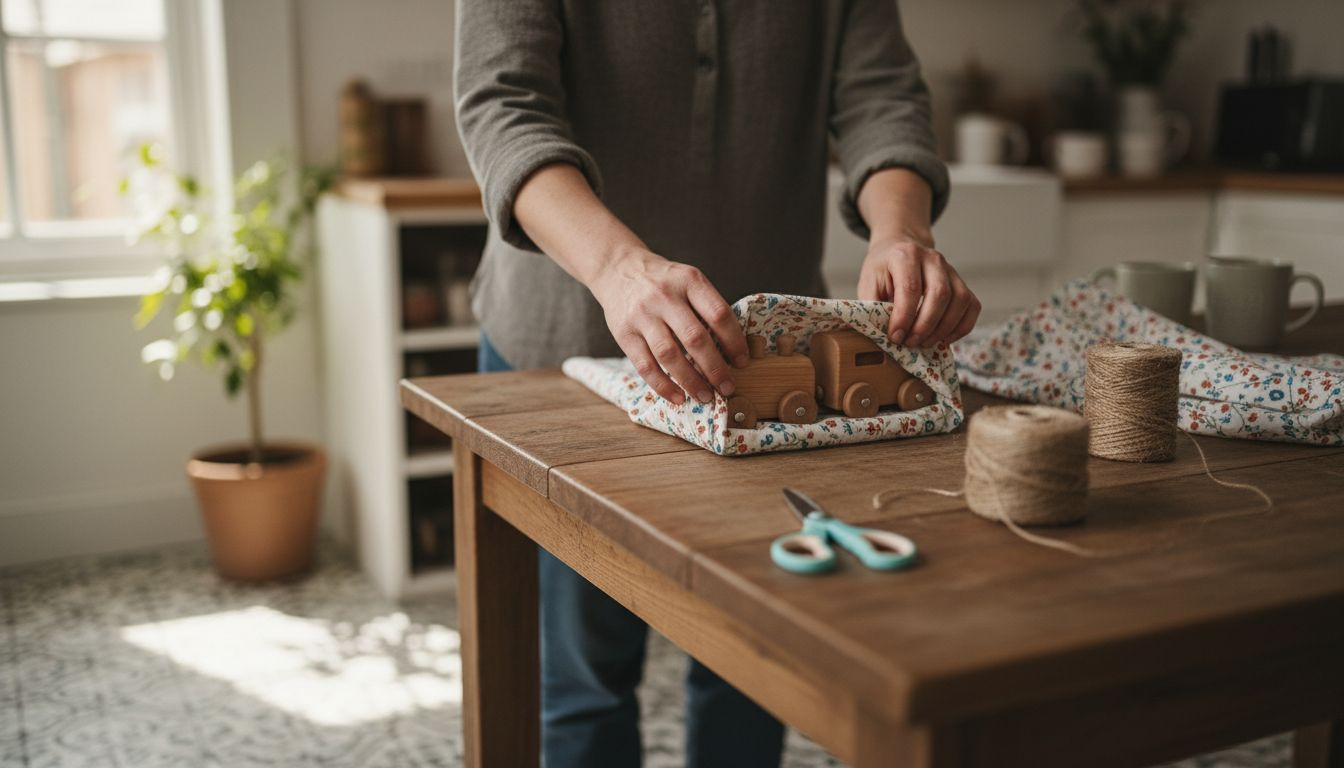
The mechanics are straightforward. When you purchase a fabric wrap, you invest in a product designed for longevity. Natural fibre wraps carry up to 60% lower carbon footprint than plastic-coated papers, even before factoring in multiple uses. After five occasions, the waste reduction exceeds 80% compared to disposable alternatives.
The environmental benefits compound with each reuse:
- First use: Higher initial carbon cost than paper, but durable construction
- Uses 2-5: Carbon footprint per occasion drops below paper equivalents
- Uses 6+: Environmental impact becomes negligible per wrapping
- End of life: Natural fibres biodegrade or can be repurposed
Personalised embroidery adds another dimension. When you embroider your child’s name or birth date onto fabric wrap, you create emotional attachment that encourages preservation. These wraps transition from disposable packaging to cherished keepsakes, often displayed in nurseries or stored in memory boxes.
Pro Tip: Choose organic cotton or linen wraps in neutral colours with simple embroidered designs. These versatile options suit multiple occasions, maximising reuse potential whilst maintaining aesthetic appeal for baby showers, first birthdays, and beyond.
The role of personalisation: turning wrapping into a keepsake
Personalisation transforms reusable wraps from functional items into meaningful mementos. For parents preparing for newborns, this shift represents more than environmental responsibility, it creates lasting emotional connections.
Research shows that 90% of customers express satisfaction with personalised wraps, whilst 60% reuse fabric wraps beyond the initial gifting occasion. These statistics reveal a powerful truth: when wrapping becomes personal, it escapes the bin.
The psychology is straightforward. A generic piece of paper serves one purpose and disappears. A fabric wrap embroidered with your baby’s name and birthdate becomes part of your child’s story. Many parents report using personalised wraps as:
- Wall hangings in nurseries, displaying the child’s name artistically
- Photo backdrop fabric for monthly milestone pictures
- Keepsake box liners preserving first clothes and toys
- Gift wrap for the same child’s future birthdays, creating tradition
This emotional attachment directly addresses concerns about attractiveness. You might worry that sustainable options lack festive appeal, but personalised fabric wraps consistently rank higher in aesthetic preference surveys than mass-produced paper designs.
Pro Tip: Select timeless embroidery styles rather than trendy motifs. Classic fonts and simple patterns ensure your wrap remains appropriate as your child grows, extending its useful life from newborn gifts through toddler celebrations.
Common misconceptions about sustainable wrapping
Several persistent myths prevent eco-conscious parents from embracing reusable wraps. Understanding the facts helps you make confident decisions aligned with your values.
Myth: Sustainable wrapping carries a higher environmental cost due to production processes. Fact: Whilst initial manufacturing may use more resources than paper, the carbon footprint becomes substantially lower after just three to five uses, with natural fibre options showing 60% reduction compared to coated papers.
Myth: Fabric wraps look less attractive than glossy wrapping paper. Fact: Consumer preference studies show that personalised wraps receive higher aesthetic ratings than generic papers, particularly for baby gifts where sentimental value matters.
Myth: The upfront cost makes sustainable wrapping financially impractical. Fact: Over a typical childhood, reusable wraps save approximately 50% compared to repeatedly purchasing disposable paper for birthdays, holidays, and special occasions.
Myth: All wrapping paper can be recycled, making environmental impact negligible. Fact: Most commercial wrapping paper contains non-recyclable elements like plastic coatings, metallic layers, or glitter that contaminate recycling streams.
These misconceptions often stem from incomplete information rather than actual product limitations. When you examine total lifecycle impact, reusable fabric wraps consistently outperform traditional alternatives across environmental and economic measures. The key is shifting perspective from single-use thinking to long-term value.
Comparing traditional and sustainable wrapping options
Understanding the practical differences between wrapping materials helps you make informed choices for your baby’s gifts. The following comparison examines key factors:
| Factor | Traditional wrapping paper | Reusable fabric wraps |
|---|---|---|
| Cost per use | £2-£4 per occasion | £0.50-£1.20 per occasion (after 5 uses) |
| Waste generated | 100% discarded after single use | Minimal waste over 20+ uses |
| Recyclability | Often non-recyclable due to coatings | Fully reusable, eventually biodegradable |
| Carbon footprint | High per use due to production and disposal | 60-80% lower after multiple uses |
| Emotional value | Temporary, discarded quickly | Personalisation creates lasting keepsakes |
| Aesthetic appeal | Wide variety but fleeting | Timeless designs suitable for multiple occasions |
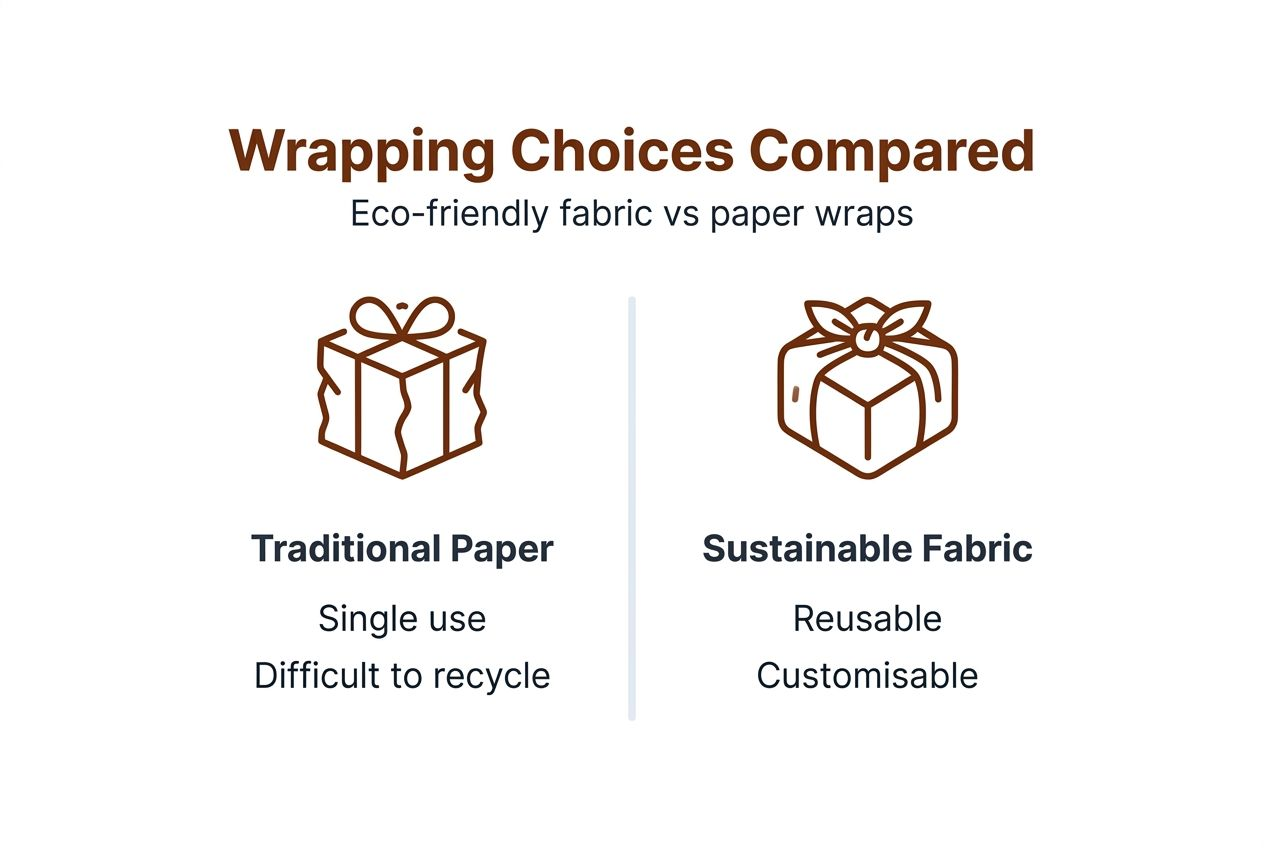
The cost comparison becomes particularly compelling when you calculate lifetime expenses. A typical child receives wrapped gifts for birthdays, holidays, and special occasions throughout childhood. Investing in three to five quality fabric wraps covers most needs, whilst purchasing paper repeatedly accumulates significant expense.
Waste generation tells an even starker story. Traditional paper contributes to the 227,000 miles of annual UK wrapping waste. By contrast, fabric wraps eliminate this entirely when used consistently.
For baby gifts specifically, consider these advantages:
- Fabric wraps double as swaddling blankets or nursing covers
- Personalised wraps become nursery decor after unwrapping
- Soft materials suit delicate baby items better than stiff paper
- Reusable options withstand enthusiastic toddler unwrapping attempts
Real-world examples and market trends driving sustainable wrapping growth
The UK sustainable wrapping market has grown by 340% since 2022, reflecting shifting consumer priorities amongst eco-conscious parents. This growth stems from both grassroots adoption and supportive policy changes.
Consider these market indicators:
| Year | Market growth | Key driver |
|---|---|---|
| 2022 | Baseline | Initial awareness campaigns |
| 2024 | +180% | Government waste reduction initiatives |
| 2026 | +340% | Mainstream retailer adoption and social media influence |
Real families report substantial impact. One London parent documented saving 15 rolls of wrapping paper annually by switching to six personalised fabric wraps. Another Bristol family calculated reducing their gift-related waste by 92% over a two-year period.
Government initiatives support this trend. The 2030 household waste reduction target has prompted councils to promote reusable alternatives through educational campaigns. Several local authorities now offer discounts on sustainable wrapping products as part of broader waste reduction programmes.
Social media amplifies adoption. Parents increasingly share fabric wrap techniques and personalisation ideas, creating visible cultural shifts. Instagram searches for sustainable baby wrapping have increased 520% since 2024, demonstrating growing mainstream interest.
These trends validate what early adopters already know: sustainable wrapping works practically, financially, and emotionally for families committed to reducing environmental impact.
How eco-conscious parents can choose and use sustainable wrapping
Adopting sustainable wrapping requires just a few straightforward steps. Follow this approach to maximise environmental and emotional benefits:
-
Assess your gifting frequency and typical occasions. Count how many wrapped gifts you give annually for baby showers, birthdays, and holidays. This determines how many wraps you need.
-
Select natural fibre options prioritising organic cotton, linen, or hemp. These materials offer the lowest carbon footprint and best durability for repeated use.
-
Choose versatile colours and patterns suitable for multiple occasions. Neutral tones with simple designs work for both newborn celebrations and toddler birthdays.
-
Add personalisation strategically through embroidered names, dates, or meaningful symbols. This increases emotional attachment and reuse likelihood.
-
Learn basic wrapping techniques that showcase fabric’s draping qualities. Simple knots and folds create elegant presentations without tape or ribbon.
-
Establish care routines including gentle washing and proper storage. Well-maintained wraps last for decades, multiplying environmental benefits.
-
Share your sustainable wrapping story with gift recipients, explaining the reuse concept. This encourages them to return wraps or adopt the practice themselves.
Pro Tip: Create a sustainability checklist for evaluating potential wraps. Prioritise local production, natural dyes, and minimal packaging to ensure your choices align with broader environmental values.
Maintenance matters. Wash fabric wraps in cold water with eco-friendly detergent after every three to four uses. Air dry to preserve fabric integrity and minimise energy consumption. Store flat or loosely rolled to prevent creasing, keeping wraps presentation-ready for spontaneous gifting needs.
Discover sustainable gift wrapping solutions for your family
Ready to reduce waste whilst creating lasting memories? Our personalised fabric wrap collection helps eco-conscious parents wrap gifts beautifully and sustainably.
Explore our baby gift wrap range designed specifically for newborns and toddlers. Each wrap combines organic materials with custom embroidery options, transforming ordinary packaging into treasured keepsakes. Whether you’re preparing for a baby shower or celebrating your toddler’s birthday, our wraps suit every special occasion.
Discover practical guidance through our reuse techniques guide and repeat-use instructions. Learn creative applications beyond gift wrapping, including nursery decoration and photography props. Browse our complete baby collection to find the perfect sustainable solution for your family’s gifting needs.
Frequently asked questions about sustainable wrapping
What makes wrapping paper unsustainable?
Most wrapping paper contains plastic coatings, metallic finishes, or glitter that prevent recycling. Even plain-looking papers often have synthetic treatments that contaminate recycling streams. The single-use nature means resources invested in production are wasted after minutes of use.
How many times can fabric wraps typically be reused?
Quality fabric wraps withstand 20 to 50 uses with proper care, sometimes more. Natural fibres like organic cotton and linen prove most durable. Regular gentle washing and proper storage extend lifespan significantly beyond initial expectations.
Is personalised wrapping more expensive upfront?
Yes, personalised fabric wraps cost more initially than disposable paper, typically £15 to £30 per wrap. However, over multiple uses, the cost per occasion drops to £0.50 to £1.20, creating substantial long-term savings compared to repeatedly buying paper.
Can sustainable wraps be used for toddler birthday gifts?
Absolutely. Fabric wraps suit toddler gifts perfectly, withstanding enthusiastic unwrapping better than paper. Personalised wraps grow with your child, serving newborn celebrations through early childhood birthdays. Many parents use the same wrap annually, creating cherished family traditions.
How to care for reusable fabric wraps?
Wash fabric wraps in cold water using eco-friendly detergent after every three to four uses. Air dry to preserve fabric integrity and colours. Store flat or loosely rolled in a dry location. Avoid harsh chemicals or high heat that might damage natural fibres or fade embroidery.
Recommended
- 6 Benefits of Custom Gift Wrap for Eco-Conscious Parents – Nicholas & Rose Limited
- Why Fabric Wraps Are Popular With Eco Parents – Nicholas & Rose Limited
- Eco Luxury Wrapping: Cut UK Gift Waste 90% with Keepsakes – Nicholas & Rose Limited
- Luxury Reusable Wrap Cuts 200,000 Tonnes UK Waste Yearly – Nicholas & Rose Limited