

Low-waste Christmas: celebrate sustainably this year
TL;DR:
- A low-waste Christmas focuses on reducing packaging, gifts, and food waste through thoughtful choices, not perfection. Families adopting these practices report calmer holidays, with environmental impact minimized by simple swaps like fabric wraps and better planning. Prioritizing meaningful, reusable, and well-considered traditions creates a festive season that is both joyful and sustainable.
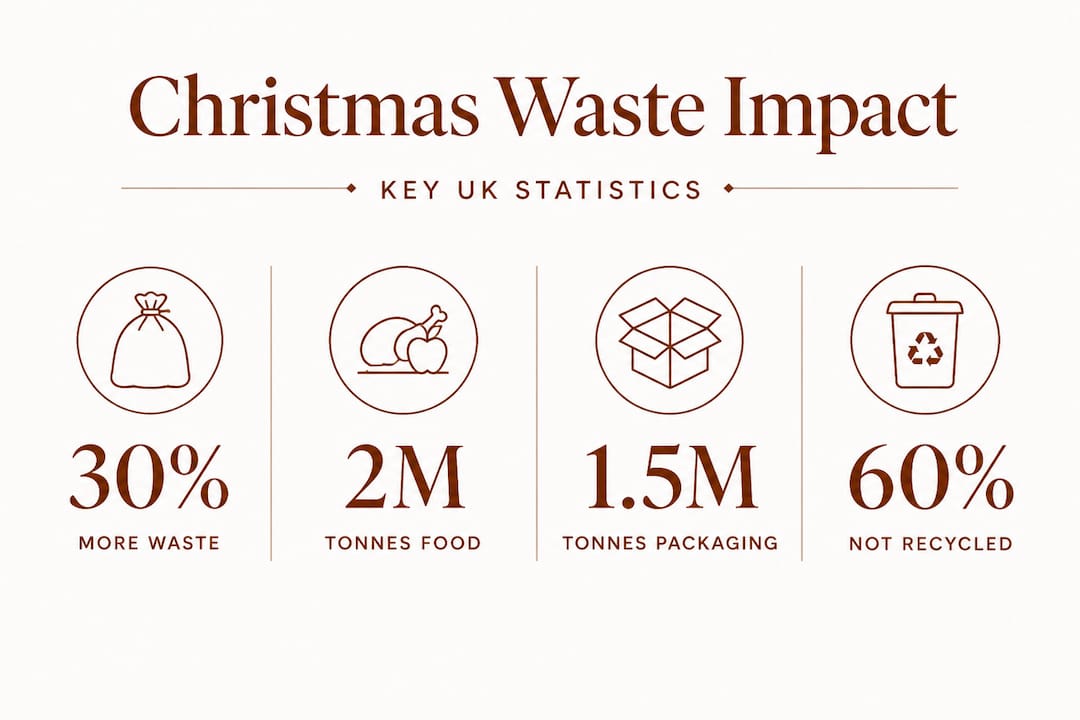
The familiar magic of a British Christmas carries with it a hidden cost that most families rarely pause to consider. Household waste rises by around 30% during the festive period compared with the rest of the year, a figure that quietly accumulates behind the ribbons, the wrappings, and the well-intentioned gifts that too often end up forgotten by January. Yet the desire to celebrate beautifully and meaningfully does not have to come at such an environmental price. A thoughtful, low-waste Christmas is not about sacrifice; it is about making choices that feel as good as they look, choices that honour both the people you love and the world they will inherit.
Table of Contents
- What is a low-waste Christmas?
- The real impact of Christmas waste in the UK
- Low-waste Christmas gifts: buying fewer but better
- Eco-friendly wrapping: practical swaps and tips
- Reducing food waste and other festive throwaways
- Why practical low-waste wins over perfection
- Personalised, low-waste Christmas solutions
- Frequently asked questions
Key Takeaways
| Point | Details |
|---|---|
| Meaningful waste reduction | Focus on cutting back packaging, single-use items, and food waste rather than perfection. |
| Smarter gifting | Choose fewer, high-quality, or second-hand gifts that will be truly appreciated and used. |
| Reusable and recyclable wrapping | Opt for reusable materials like fabric and avoid non-recyclable finishes to reduce holiday waste. |
| Plan for food waste | Prevent leftovers from ending up in the bin by planning portions, reusing, freezing, or composting. |
| Progress, not perfection | Adopt sustainable practices step by step instead of striving for an unrealistic zero-waste ideal. |
What is a low-waste Christmas?
To understand how to take action, it helps to be clear about what “low-waste Christmas” actually means and how it compares to other approaches. The term is sometimes conflated with “zero waste,” but these are genuinely different ideas, and recognising the distinction makes the whole endeavour feel far more achievable.
A low-waste Christmas is, at its heart, a “reduce and reuse first” approach to the festive season, aiming to cut the amount of packaging, single-use items, unwanted gifts, and food waste created during Christmas. It is not a pursuit of ecological perfection. As some sustainability guidance rightly distinguishes low-waste from zero-waste by focusing on reductions and practical trade-offs, recognising that meaningful progress matters far more than an impossible standard.
The areas where low-waste thinking applies most clearly during Christmas are four in number: gifts, wrapping, decorations, and food. Each deserves attention, and together they represent the full picture of what a more considered celebration looks like.
| Approach | Philosophy | Realistic for families? | Key focus |
|---|---|---|---|
| Traditional Christmas | Consume freely, discard freely | Yes, but costly | Abundance and novelty |
| Zero-waste Christmas | Eliminate all waste entirely | Rarely achievable | Perfection |
| Low-waste Christmas | Reduce, reuse, recycle thoughtfully | Yes, with planning | Meaningful reductions |
“The goal of a low-waste Christmas is not to remove the joy from the season, but to redirect it. When you choose to give with intention, wrap with care, and eat with awareness, the celebration becomes richer, not poorer.”
Families who adopt a low-waste approach often report that the season feels calmer and more genuinely connected. The environmental impact of Christmas wrap waste alone is staggering when examined closely, and it is one of the most straightforward areas to address with a few simple, elegant changes.
The real impact of Christmas waste in the UK
Now that we have defined what low-waste Christmas means, it is important to see just how significant holiday waste is for British households. Numbers, when they are concrete and specific, have a way of making abstract concerns feel genuinely urgent.
The 30% rise in household waste during the festive period is not merely a statistic; it represents millions of tonnes of wrapping paper, broken toys, uneaten food, and single-use decorations flowing into landfill every January. Consider the breadth of that figure across a typical British street, a row of homes each adding a third more waste to their bins over just a few weeks.
| Type of Christmas waste | Estimated UK impact | Common causes |
|---|---|---|
| Wrapping paper and packaging | Vast tonnage sent to landfill annually | Non-recyclable coatings, glitter, foil |
| Food waste | Significant increase over festive period | Over-purchasing, poor planning |
| Unwanted gifts | Billions of pounds worth discarded | Impulse buying, lack of personalisation |
| Single-use decorations | Growing problem year on year | Cheap imports, fast-fashion festive trends |
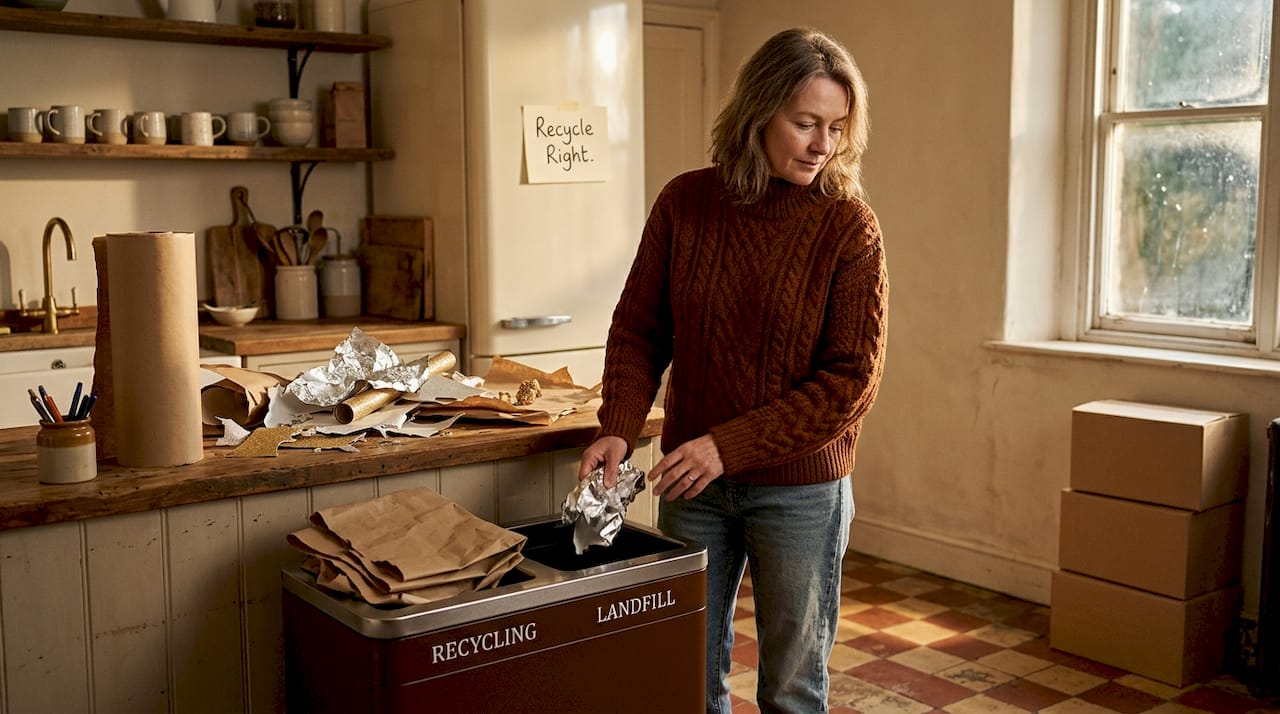
The uncomfortable truth about wrapping paper alone is that a great deal of it cannot be recycled at all. Foil finishes, glitter coatings, and plastic laminates all contaminate recycling streams, meaning that the beautiful rolls purchased with such care end up in exactly the same place as kitchen waste. For families raising children in a world increasingly shaped by environmental pressures, this awareness is not a source of guilt; it is a call to make more beautiful, more intentional choices. Explore what a sustainable Christmas impact genuinely looks like when families commit to even modest changes, and the results are quietly inspiring.
Low-waste Christmas gifts: buying fewer but better
One of the simplest ways families can reduce Christmas waste is by rethinking their approach to gifting. The cultural pressure to buy more, to fill the space beneath the tree with abundance, is deeply ingrained. Yet the gifts that are remembered years later are almost never the ones purchased in haste or in bulk.
Low-waste Christmas gifting prioritises gifts that last, can be reused, or are experiences, reducing the chance that presents end up unwanted and discarded before winter truly settles in. This is not a counsel of austerity; it is an invitation to give with deeper attention.
Here are five approaches that work beautifully for families and gift-givers alike:
- Choose durability over novelty. A well-crafted wooden toy, a beautifully illustrated book, or a quality piece of clothing in a classic style will outlast a season’s worth of plastic novelties. Look for items built to grow with the child.
- Explore second-hand treasures. Pre-loved gifts carry a certain charm and story. Vintage picture books, restored toys, and curated second-hand finds often delight children and adults far more than brand-new equivalents.
- Give experiences rather than objects. Theatre trips, pottery workshops, cooking classes, or a nature adventure together create memories that no landfill will ever claim.
- Support small, ethical makers. A bespoke, handmade item carries intention and craft. When you choose a maker who values quality and sustainability, your gift supports a way of working the world genuinely needs more of.
- Ask, rather than assume. A simple, warm conversation about what someone truly wants or needs removes the guesswork that leads to unwanted presents gathering dust by February.
Pro Tip: Involve children in choosing gifts for siblings, cousins, or friends. When little ones have agency in the gifting process, they develop a sense of generosity and thoughtfulness that shapes their relationship with giving for years to come. It also makes the season far more meaningful for everyone gathered around the table.
Pairing a thoughtful gift with considered wrapping is where the low-waste approach truly comes into its own. A zero waste gift wrapping guide can help you see how the presentation itself can become part of the gift, rather than an afterthought destined for the recycling bin.
Eco-friendly wrapping: practical swaps and tips
Gifts are only part of the story; the way we wrap them can also have a significant environmental impact. Wrapping paper is one of the most visible and most easily addressed sources of Christmas waste, and the alternatives available today are far lovelier than many families realise.
Low-waste wrapping focuses on materials that are recyclable or reusable, and specifically on avoiding finishes that prevent recycling, such as plastic film, heavy coatings, and glitter or foil-type decorations. The scrunchy test is a useful guide: if plain paper screws into a ball and holds its shape, it is likely recyclable. If it springs back or has a shiny, coated feel, it almost certainly is not.
Materials to embrace:
- Uncoated brown kraft paper, which wraps beautifully and takes embellishment with natural twine, dried botanicals, or hand-stamped designs
- Reusable fabric wraps, which drape elegantly around gifts and can be used year after year, becoming a cherished part of your family’s festive ritual
- Reusable gift bags in cotton or linen, which hold their shape, feel luxurious in the hand, and require no tape or scissors
- Old newspapers, maps, or pages from illustrated magazines, which have a particular nostalgic charm
- Fabric remnants and scarves, which double as a gift in their own right
Materials to avoid:
- Glitter-coated or foil-embossed paper, which is almost universally non-recyclable
- Plastic ribbon and metallic bows, which cannot be composted or recycled
- Cellophane wrapping, which looks delicate but creates lasting plastic waste
- Coated or laminated papers, even when they appear matte
It is worth noting, as holiday recycling guidance rightly points out, that “recyclable” depends entirely on local acceptance rules and whether items are contaminated. Food residue, non-recyclable coatings, and mixed materials can all render otherwise recyclable wrapping unsuitable. Low-waste planning therefore includes correct disposal, not merely thoughtful purchase.
Making wrapping a family activity transforms what can feel like a chore into a calm, creative ritual. Gather the children around the table with lengths of brown paper, pots of dried rosemary, and spools of jute twine, and let the wrapping itself become part of the gift’s story. Explore fabric gift wrapping ideas for inspiration that suits every aesthetic, from the spare and modern to the warmly traditional. A beautifully illustrated eco-conscious wrapping tutorial can also guide you through the practical steps with ease.
Pro Tip: Begin a fabric wrap tradition in your family. Designate a collection of beautifully embroidered or printed fabric wraps that appear only at Christmas, each one associated with a particular person or memory. Over the years, these pieces become heirlooms: touched by many hands, freighted with quiet affection, and never destined for the bin.
Reducing food waste and other festive throwaways
Gift wrap and presents are only one area. Food and party materials represent another enormous source of festive waste, and this is where a little planning yields disproportionately large rewards.
Low-waste food guidance for Christmas centres on realistic portion planning and waste prevention, using leftovers thoughtfully, freezing what cannot be eaten, and composting what remains. The instinct to over-cater is understandable, rooted in a generous desire for abundance. Yet a table laden with food that ends up in the bin serves no one.
Four steps to reduce festive food waste:
- Plan portions honestly. Use a simple online portion calculator for your family size and resist the urge to double every quantity. A single beautifully cooked bird, sized appropriately, is more satisfying than two that cannot all be finished.
- Design leftover meals in advance. Turkey soup, bubble and squeak, cold cuts with chutney: having a clear plan for Boxing Day and beyond means nothing is wasted and the cooking effort extends beautifully across the week.
- Freeze proactively. Bread sauce, cooked meats, and even roasted vegetables freeze surprisingly well. Portion and freeze on Christmas evening so that good food does not quietly deteriorate in the fridge.
- Compost what remains. Vegetable peelings, fruit, and non-meat food scraps can go directly to a home compost bin or a local food waste collection. Many local councils now offer this service year-round.
Beyond food, consider:
- Avoiding single-use crackers in favour of reusable crackers you fill yourself with small, chosen gifts
- Choosing natural, biodegradable decorations such as dried orange slices, cinnamon sticks, and pine cones
- Donating unwanted gifts promptly to local charities rather than storing them indefinitely
- Conducting a quiet waste audit on 27th December to note what categories generated the most rubbish, and planning accordingly for the following year
A thoughtful sustainable Christmas wrapping guide can help you extend this low-waste thinking into every corner of your celebration, not just the gifts beneath the tree.
Why practical low-waste wins over perfection
Having explored these practical strategies, it feels important to address something that rarely appears in sustainability guides: the quiet weight of expectation. The narrative around eco-conscious living can, if we are not careful, become its own kind of pressure. The idea that a truly green Christmas requires homemade everything, a zero-waste kitchen, and entirely plastic-free presents is, for most families, simply not realistic. And when the ideal feels unreachable, many people give up entirely.
We believe that is entirely the wrong response. As low-waste guidance rightly acknowledges, the goal is meaningful reductions rather than perfection, and that distinction matters enormously. A family that switches from non-recyclable foil paper to reusable fabric wraps has made a genuinely significant change. One that plans their Christmas dinner with a little more care and wastes half as much food has done something wonderful. These are not small victories; they accumulate.
The most powerful shifts we have seen come from families who choose one or two areas to address thoughtfully, rather than attempting to overhaul every aspect of their festive life simultaneously. Fabric wraps reused year after year carry the fingerprints of previous Christmases; they become part of the family’s story. A leftover bubble and squeak shared on a grey December morning becomes a memory in its own right. A gift chosen with real attention, wrapped in something beautiful that will not be thrown away, communicates a depth of care that no amount of foil and glitter could replicate.
Progress, repeated with warmth and intention, is the truest form of sustainability. Explore the eco Christmas wrapping steps that make the transition from disposable to reusable feel natural and genuinely lovely, rather than like a compromise.
Personalised, low-waste Christmas solutions
If you are ready to put these low-waste strategies into practice, the simplest and most elegant place to begin is with your gift wrapping. Reusable fabric wraps are among the most impactful swaps a family can make, removing single-use paper from your celebration entirely and replacing it with something beautiful enough to become a tradition.
At Nicholas & Rose, we create bespoke, embroidered fabric gift wraps that are designed to be kept, treasured, and used again and again. Our 2026 newborn and toddler range makes these heirloom pieces especially meaningful for new arrivals, ensuring that the wrapping itself becomes a personalised memento long after the gift inside has been opened and loved. Browse our collection of sustainable fabric wraps and discover how beautifully a low-waste Christmas can look when every detail is chosen with intention.
Frequently asked questions
What are the key steps for a low-waste Christmas?
Prioritise fewer, better gifts; use reusable wrapping; plan food carefully; and recycle or compost appropriately. The low-waste approach focuses on reducing packaging, single-use items, unwanted gifts, and food waste across the whole festive season.
How does fabric gift wrap help reduce Christmas waste?
Reusable fabric wraps replace single-use paper entirely, lasting for many Christmases and becoming part of a family’s traditions rather than part of their January recycling. Low-waste wrapping specifically prioritises materials that are reusable and free from finishes that prevent recycling.
What is the difference between low-waste and zero-waste Christmas?
Low-waste means making meaningful, realistic reductions rather than eliminating all waste, which is rarely achievable for a busy family. The distinction matters because it removes the pressure of perfection and focuses energy on progress that is genuinely sustainable over time.
Are second-hand presents considered low-waste?
Yes, second-hand gifts are an excellent low-waste choice because they reduce demand for new resources and prevent good items from becoming waste. Low-waste gifting specifically includes pre-loved items alongside experiences and durable, long-lasting presents.
Can I recycle all Christmas wrapping paper?
Not all wrapping paper is recyclable; foil, glitter, and plastic-coated papers are typically not accepted and will contaminate recycling streams. Low-waste wrapping guidance advises avoiding these finishes entirely and checking local collection rules before placing any wrapping in your recycling bin.
Recommended
- Sustainable Christmas Wrapping: A Luxurious Eco Choice – Nicholas & Rose Limited
- Personalise Christmas wraps sustainably: eco gifting 2026 – Nicholas & Rose Limited
- Innovative Gift Wrapping: Sustainable Luxury for Christmas – Nicholas & Rose Limited
- Innovative holiday wrapping: Sustainable gifts for little ones – Nicholas & Rose Limited