

Minimalist luxury gift wrapping: sustainable & elegant
TL;DR:
- Minimalist luxury gift wrapping emphasizes quality, restraint, and sustainability over excess.
- Reusable fabrics and natural materials transform wrapping into cherished keepsakes, reducing landfill waste.
- Personalization enhances meaningfulness without sacrificing eco-conscious principles, making gifting more thoughtful.
Each year in the UK, 108 million rolls of wrapping paper and 40 million rolls of tape travel from festive hands directly into landfill, often torn away in seconds before a baby shower has even concluded. That single image, of something so lovingly chosen unravelling into waste, is precisely what draws so many thoughtful gift-givers towards a more considered approach. Minimalist luxury wrapping is not about doing less. It is about choosing with more intention, reaching for materials that honour both the recipient and the world they will grow up in. This article explores the philosophy, the materials, the personalisation possibilities, and the sustainable data behind a quieter, more beautiful way to give.
Table of Contents
- Why minimalism redefines luxury in gift wrapping
- Essential materials and techniques for minimalist luxury wrapping
- Personalisation: making minimalist wraps special for children’s occasions
- The sustainability impact: data and market trends
- Why sustainable minimalism is the true luxury for family celebrations
- Transform your gift wrapping with sustainable luxury options
- Frequently asked questions
Key Takeaways
| Point | Details |
|---|---|
| Minimalist luxury defined | Luxury wrapping relies on simplicity, quality, and thoughtful design rather than excess. |
| Eco-friendly materials | Kraft paper, natural fibre ribbons, and furoshiki fabrics are sustainable and elegant options. |
| Personal touch matters | Minimalist wraps can be fully personalised with colour, tags, and creative tying for children’s occasions. |
| Real impact in the UK | Switching to minimalism helps lessen the UK’s landfill burden by millions of waste items each year. |
Why minimalism redefines luxury in gift wrapping
There is a long-held assumption that generosity must look abundant, that more layers, more ribbon, more glitter somehow communicate deeper feeling. Minimalist luxury gently dismantles this idea. Rather than dazzling through quantity, it speaks through quality, restraint, and an almost meditative attention to detail that makes every fold and fabric choice feel purposeful.
The philosophy draws from two quietly powerful traditions. Japanese wabi-sabi finds beauty in the imperfect and the transient, encouraging us to see elegance in a single piece of hand-dyed cloth rather than an explosion of foil paper. Scandinavian design, meanwhile, prizes function and natural materials, insisting that beauty should never be separated from usefulness. Together, they offer a template for wrapping that emphasises simplicity, quality, and sustainability in equal measure.
True luxury is not in the wrapping paper itself, but in the quiet confidence of knowing your gift will be remembered long after the occasion has passed.
When the outer layer is composed and refined, attention naturally returns to what lies beneath. A gift wrapped in a soft organic cotton cloth, tied with a strand of natural jute, communicates taste, care, and values all at once. For eco-conscious parents and gift-givers, this matters deeply. Understanding defining sustainable luxury is the first step towards making gifting choices that feel genuinely aligned with your principles.
The key benefits of this approach for families are numerous:
- Reusability: fabric wraps become keepsakes rather than waste, treasured across birthdays and milestones.
- Reduced landfill: fewer single-use materials mean a lighter environmental footprint for each occasion.
- Emotional resonance: a bespoke, considered wrap carries a warmth that a generic paper roll simply cannot replicate.
- Timeless aesthetic: neutral tones and natural textures never date, making photographs of the occasion feel equally elegant years later.
- Personalisation potential: embroidery, colour choice, and fabric print allow each wrap to tell a story unique to that child.
For families welcoming a newborn or celebrating a toddler’s first moments, these qualities carry particular weight. The wrap itself can become an heirloom, folded gently into a memory box long after the gift inside has been enjoyed.
Essential materials and techniques for minimalist luxury wrapping
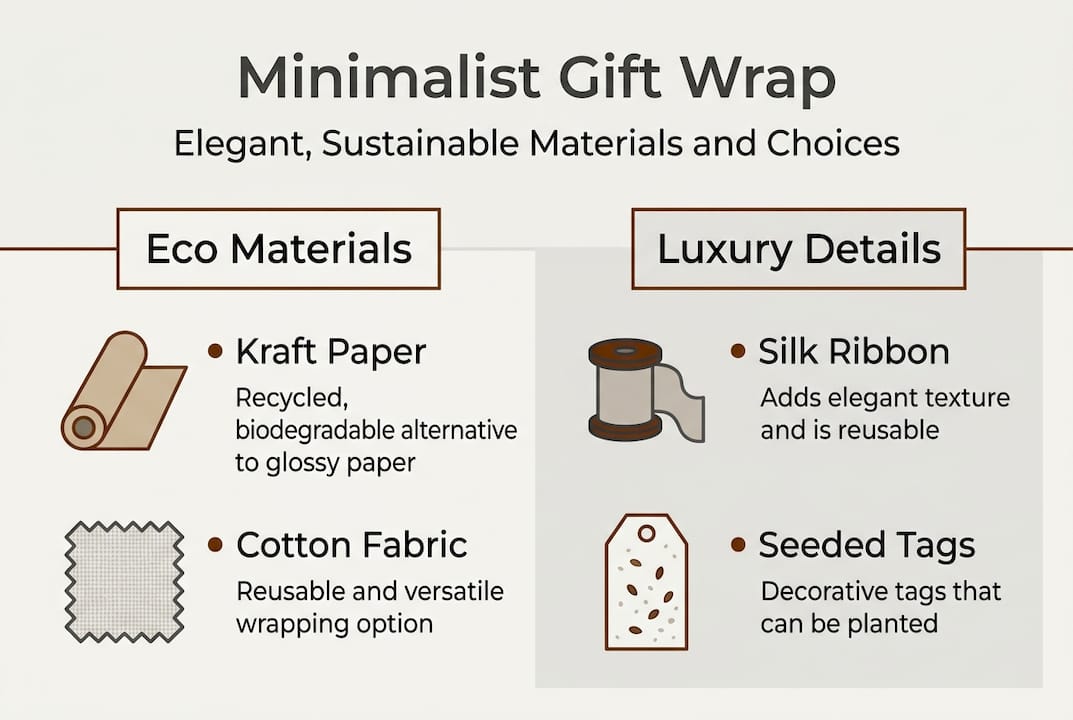
Choosing the right material is where minimalist philosophy becomes tangible. The most celebrated options use kraft paper, natural fibre ribbons, furoshiki fabric, and avoid plastic entirely, ensuring every element is reusable, recyclable, or compostable.
| Material | Eco quality | Luxury quality | Best suited for |
|---|---|---|---|
| Organic cotton furoshiki | Reusable, biodegradable | Soft drape, rich colour | Baby gifts, oddly shaped items |
| Kraft paper | Recyclable, compostable | Earthy, refined texture | Books, flat gifts |
| Natural jute ribbon | Biodegradable | Rustic, tactile finish | All occasions |
| Plantable seeded tags | Zero waste, grows wildflowers | Charming, unique | Baby showers, birthdays |
| Recycled tissue paper | Recyclable | Luminous inner layer | Delicate items, clothing |
For eco-conscious wrapping explained in its simplest terms, the goal is always to select materials that give twice: once in the moment of unwrapping, and again in their afterlife as a reusable cloth, compostable tag, or growing seed.
Creating a beautifully minimal wrap is easier than it looks. Follow these steps for a polished finish:
- Select your base: choose an organic cotton furoshiki or a sheet of quality kraft paper sized generously to your gift.
- Centre the gift: place it diagonally for fabric, or squarely for paper, ensuring even coverage.
- Fold with intention: smooth each fold slowly, allowing the material to drape naturally without forcing sharp creases.
- Secure with natural ribbon: tie a simple double knot using jute or cotton ribbon, leaving the ends long for visual elegance.
- Add a plantable tag: write your message, then tuck the seeded card beneath the ribbon so it becomes part of the presentation.
- Leave breathing room: resist the urge to add more. One considered element is always more powerful than several competing ones.
For fabric gift wrap advice on specific tying methods, the Japanese otsukai tsutsumi knot works beautifully for square boxes, whilst the bottle wrap technique suits cylindrical gifts such as bath products.
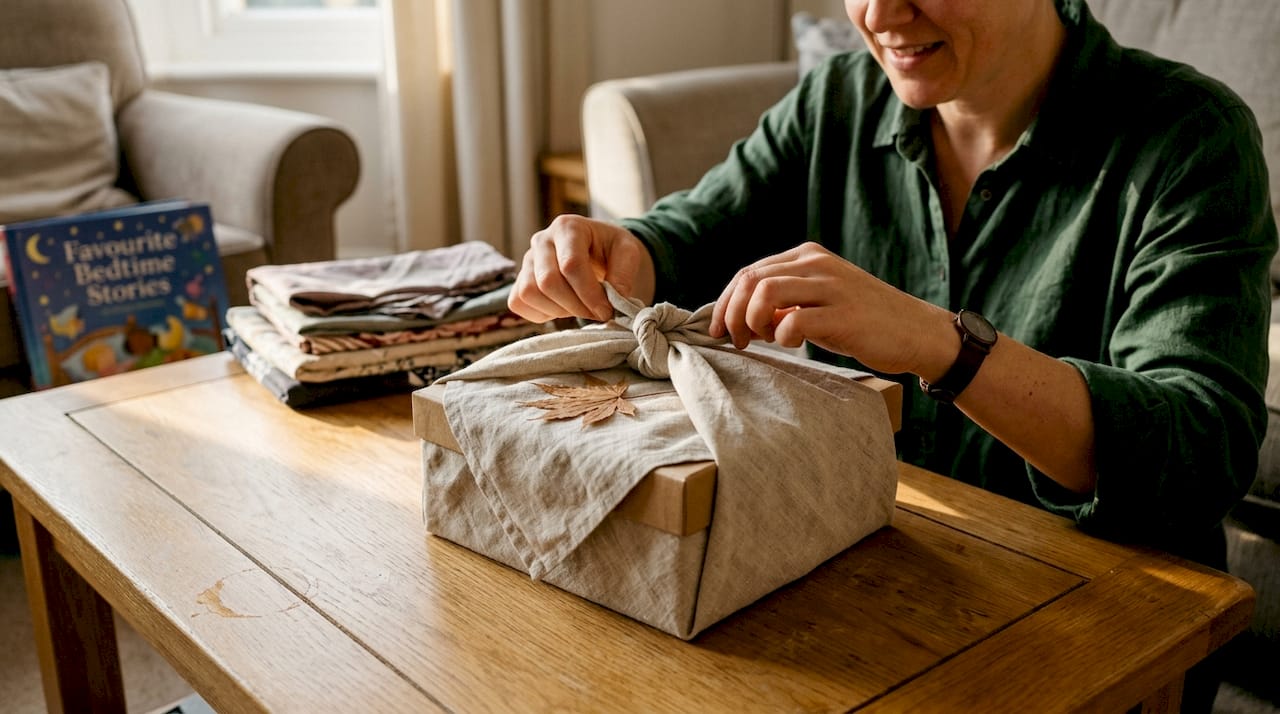
Pro Tip: Awkward baby gifts, particularly soft toys, nursing pillows, or oddly shaped activity sets, are actually where furoshiki fabric excels over paper. The cloth mould itself to any shape with grace, producing a sculptural finish that no paper could achieve. Explore a full wrapping workflow for parents to find step-by-step guidance tailored specifically to baby and toddler gift shapes.
Personalisation: making minimalist wraps special for children’s occasions
Minimalism and personalisation are not opposing forces. In fact, a restrained backdrop makes personal details sing all the more clearly. When a fabric wrap carries a child’s name in delicate embroidery, or a hand-dyed cloth echoes the colour palette of the nursery, the effect is quietly breathtaking.
Personalisation via ribbon colour, plantable seeded tags, or fabric prints is especially suited to baby showers, where each element can reflect the theme of the occasion without veering into excess. For gender-neutral celebrations, soft sage greens, warm ochres, and natural undyed cottons create a palette that feels both contemporary and timeless.
Furoshiki fabric is particularly versatile for children’s gifts because its tying method accommodates almost any shape, from bulky soft toys to irregular play sets. The cloth can then be repurposed as a playmat, a doll’s blanket, or a keepsake wrap for treasured items, giving it a second life far beyond the unwrapping moment.
| UK brand | Personalisation options | Material | Occasion focus |
|---|---|---|---|
| Etta Loves | Monochrome print, satin ribbon | Recyclable paper | Baby gifts, newborn occasions |
| Bare and Bloom | Plantable tags, kraft boxes | Kraft and seed paper | All eco occasions |
| Little Green Radicals | GOTS organic cotton furoshiki | Organic cotton fabric | Baby and children’s gifts |
| Nicholas & Rose | Bespoke embroidery, fabric choice | Reusable organic cotton | Newborn, toddler, milestones |
Leading brands are responding to this appetite. Recyclable monochrome paper with satin ribbon, plantable tags and kraft boxes, and GOTS organic cotton furoshiki represent some of the most thoughtfully designed options available in the UK today.
For those seeking truly bespoke touches, consider:
- Embroidered names or dates: a child’s name stitched in soft thread turns a fabric wrap into a lifelong memento.
- Themed fabric prints: woodland creatures, floral meadows, and celestial motifs suit children’s aesthetics without feeling childish.
- Colour-coded ribbon sets: one colour per child in a family creates a personal gifting language that children begin to recognise and love.
- Hand-written botanical tags: paired with pressed dried flowers, these add a handmade warmth that printed cards cannot replicate.
Exploring top sustainable wrap solutions will reveal the full breadth of options available, from understated organic linens to richly printed cotton wraps that still honour minimalist principles through their restrained use of pattern.
The sustainability impact: data and market trends
The numbers behind UK gifting waste are quietly startling. Each year, 108 million rolls of wrapping paper and 40 million rolls of tape end up in landfill, alongside a vast quantity of plastic bows, foil embellishments, and non-recyclable gift bags. The scale invites a genuine reckoning for anyone who cares about what kind of world a new baby will inherit.
The most meaningful gift you can give a new child is not only what is inside the wrapping, but the values encoded in the wrapping itself.
Consumer sentiment is shifting in a clear direction. The same data reveals that 40% of UK shoppers actively seek sustainable alternatives when purchasing gifts, and luxury retailers have responded in kind. Understanding your eco-luxury choices has never been easier, with more refined, reusable options available across all price points.
The market validation is equally compelling. Etta Loves, one of the UK’s most respected names in baby gifting, carries a 4.97-star rating across 80,000 families, demonstrating that parents are not simply tolerating minimalist sustainable wraps but genuinely celebrating them.
Key benefits for eco-conscious UK parents choosing minimalist wrapping include:
- Landfill reduction: every reusable wrap removes at least one roll of paper and one roll of tape from the waste stream annually.
- Cost efficiency over time: a quality furoshiki wrap used across ten occasions costs less per use than ten rolls of paper.
- Emotional longevity: fabric wraps are kept, displayed, and passed down, whereas paper is forgotten within moments.
- Aligned values: for parents raising children with environmental awareness, the wrap itself becomes a gentle, visible lesson.
There are good reasons to understand why choosing sustainable wrapping matters beyond sentiment. The environmental benefits of switching even a single household from disposable to reusable wrapping across a year are measurable and meaningful.
Why sustainable minimalism is the true luxury for family celebrations
We have been conditioned to equate extravagance with care. More layers, more sparkle, more volume somehow signals more love. But spend a moment with a truly well-wrapped gift, a cloth that drapes softly, a name sewn in silk thread, and that assumption dissolves completely.
The uncomfortable truth is that excess wrapping is often more about the giver’s anxiety than the recipient’s joy. It fills silence. It signals effort without requiring thought. Minimalist wrapping, by contrast, demands genuine consideration: which fabric, which colour, which personal detail will make this feel like it was made for this child alone.
For families, there is something quietly transformative about involving children in the wrapping process itself. Choosing a ribbon colour, pressing a flower for a tag, or tying a simple knot together turns gift-giving into a shared ritual rather than a solitary chore. Our eco wrapping checklist can help you build this into every celebration with ease.
Sustainable minimalism is not a compromise. It is, in every sense, the more generous choice.
Transform your gift wrapping with sustainable luxury options
You now have a genuine understanding of why minimalist, sustainable wrapping is not only the kinder environmental choice but the more beautiful and meaningful one. Nicholas & Rose has designed its 2026 newborn and toddler collection precisely for moments like this, wraps that are made to be kept, personalised through embroidery, and treasured long after the occasion has passed.
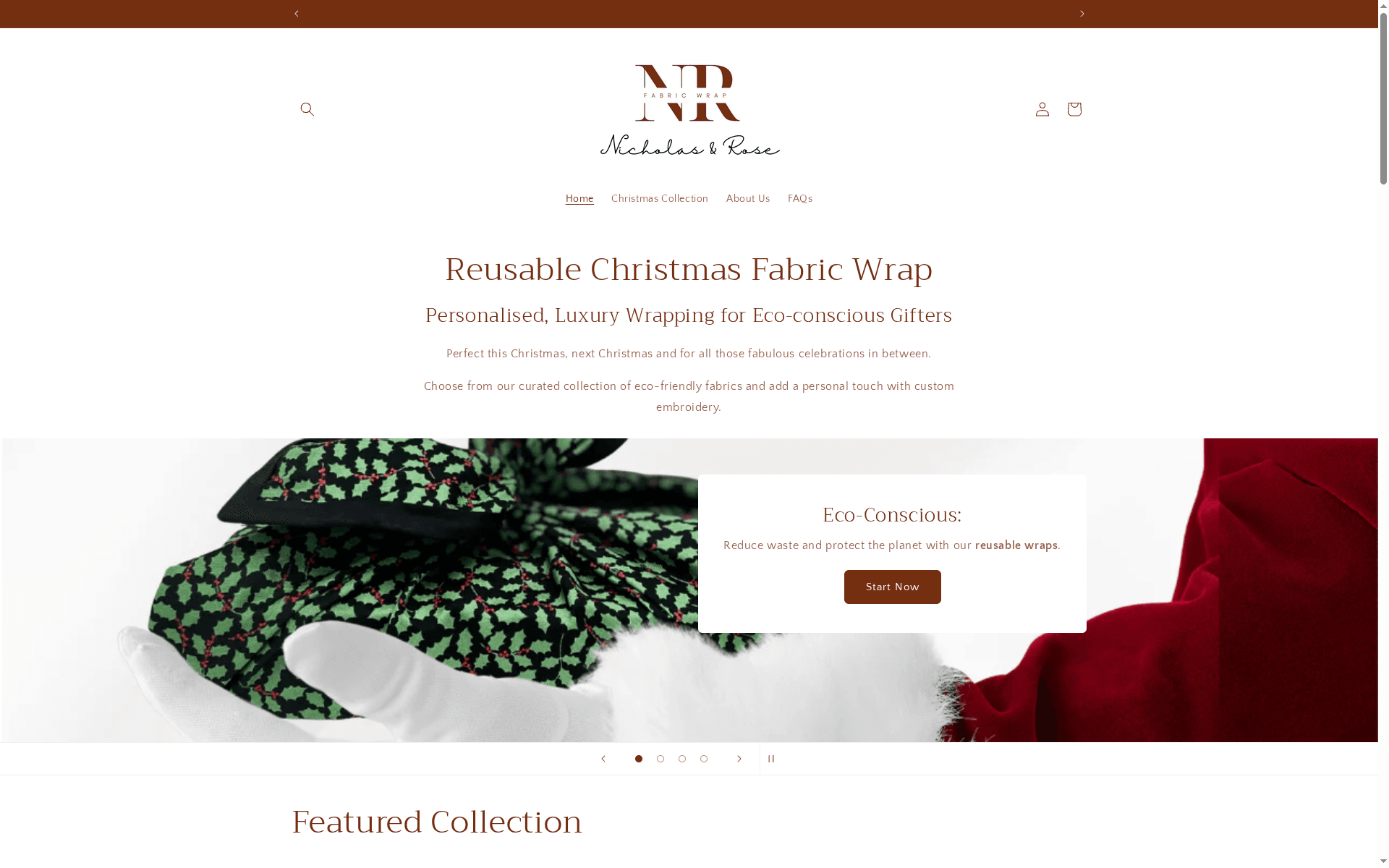
Whether you are drawn to the warmth of a sunshine yellow furoshiki wrap or the gentle charm of a woodland rabbit reusable wrap, the Nicholas & Rose collection offers bespoke, heirloom-quality gifting for every family milestone. Each piece is a gift in itself.
Frequently asked questions
What materials best suit minimalist luxury wrapping for baby showers?
Kraft paper, organic cotton furoshiki, natural fibre ribbons, and plantable tags balance elegance, reusability, and sustainability beautifully for baby occasions.
How can I personalise eco-conscious wraps for a child’s special event?
Opt for colourful ribbons, custom-print furoshiki fabric, or plantable seeded tags that grow wildflowers after the celebration, combining charm with zero waste.
Does minimalist wrapping reduce environmental impact?
Yes. Minimalist wrapping uses fewer materials, prioritises reusables, and helps address the 108 million rolls of wrapping paper sent to UK landfill each year.
Which UK brands lead in luxury minimalist wrapping?
Etta Loves, Bare and Bloom, and Little Green Radicals each offer top-rated sustainable wraps with genuine luxury appeal for baby and children’s gifting.
Is personalising minimalist wrapping wasteful?
Not at all. Personalisation methods such as ribbon colour, embroidery, and plantable tags use minimal resources and often enhance sustainability by encouraging the wrap to be kept rather than discarded.
Recommended
- Eco Conscious Gift Wrapping Explained: Sustainable Luxury – Nicholas & Rose Limited
- Master the Sustainable Gift Wrapping Process for Luxury Gifts – Nicholas & Rose Limited
- Luxury Christmas Wrapping Tutorial for Eco-Conscious Gifts – Nicholas & Rose Limited
- Innovative Gift Wrapping: Sustainable Luxury for Christmas – Nicholas & Rose Limited
- Sustainable Jewelry Shopping Workflow for Ethical Luxury – Eternal Carat
- Why luxury candles are the perfect gift for wellness seekers – mi KALMA