

Why eco wraps are the sustainable choice for gifting
TL;DR:
- Reusable fabric wraps serve as eco-friendly, durable packaging alternatives to disposable gift wrap. They can be used multiple times, reducing waste and carbon footprint while carrying sentimental value. Personalisation and secondhand options enhance their significance, making them meaningful gifts for special occasions.
Each year, the UK discards enough disposable gift wrap to circle the Earth nine times, yet the moment a baby shower gift is opened, that paper is already destined for landfill, sometimes before the newborn has even drawn their first breath. For eco-conscious parents and thoughtful gift-givers, this feels deeply at odds with the values you hold dear. Reusable fabric wraps offer something altogether different: a gift that breathes, endures, and carries meaning long after the occasion has passed. This guide explores the genuine environmental case for choosing fabric wraps over disposables, and why they are fast becoming the most considered gifting choice for newborns and toddlers across the UK.
Table of Contents
- What makes a wrap eco-friendly?
- How wraps reduce waste compared to disposable options
- Sustainable use: Babywearing wraps, swaddles, and second life
- Why wraps are the perfect sustainable gift for special occasions
- Our perspective: What most people miss about eco wraps
- Give the gift of sustainability with Nicholas & Rose
- Frequently asked questions
Key Takeaways
| Point | Details |
|---|---|
| Certifications matter | Choose GOTS/OEKO-TEX certified wraps to ensure true sustainability and safety for babies. |
| Reusable over disposable | Fabric wraps can reduce gift-wrapping waste by 90% or more compared to single-use options. |
| Versatile and lasting | Wraps serve as carriers, swaddles, or keepsake gifts, extending their useful life well beyond a single occasion. |
| Gift with impact | Eco wraps combine sustainability, personalisation, and emotional value for unforgettable gifts. |
What makes a wrap eco-friendly?
The term ‘eco-friendly’ is used so freely in today’s marketplace that it has, for many shoppers, lost much of its meaning. When it comes to wraps for newborns and toddlers, however, the distinction is both clear and consequential. A truly eco wrap is one crafted from natural, certified materials, produced under ethical conditions, and designed to live many lives rather than one.
At the heart of any genuinely sustainable wrap is the fabric itself. Organic cotton wraps that carry GOTS (Global Organic Textile Standard) or OEKO-TEX certification reduce chemical exposure for your baby and lessen the environmental burden of production. These certifications are not simply labels; they represent rigorous, independently verified standards covering everything from soil health to worker welfare.
Here is what to look for when choosing an eco wrap:
- GOTS certification: Guarantees the entire supply chain, from raw cotton to finished fabric, meets organic and ethical standards
- OEKO-TEX Standard 100: Confirms the fabric is free from harmful substances, making it safe for a newborn’s delicate skin
- Natural fibres: Organic cotton, bamboo, and linen biodegrade far more gracefully than synthetic blends
- Ethical production: Transparent supply chains with fair wages and safe working conditions
- Minimal dyeing and finishing: Natural or low-impact dyes reduce water pollution and chemical runoff
Choosing eco materials in gifting also means considering the wrap’s entire lifecycle. A fabric made with fewer chemicals requires less energy to produce and, crucially, does not release microplastics when washed, unlike many synthetic alternatives.
“The wrap you choose for a gift is not just packaging. It is the first thing to touch a newborn’s world, and it deserves to be as pure as the moment itself.”
Pro Tip: When shopping for personalised eco wraps, ask brands directly for their certification documentation. Genuine certifications are always traceable, and any hesitation from a brand is a signal worth heeding.
Greenwashing remains a real concern in the UK baby market. A wrap described as ‘natural’ or ‘sustainable’ without a recognised certification may still contain synthetic blends or have been produced under questionable conditions. Your discernment as a gift-giver is the most powerful tool you have.
How wraps reduce waste compared to disposable options
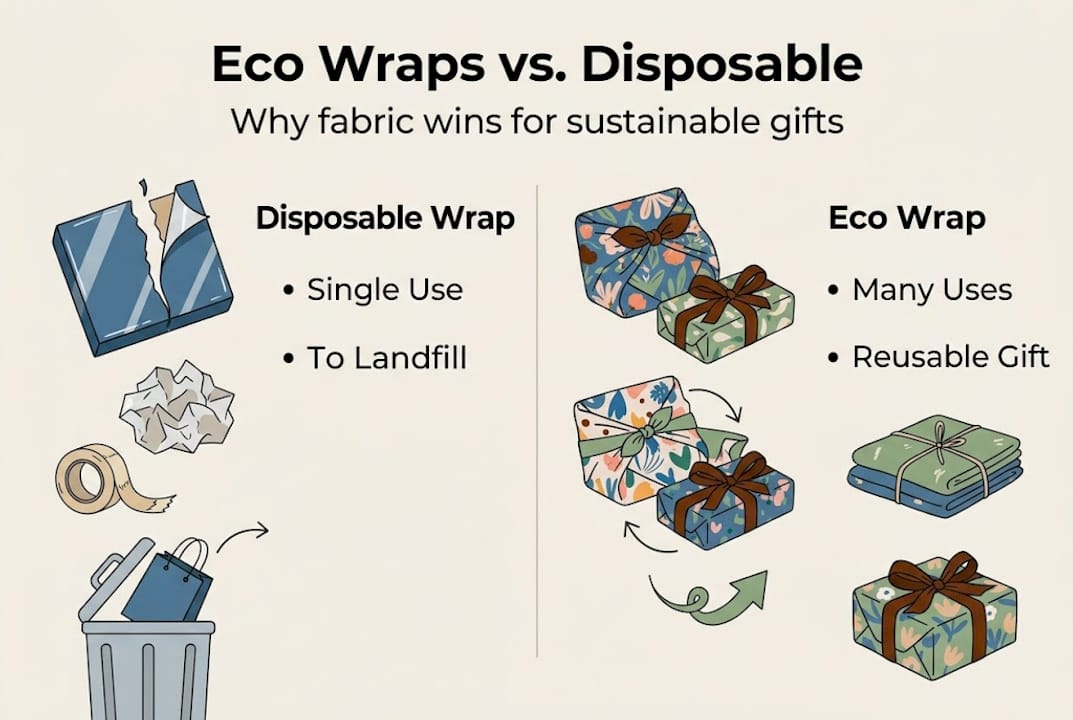
The numbers, when you sit with them, are quietly startling. The UK sends around 3 billion nappies to landfill every single year, and disposable gift wrapping follows a similarly troubling path. Paper wrap, foil, and plastic ribbon are typically used for mere minutes before being discarded, contributing to a cycle of consumption that serves no lasting purpose.
Fabric wraps, by contrast, can be reused dozens, even hundreds, of times. A single quality wrap, passed between family members and repurposed across occasions, can replace what might otherwise be a lifetime of disposable packaging.
| Feature | Disposable gift wrap | Reusable fabric wrap |
|---|---|---|
| Lifespan | Single use | Years to decades |
| End of life | Landfill or incineration | Compostable (natural fibres) |
| Carbon footprint | High per use | Significantly lower over time |
| Chemical content | Often bleached, dyed | Certified chemical-free options |
| Personalisation | Limited | Embroidered, lasting |
The environmental maths strongly favours reusability. Textiles cut wrapping waste by more than 90% when used consistently across a family’s gifting occasions. That is not a marginal improvement; it is a transformation.
Consider the practical moments when a reusable wrap steps in where a disposable would have been used:
- Baby shower gifts wrapped and presented with elegance, the fabric becoming part of the gift itself
- Christening and naming ceremony presents that arrive beautifully dressed without a scrap of paper in sight
- Birthday gifts for toddlers where the wrap doubles as a playmat, swaddle, or keepsake cloth
- Milestone gifts, first steps, first words, first Christmas, each one wrapped in the same cherished fabric
The benefits of reusable wraps extend well beyond the environmental. There is a quiet elegance in unwrapping a gift that has been thoughtfully dressed in fabric rather than torn paper. It signals care, intention, and a refusal to treat the moment as disposable.
Sustainable use: Babywearing wraps, swaddles, and second life
One of the most compelling qualities of a fabric wrap is its refusal to be a single-purpose object. Unlike a roll of paper that serves one moment and nothing more, a well-chosen wrap evolves with your family, shifting from gift wrap to swaddle to carrier and, in time, to a treasured piece passed to the next generation.
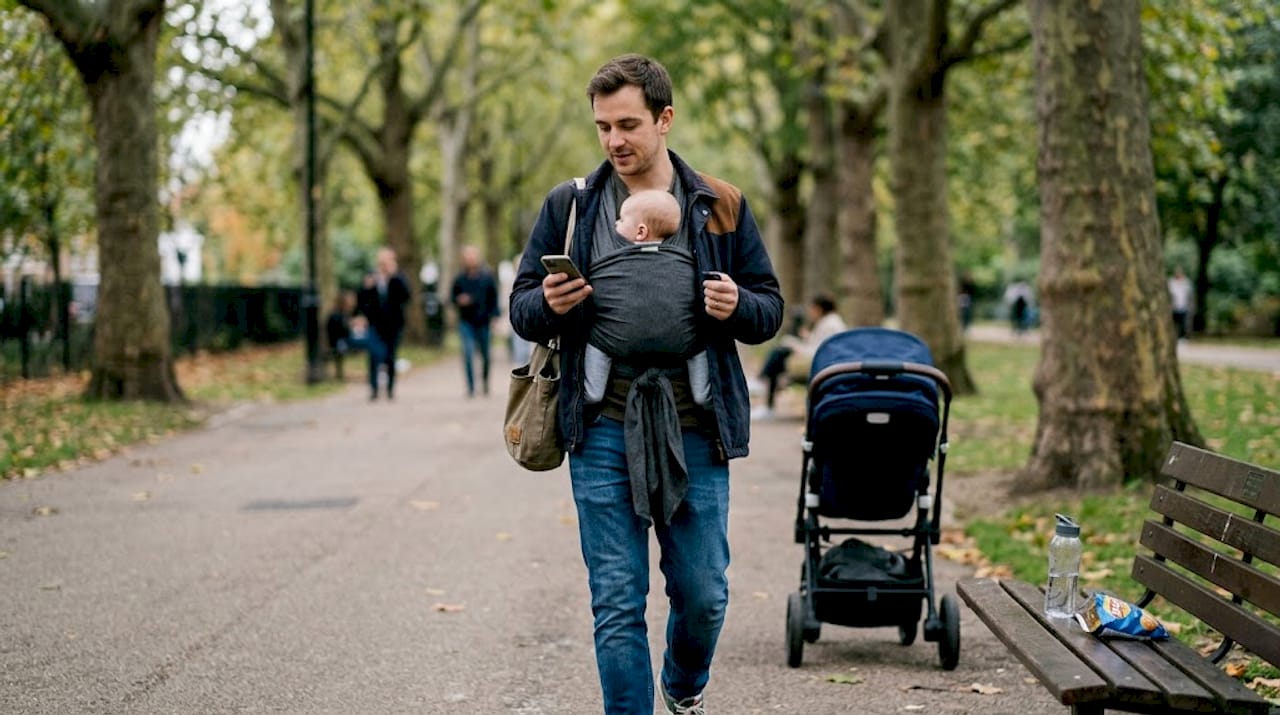
Baby wraps promote babywearing as a gentle alternative to plastic-heavy strollers, reducing the need for resource-intensive equipment that takes considerable energy to produce and significant space to store. A wrap carrier is lightweight, compact, and perfectly suited to public transport and everyday life in a way that a bulky pushchair simply cannot match.
| Wrap type | Primary use | Sustainable secondary use |
|---|---|---|
| Carrier wrap | Babywearing | Swaddle, play blanket, keepsake |
| Swaddle wrap | Newborn comfort | Muslin cloth, gift wrap, heirloom |
| Fabric gift wrap | Presentation | Swaddle, carrier, storage pouch |
Extending the life of your wrap is both simple and deeply satisfying. Here is how to give a fabric wrap its second, third, and fourth life:
- Pass it down within your family, from one baby to the next, allowing the fabric to carry its stories forward
- Join a UK preloved wrap community such as those found on dedicated babywearing forums or Facebook groups, where wraps are bought, sold, and swapped with care
- Repurpose as a swaddle or play cloth once the gifting occasion has passed, integrating the wrap into daily life
- Donate to a local baby bank or charity, where families in need can benefit from quality fabric items
- Compost natural fibre wraps at the very end of their long life, returning them gently to the earth
Pro Tip: UK platforms such as Preloved, local National Childbirth Trust (NCT) sales, and dedicated babywearing Facebook groups are excellent places to find or rehome quality fabric wraps. Always check for certification labels when buying secondhand to ensure safety standards are maintained.
Exploring eco-conscious gifting choices through this lens reveals that the most sustainable gift is rarely the newest one. A preloved wrap, gifted with love and a little embroidered personalisation, carries more meaning than any freshly purchased disposable ever could.
Why wraps are the perfect sustainable gift for special occasions
There is a particular kind of joy in giving a gift that will be remembered. Not because it was expensive, but because it was chosen with such evident care that the recipient feels truly seen. A personalised fabric wrap achieves this with quiet grace, arriving as both a practical necessity and a lasting keepsake.
For certified sustainable brands and preloved options alike, the wrap has become a symbol of thoughtful parenting culture in the UK, one that values longevity over convenience and meaning over novelty. Occasions that call for a wrap gift include:
- Baby showers: The wrap arrives as packaging and stays as a swaddle, a carrier, or a cherished memento
- Christenings and naming ceremonies: A fabric wrap embroidered with the baby’s name becomes an heirloom from the very first day
- First birthdays: A toddler’s gift wrapped in fabric that can later become a comfort blanket or dress-up cloth
- New sibling gifts: A wrap that bridges the new arrival with an older child, woven into the family’s shared story
“Choosing a sustainable gift is not a compromise. It is an act of imagination, a decision to believe that beauty and responsibility can exist in the same breath.”
The personalisation element is where a fabric wrap truly distinguishes itself. An embroidered name, a birth date, or a small motif transforms a piece of cloth into something irreplaceable. Exploring luxury personalised gifts reveals how deeply this resonates with modern parents who want their children’s earliest memories to be rooted in intention and beauty.
Following eco gift wrapping steps need not be complicated. The simplest approach is often the most beautiful: fold the fabric around the gift, tie it with a ribbon of natural twine, and let the textile do what it was made to do.
Our perspective: What most people miss about eco wraps
Most conversations about eco wraps settle quickly on the practical: landfill statistics, certifications, carbon comparisons. These matter enormously, and we would never diminish them. But we believe the deeper value of choosing a fabric wrap lies somewhere less tangible and, we think, more enduring.
When you gift a wrap, you are not simply reducing waste. You are quietly challenging the culture of disposability that has come to define so much of modern gifting. You are saying, with a piece of fabric, that this moment deserves more than something destined for the bin.
There is a reason fabric wraps are growing in popularity across generations of UK families. They carry stories. They prompt conversations. A grandmother who recognises the wrap used for her grandchild’s christening gift, now repurposed as a comfort blanket, feels something that no recycled paper wrap could ever evoke.
Personalisation in gifting is the thread, quite literally, that ties all of this together. An embroidered name does not just identify a wrap; it anchors it to a moment in time, making it impossible to discard and deeply personal to keep.
Pro Tip: Consider starting a family tradition of reusing the same wrap for each new arrival. The accumulation of names and dates embroidered into the fabric becomes, over time, a textile family tree of extraordinary beauty.
Give the gift of sustainability with Nicholas & Rose
If this article has stirred something in you, a quiet resolve to gift with greater intention, then Nicholas & Rose is where that resolve becomes something beautiful and tangible.
Our 2026 newborn and toddler range of luxury sustainable gift wraps brings together the finest organic fabrics with bespoke embroidery, creating pieces that are as meaningful as they are mindful. Every wrap is designed to be used, loved, and passed on, never discarded. Browse the full Nicholas & Rose collection and discover how a single gifting choice can become a family tradition that endures for generations.
Frequently asked questions
What materials should I look for in eco wraps?
Choose wraps made from 100% organic cotton and prioritise GOTS or OEKO-TEX certifications, as these independently verify both fabric safety and ethical production standards.
How often can a fabric wrap be reused?
A quality fabric wrap can serve multiple babies across many years, and UK parents increasingly favour preloved wraps to extend the lifecycle even further, making each wrap’s environmental footprint remarkably small.
Are baby wraps really better for the environment than strollers?
Yes. Wraps use far less plastic and require significantly fewer resources to produce than strollers, making them a lighter, more eco-friendly choice for everyday mobility and travel.
Can I personalise eco wraps for gifting?
Absolutely. Many UK brands, including Nicholas & Rose, offer embroidered personalisation on eco wraps, transforming a sustainable choice into a bespoke keepsake that the family will treasure for years.
Where can I buy or sell preloved eco wraps in the UK?
UK-based platforms such as Preloved, NCT nearly new sales, and dedicated babywearing Facebook groups are reliable places to find or rehome quality fabric wraps, often with full certification details included.
Recommended
- How to Choose Eco Friendly Wrap 2025 for Luxurious Gifts – Nicholas & Rose Limited
- Eco Aware Wrapping: Defining Sustainable Luxury – Nicholas & Rose Limited
- Sustainable Gift Wrap Choices: Eco-Luxury for 2025 – Nicholas & Rose Limited
- Eco Conscious Gift Wrapping Explained: Sustainable Luxury – Nicholas & Rose Limited
- Eco-Friendly Wall Art Explained: Sustainable Decor